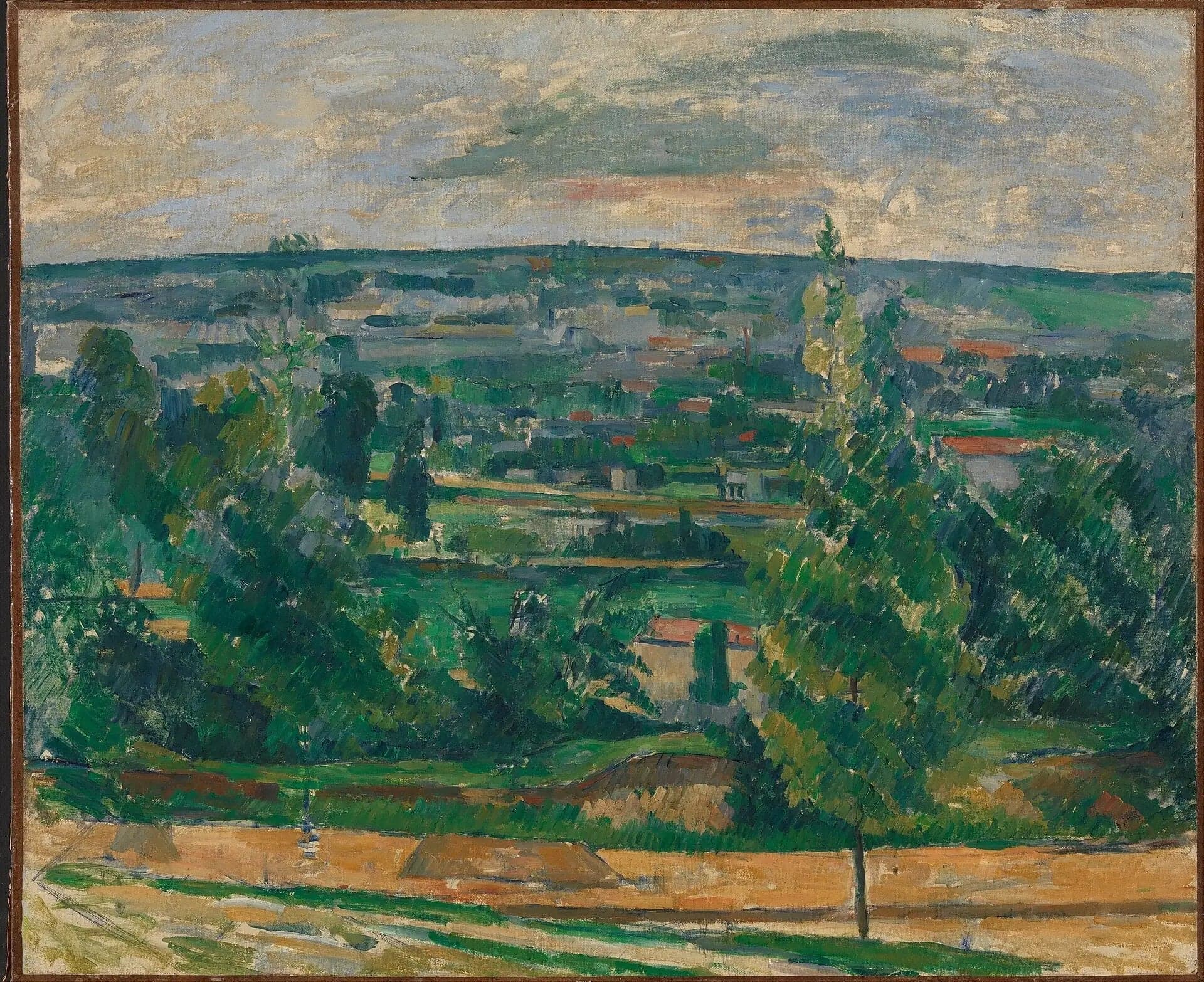
Landscape near Melun
- Original dimensions
- 73 x 60 cm
- Museum
- National Museum
- Year
- 1879
Scene depicted
The painting "Landscape near Melun - Paul Cézanne " depicts a bucolic landscape where nature reigns supreme. We discover gentle hills, adorned with touches of greenery, while the sky is dressed in subtle gradients. This canvas invites us to an immersive stroll in a suspended moment, revealing the sentimentality and harmony of the French rural environment.
Historical context
Created in 1879, the painting "Landscape near Melun" is set against a backdrop of artistic innovation in the heart of France, during a vibrant Impressionist movement. This masterpiece reflects a time when artists sought to capture the ephemeral essence of light and landscapes. Currently, this canvas is preserved in the National Museum, where it continues to fascinate visitors with its majestic dimensions of 73 x 60 cm.
Place in the artist's career
"Landscape near Melun" represents a significant turning point in Cézanne's career, illustrating his transition to a more authentic and reflective style. In parallel with his earlier works like "Hunting with Hawks" and his later compositions, this painting marks the artist's quest to capture the ephemeral, while benefiting from the more mature perspective of his pictorial evolution.
Anecdote
"Everything I do is the search for a hidden truth," said Cézanne. One spring morning in Melun, he was struck by the beauty of the verdant hills bathed in light. It was this fleeting moment, a unique sensation, that inspired this masterpiece . The painting tells of this raw emotion, this silent dialogue between the artist and nature.