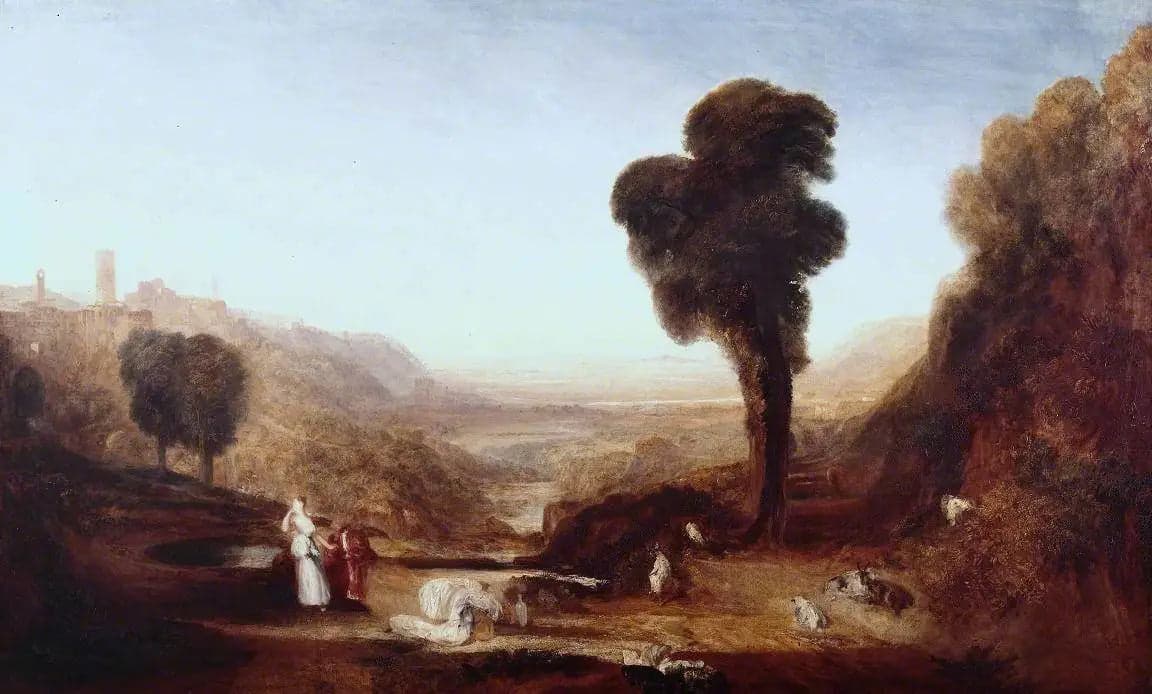
Landscape: Christ and the Woman of Samaria
- Original dimensions
- 147.3 x 238.8 cm
- Museum
- Tate
- Year
- 1825
Scene depicted
The composition of this painting illustrates a touching encounter between Christ and the Samaritan woman, a moment of revelation and dialogue. Turner captures not only the surrounding landscape but also the spiritual intensity of this interaction, where natural elements underscore the depth of the evangelical message.
Historical context
Created in 1825 in the heart of England, this painting is part of the romantic movement. Turner, master of light and landscape, illustrated the very essence of human emotion by combining a biblical setting with the beauty of nature. Currently on display at the Tate , this canvas measures 147.3 x 238.8 cm, reflecting the ambition of its pictorial content.
Place in the artist's career
The painting marks a turning point in Turner's career, representing stylistic maturity with a new conception of landscape. When compared to his earlier works like “The Fighting Temeraire” and later ones like “Rain, Steam and Speed,” one can observe the evolution and constant innovation of his artistic approach.
Anecdote
“Light is my subject, shadows are my accomplices.” This thought from the famous artist resonates with every brushstroke of his masterpiece . Turner found his inspiration by the edge of a tranquil river, where the murmur of the waters and the sweet scent of spring flowers inspired him to create this canvas vibrant with life and emotion.