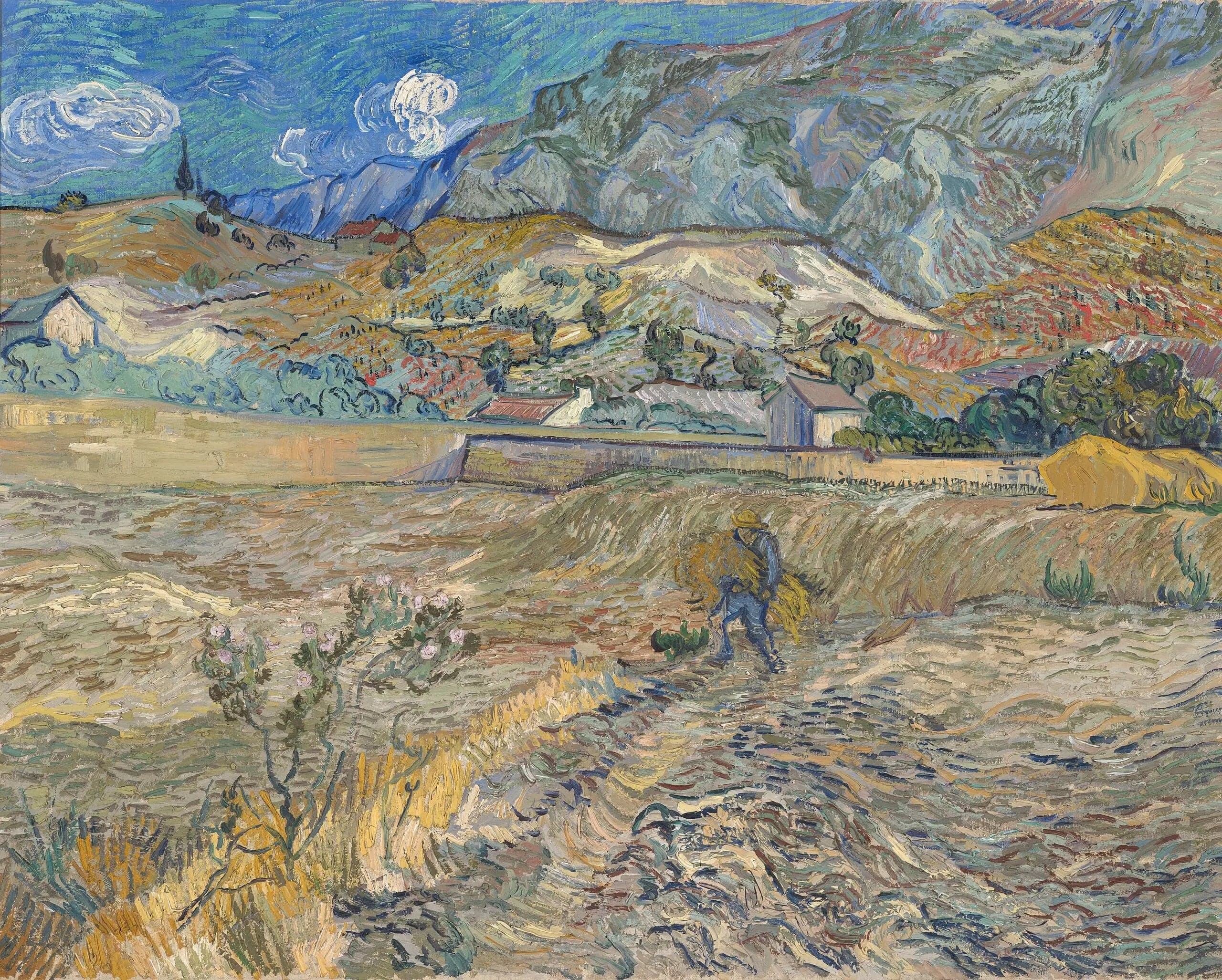
Landscape at Saint-Rémy
- Original dimensions
- 36.25 x 29 cm
- Museum
- Indianapolis Museum of Art
- Year
- 1889
Scene depicted
In this pictorial work, the shimmering colors and dynamic brushstrokes immerse us in the heart of the Provençal landscapes that Vincent cherished so much. The sky, at times stormy and serene, dances with the wheat fields sculpted by the wind. Each brushstroke tells a story, that of a blazing summer where nature reveals its eternal cycle.
Historical context
Created in 1889, this extraordinary painting is part of the post-impressionist movement, emerging from a Saint-Rémy-de-Provence of a thousand colors. It is here that Vincent van Gogh , grappling with his inner demons, managed to capture the vibrant soul of nature. Today, this canvas bears witness to a remarkable artistic heritage, preserved at the Indianapolis Museum of Art , where it continues to dazzle visitors with the power of its strokes.
Place in the artist's career
The painting “Landscape at Saint-Rémy” represents a key milestone in Vincent van Gogh's career, symbolizing a period of great introspection and creativity. This masterpiece dialogues with other iconic canvases such as “ The Starry Night ” and “The Irises ,” offering a striking insight into the technical and emotional evolution of the artist.
Anecdote
“Nature is my true source of inspiration, it transports me beyond my torments,” Vincent might have said while contemplating the landscapes of Saint-Rémy. One bright morning, enveloped by the delicate scent of wildflowers, he let himself be carried away by the emotion of the moment. This painting , the fruit of this impulse, resonates deeply with the artist's passion and his quest for light.