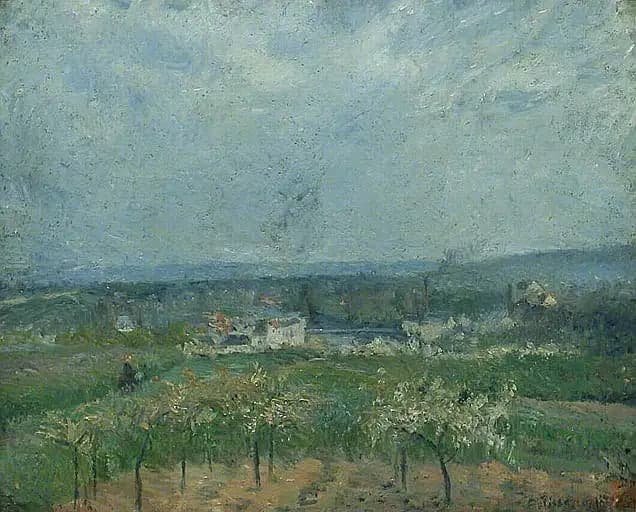
Landscape at Pontoise
- Original dimensions
- 55 x 46 cm
- Museum
- room 903
- Year
- 1877
Scene depicted
This painting depicts a bucolic landscape in a serene setting, where light plays with the shadows of the trees, reflecting on the winding path. The harmonious composition tells the story of peaceful days, moments of simple life, intoxicating the viewer with a sense of freedom, calm, and wonder. The shades of green and blue evoke a welcoming nature, while the floral touches added bring a hint of spring joy.
Historical context
Created in 1877, in Pontoise, this iconic painting is part of the Impressionist movement. At that time, the city, located in the Île-de-France region, was a meeting place for many painters, attracted by its picturesque and bright landscapes. Currently, this precious work is displayed in a renowned museum, where it fascinates visitors with its delicate composition and subtle lighting.
Place in the artist's career
Landscape at Pontoise represents not only a turning point in Pissarro's career but also a pivotal period in the evolution of Impressionism . This painting, alongside contemporaries such as “Boulevard Montmartre, Spring” and “The Potato Harvest,” shows a maturation of his style and an increased mastery in the representation of light and atmospheres, testifying to his role as a pioneer in the movement.
Anecdote
“Nature is my only master” Pissarro might have expressed one spring morning while contemplating the softness of the fields of Pontoise. It is this deep connection to nature that inspired the creation of this masterpiece, combining the beauty of the outside world with a vibrant inner emotion, captured in every brushstroke of this lively painting.