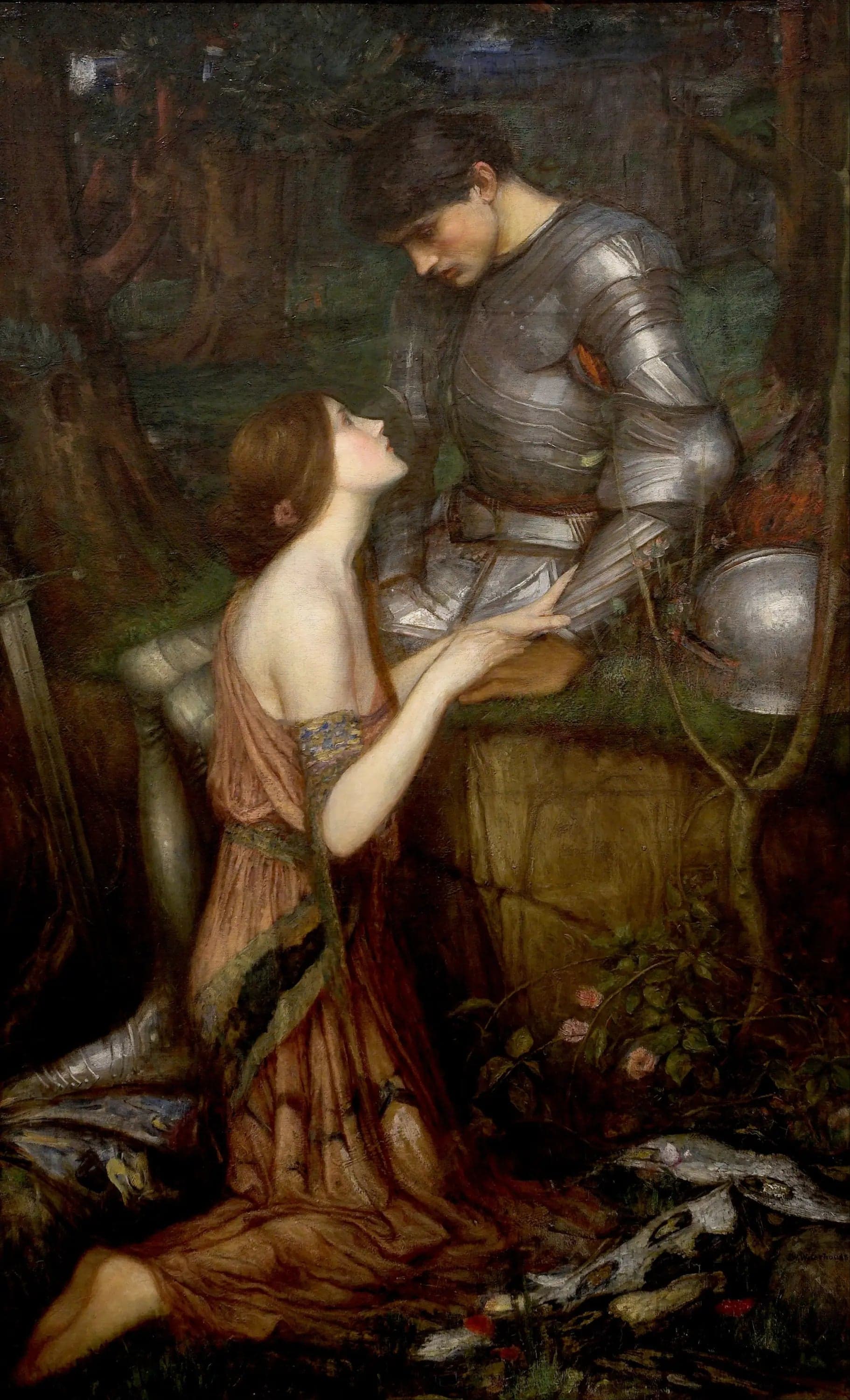
Lamia
Scene depicted
The painting depicts Greek mythology, where Lamia, a beautiful woman transformed into a monster, seduces men to better consume them. In this painting, she is both fascinating and tragic, offering the viewer a glimpse into her inner world. The finesse of her features and the depth of her gaze invite reflection on love, loss, and ephemeral beauty, transforming the canvas into a space of empathy and contemplation.
Historical context
Created in 1905 in London, the canvas Lamia is part of the Pre-Raphaelite movement, an artistic movement that marked its time with its romantic commitment and mythological themes. This painting , which demonstrates great virtuosity, is currently preserved at the art gallery of the University of Liverpool. With dimensions of 91 cm by 61 cm, this pictorial work captivates with its visual narrative and enchanting composition.
Place in the artist's career
Lamia represents a high point in Waterhouse's artistic career. After works such as The Consultation (1894) and Ulysses and the Sirens (1891), this painting illustrates his taste for exploring classical themes while highlighting his stylistic evolution. Here, light plays a crucial role, creating a bright environment that envelops the subject in an almost mystical aura, demonstrating the artist's mastery in composition and emotion.
Anecdote
“Beauty is the breath of a soul on a canvas.” These words from Waterhouse, evoking the inspiration behind his masterpiece , come to life on a summer morning, in the lush garden of his studio. It is there that he encountered the image of the woman who would become Lamia, a fascinating figure whose sensuality and mystery are reflected in every brushstroke of the painting .