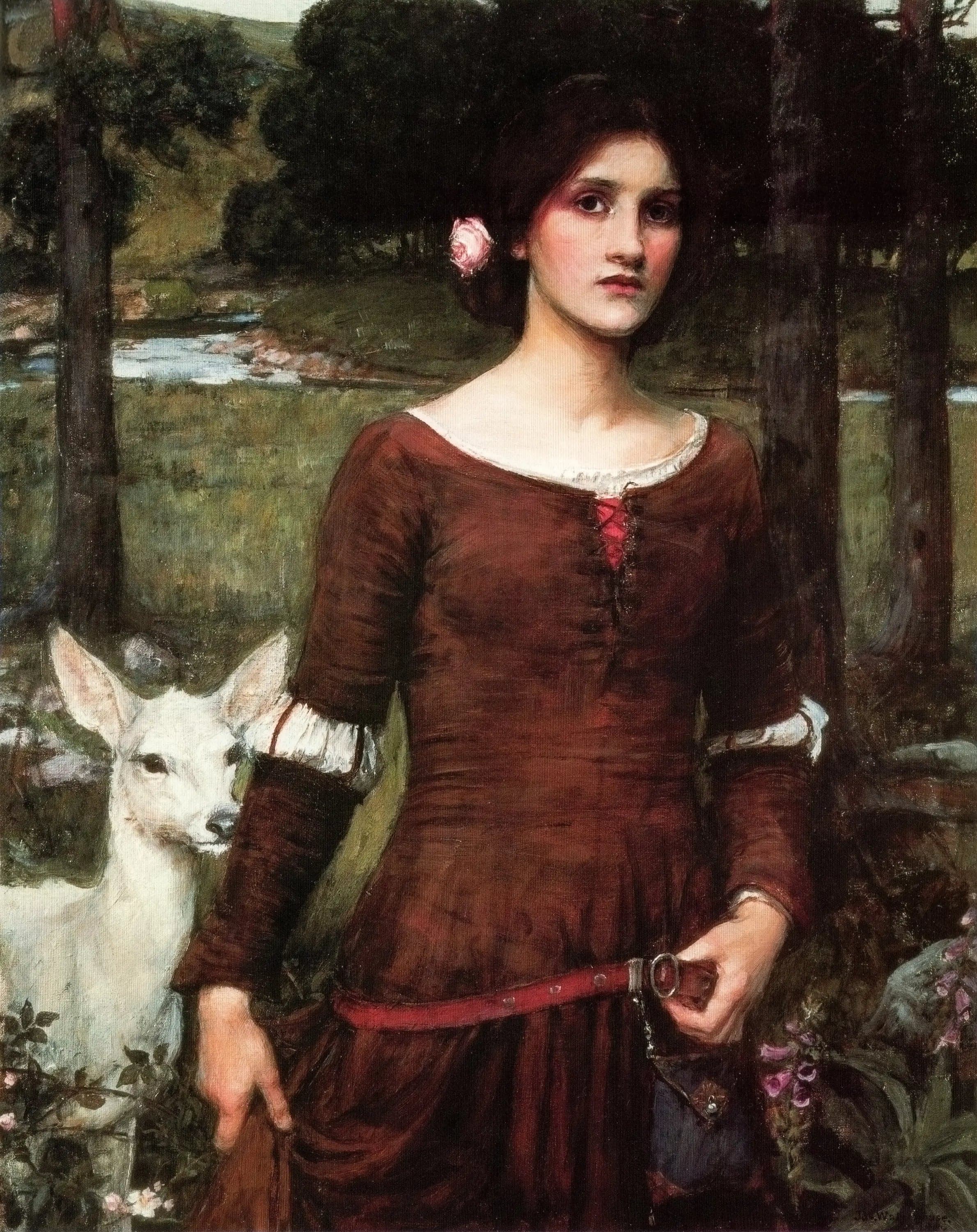
Lady Clare
Scene depicted
This painting evokes an atmosphere that is both nostalgic and romantic, illustrating a woman, a symbol of gentleness and introspection, immersed in contemplation. She stands by a stream, surrounded by lush nature, a reflection of her inner thoughts and the love stories that nourish her existence.
Historical context
Created in 1890, the painting "The Lady Clare" is emblematic of the Pre-Raphaelite movement, an artistic current that gained particular recognition in London, England. This canvas is currently displayed at the Tate Britain , a world-renowned museum, where it attracts art lovers fascinated by its cultural context of Victorian Britain.
Place in the artist's career
"The Lady Clare" represents a peak in Waterhouse's career, demonstrating his skill in capturing light and emotions. Particularly linked to "The Nymph of the Spring" and "Ophelia," this canvas stands out for its exploration of elegiac and feminine themes, reinforcing the dialogue between divine light and the shadow of humanism.
Anecdote
"Art is a mirror of the soul, where each color tells a story," Waterhouse is said to have remarked while painting this pictorial work . Inspired by the beauty of a soft, misty morning, he captured a fleeting moment in the timeless elegance of his subject, a dreamy woman, reflective of human nature.