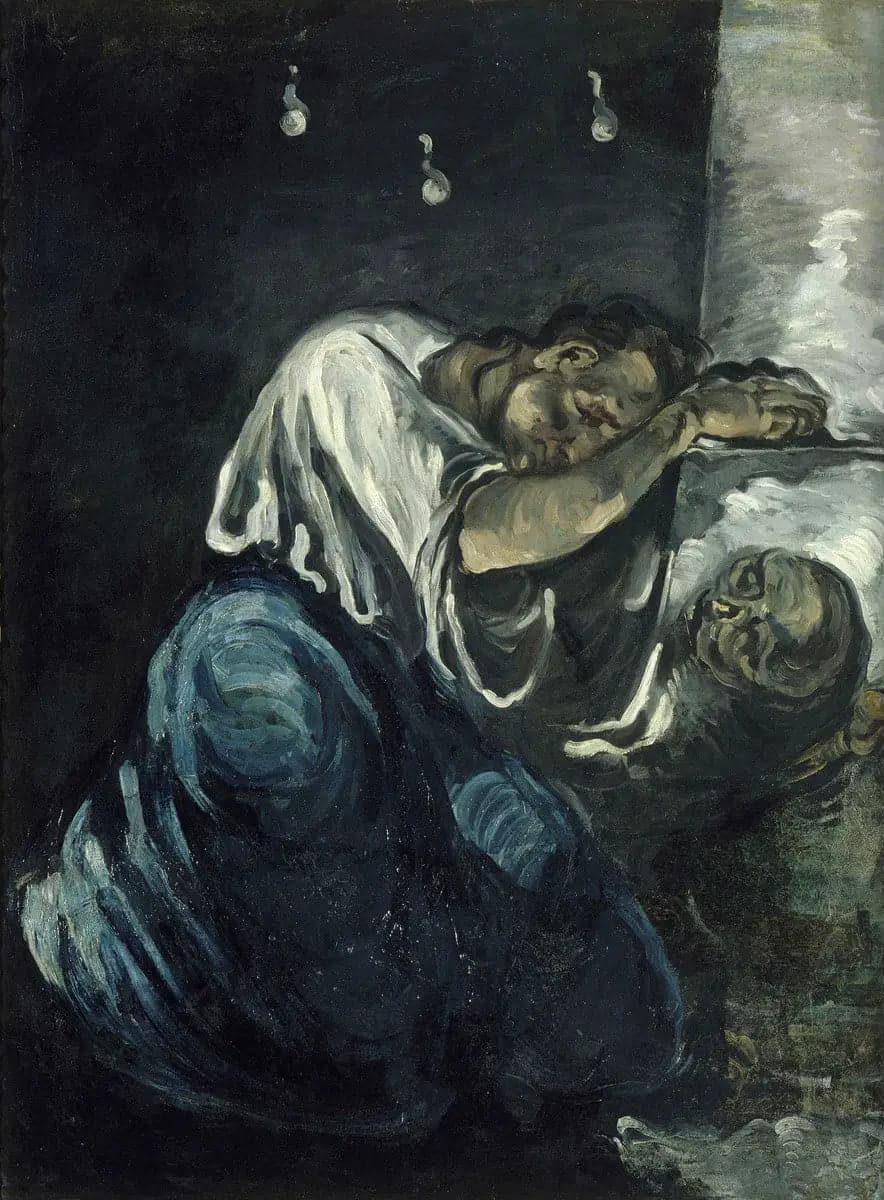
La Madeleine
- Original dimensions
- 1.264 x 1.68 cm
- Museum
- Orsay Museum
- Year
- 1869
Scene depicted
The painting “La Madeleine” depicts a woman, the central figure, immersed in silent contemplation. Cézanne manages to capture not only the face of his model but also the very essence of the moment. The depth of colors and subtle contrasts evoke an inner peace, like an invitation to contemplate the present moment.
Historical context
Created in 1869 in Aix-en-Provence, France, this painting resides at the heart of the Impressionist period. It is through this canvas that Paul Cézanne , one of the pillars of modern art, redefined the relationship with light and color. Currently exhibited at the Orsay Museum in Paris, this painting echoes a pivotal moment in pictorial expression.
Place in the artist's career
“La Madeleine” stands as a milestone in Cézanne's career, marking his stylistic blossoming. His other works, such as “The Card Players” and “Still Life with Apples,” testify to the evolution of his technique, oscillating between a realistic approach and bold stylization.
Anecdote
“Every brushstroke is a step towards infinity.” In this quest for the essential, Cézanne drew inspiration from the Provençal landscapes, sunlit alleys, and the peaceful atmosphere of his childhood. The emotion captured in the whim of a gentle morning is found in every nuance of this masterpiece .