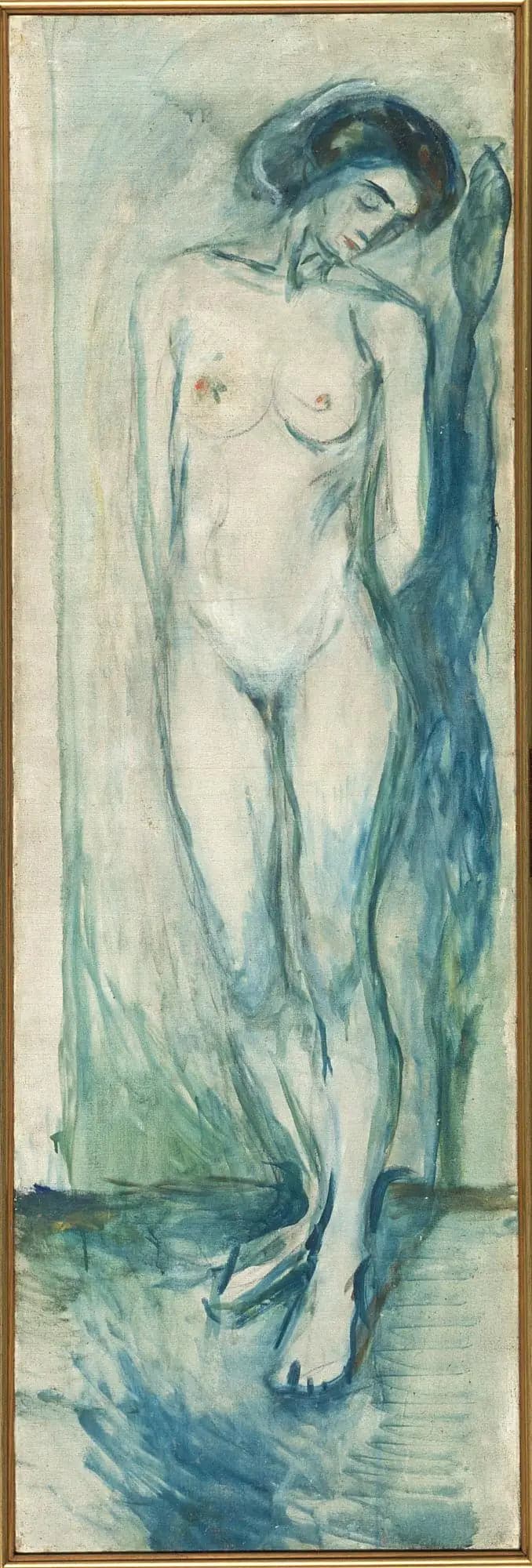
Krotkaja
- Original dimensions
- 58.5 x 177.5 cm
- Museum
- Munch Museum
- Year
- 1927
Scene depicted
The canvas Krotkaja evokes the ephemeral beauty of a moment of peace and tranquility. At the heart of the composition, figures representing the fragility of existence stand in an atmosphere charged with emotions. The artist managed to capture the essence of humanity, evoking both solitude and calm, immersing us in a reflection on life and its subtleties.
Historical context
Created in 1927, the painting Krotkaja is part of the expressionist movement that characterizes the work of Edvard Munch . This canvas, which currently resides at the Munch Museum in Oslo, Norway, evokes a time marked by personal and artistic upheavals. The 58.5 by 177.5 cm of this work tells a story of introspection and the search for meaning, rooted in the tumultuous context of the era.
Place in the artist's career
Krotkaja stands as a flagship work in the career of Edvard Munch , representing a period of maturity where he sharpens his style. Compared to other paintings like “The Scream” and “The Madonna,” the painting reflects both technical and emotional evolution, illustrating the depth of his artistic journey.
Anecdote
“I sought to capture the silence in this canvas , the sweetness of the human soul,” Munch reportedly said while reminiscing about the moment of inspiration. That day, a bright and fresh morning, he encountered a familiar face in a quiet alley, a suspended moment that profoundly influenced the creation of this masterpiece .
Major exhibitions
Munch og Ekely: 1916-1944