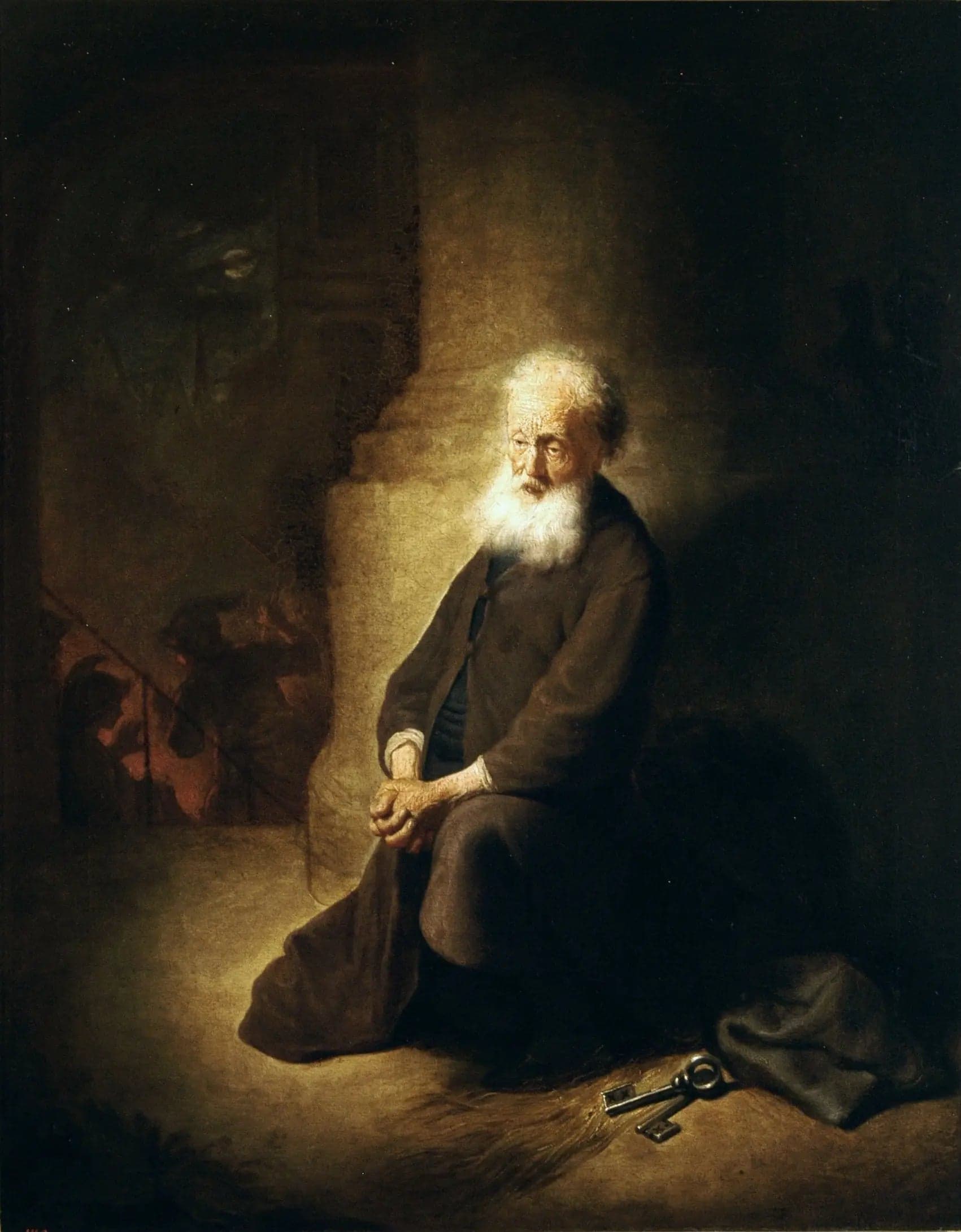
Kneeling Saint Peter.
- Original dimensions
- 50.7 x 64.3 cm
- Museum
- royal palace of Warsaw
- Year
- 1630
Scene depicted
This painting illustrates a poignant moment in the life of Saint-Pierre, frozen in a posture of reflection in the dim light. The psychological intensity of this scene emphasizes a deep humility and a call to divine grace. The soft light, strategically positioned, guides the gaze towards the central figure, accentuating the gravity and beauty of this sacred moment.
Historical context
Created in the historic city of Amsterdam, in the heart of the Netherlands during the 17th century, the painting "Saint-Pierre agenouillé" is part of the baroque movement, which is characterized by emotional intensity and a dramatized representation of light and shadows. This painting, now displayed at the royal palace of Warsaw, measures 50.7 x 64.3 cm and showcases the exceptional technical skills of Rembrandt , while reflecting the spiritual and religious context of the time.
Place in the artist's career
The painting "Saint-Pierre agenouillé" represents a crucial milestone in the career of Rembrandt , marking a period of artistic maturity. Alongside other masterpieces, such as "The Night Watch" and "The Return of the Prodigal Son", this work shows an evolution in his use of light and emotion, propelling his art to new heights.
Anecdote
“Inspiration comes when you touch the soul of the viewer.” In a quiet alley in Amsterdam, one spring morning, Rembrandt observed an old man kneeling in prayer. This fleeting moment fueled the conception of his masterpiece , capturing the essence of suffering and redemption, and bringing to life the evocative power of the canvas "Saint-Pierre agenouillé".