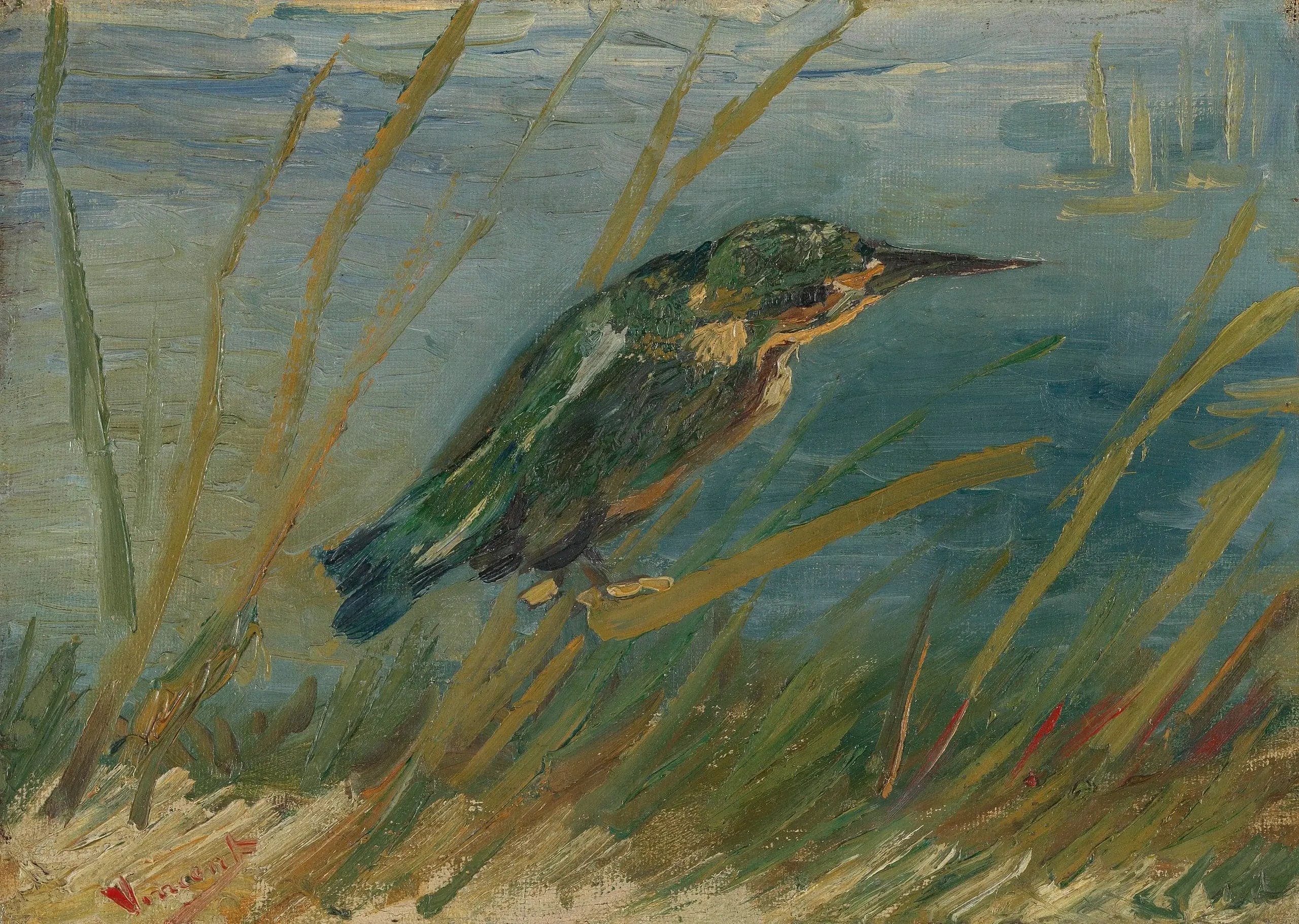
Kingfisher by the water's edge
- Original dimensions
- 26.5 x 19 cm
- Museum
- Van Gogh Museum
- Year
- 1887
Scene depicted
The painting "Kingfisher by the Water" depicts a bucolic scene where a bird draws the sky, suspended between the vibrant blue and green of nature. This harmonious composition reveals the delicate interaction between natural elements and the infinite horizon, highlighting the tranquility and serenity of moments stolen from nature.
Historical context
Created in 1887, in Paris , this painting is emblematic of post-impressionism , a movement distinguished by its emotional intensity and quest for light. In this triumphant setting of the late 19th century, Van Gogh captures the essence of the moment of grace of a kingfisher, surrounded by the shimmering reflections of the water. This precious canvas currently resides at the Van Gogh Museum , a sanctuary of art where this original work continues to amaze visitors.
Place in the artist's career
This canvas represents a pivotal milestone in Van Gogh's career, symbolizing his commitment to a more expressive and personal style. From this canvas , one can observe the evolution towards his bolder works, such as " The Starry Night " and " The Sunflowers ", both witnesses to an impressive stylistic maturity.
Anecdote
Vincent van Gogh once confided: "Nature is my true studio, and every moment spent painting it is a gift." It was by the edge of a body of water, in the early morning, that the idea for this painting was born, inspired by the calm and softness of dawn. The kingfisher, a symbol of lightness and freedom, manifests through the canvas, evoking memories of an eternal spring.