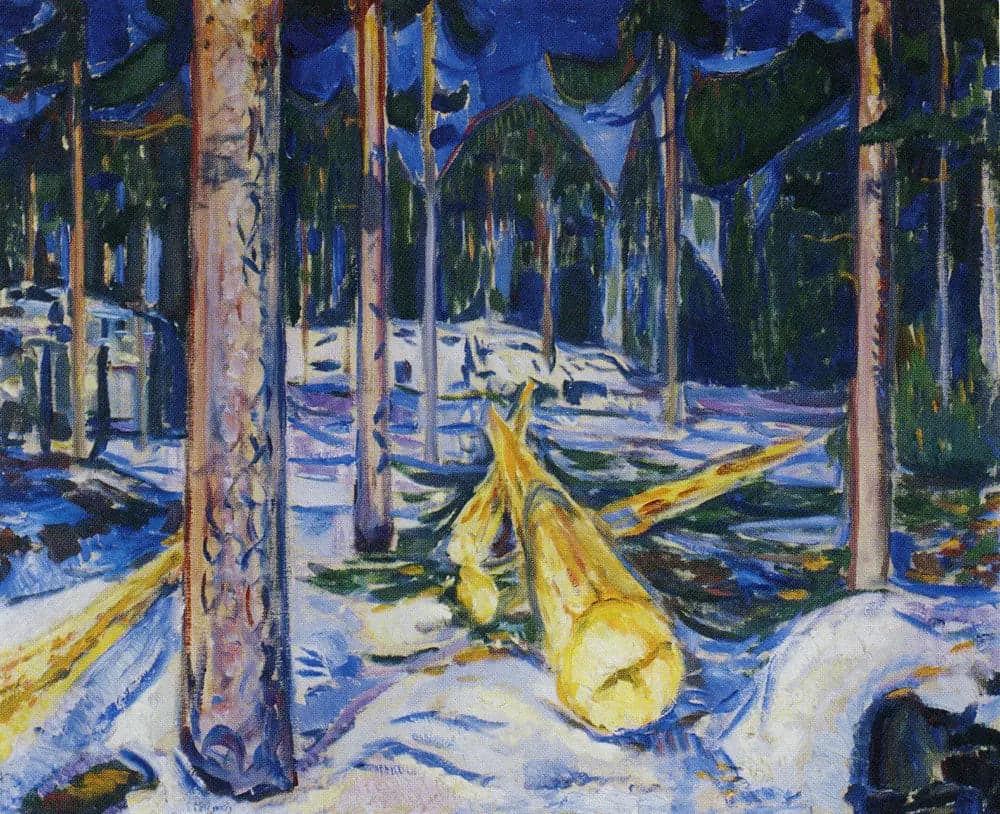
Killing Zone
- Original dimensions
- 127 x 107 cm
- Museum
- Not specified
- Year
- 1912
Scene depicted
In "Slaughter Zone," Munch creates a striking portrait of a slaughterhouse. The painting depicts thick carcasses, suspended, while conveying an atmosphere of despair and fatalism. The viewer is transported to the heart of a scene of life where death and sacrifice intertwine, revealing the dark backdrop of our daily reality.
Historical context
Created in 1912, in the city of Oslo, the painting "Slaughter Zone" is at the heart of the expressionist movement, where subjectivity and emotion often surpass realism . Munch, revolted by the human condition, offers a poignant glimpse into the pain and solitude of the time, reflecting a changing world. Currently, his painting is not found in any known museum, adding a mystery to this canvas emblematic.
Place in the artist's career
"Slaughter Zone" is a pivotal work, depicting Munch's maturity. It lies between "The Scream," his iconic painting of human suffering, and "The Madonna," where love intertwines with desire and pain. This painting shows his technical evolution, where the influence of expressionism grows.
Anecdote
“Life is a slaughter zone, where pain and beauty coexist,” Munch said, contemplating his creation. Inspired one spring morning by the cries of animals from the slaughterhouses, this moment revealed a raw truth about existence to the artist, a scene he immortalized in this composition , imbued with a heart-wrenching emotional force.