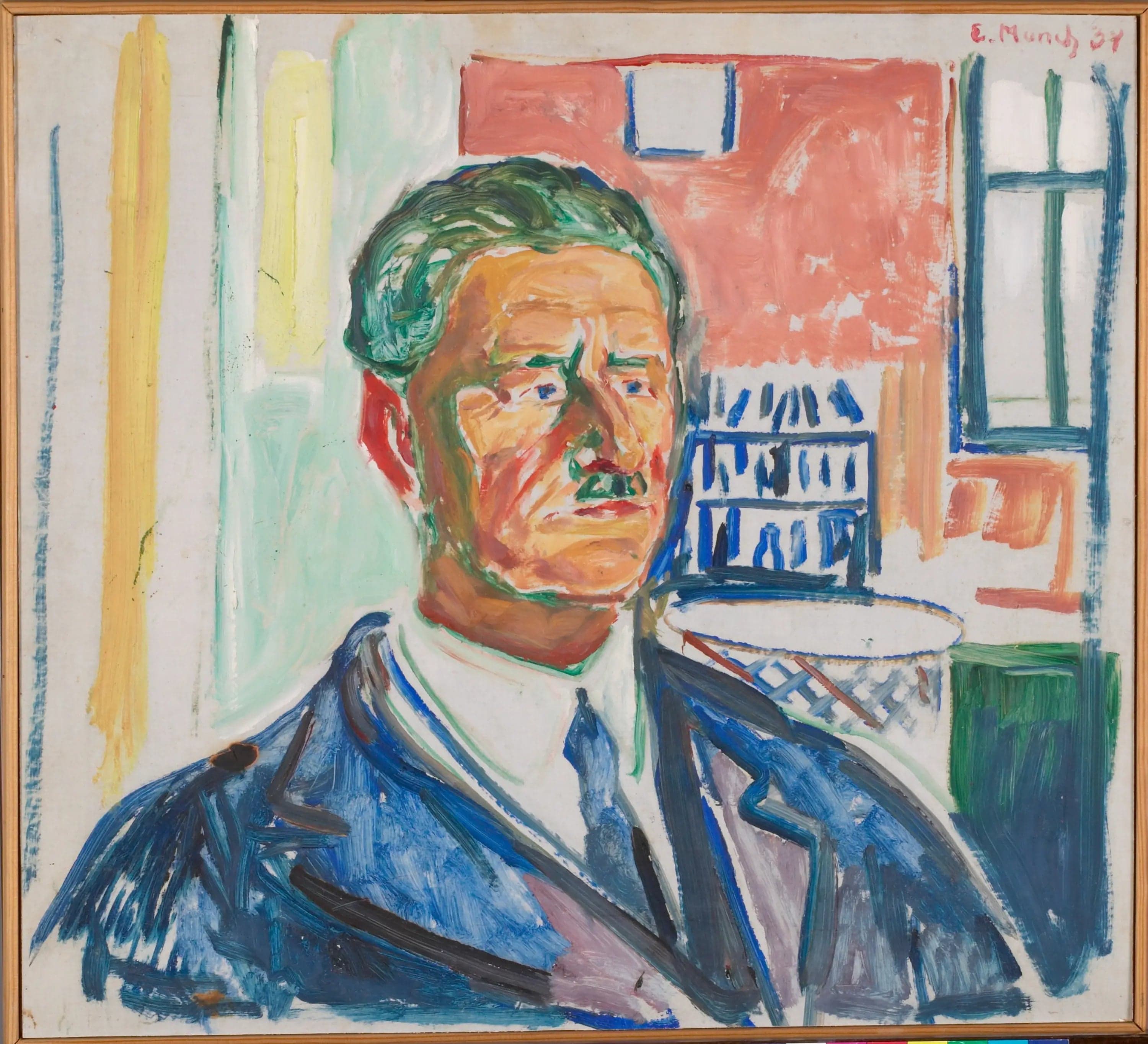
Karl Wefring
- Original dimensions
- 62.5 x 56.5 cm
- Museum
- Munch Museum
- Year
- 1934
Scene depicted
In the canvas "Karl Wefring," Munch immerses us in the meanders of the human soul through a captivating portrait. This painting invites contemplation not only of the depicted character but also of the emotional and psychological universe surrounding him. The features of the face, the expression of the eyes, everything here whispers of buried secrets and stories to tell, creating an almost palpable echo of the human psyche.
Historical context
The painting "Karl Wefring" was created in 1934, a pivotal moment in the work of Edvard Munch , a prolific Norwegian artist emblematic of symbolism and expressionism . In the heart of Oslo, at the Munch Museum, this canvas stands as a fusion of light and emotion, revealing the deeply subjective soul of its creator.
Place in the artist's career
This canvas occupies a central place in the career of Edvard Munch , marked by his exploration of the psyche and its torments. At the crossroads of his major works such as "The Scream" and "The Madonna," "Karl Wefring" denotes a technical and emotional maturity, where his style frees itself to capture unprecedented nuances of solitude and introspection.
Anecdote
“People do not see the soul of a face; they only look at the surface.” Munch was able to capture, in this masterpiece , the very essence of human melancholy. It is a fresh and misty spring morning when he crossed paths with a lost gaze that awakened in him the inspiration for this pictorial work, a fusion of fragility and strength.
Major exhibitions
Edvard Munch : portraits