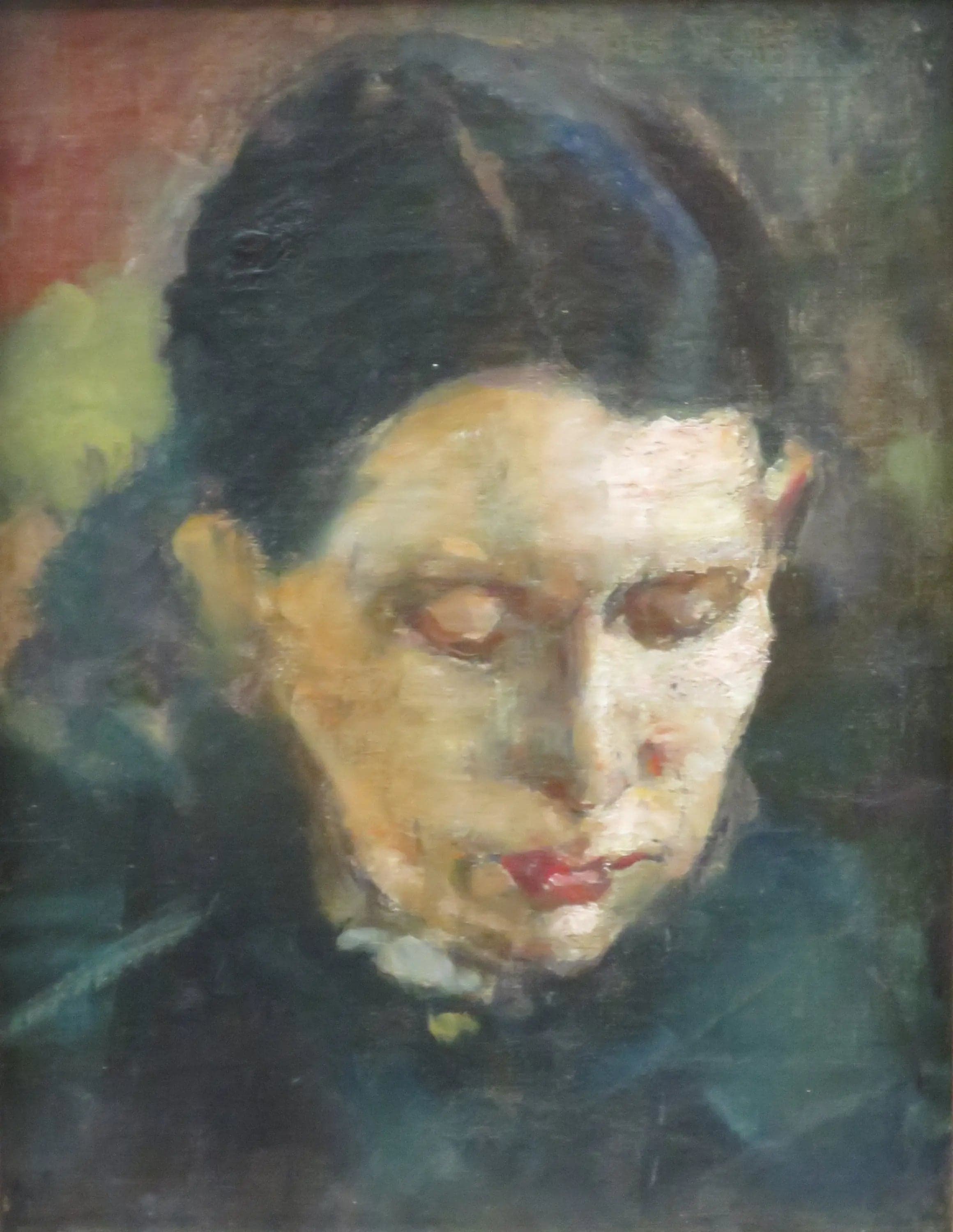
Karen Bjølstad
- Original dimensions
- 16 x 21 cm
- Museum
- Not specified
- Year
- 1882
Scene depicted
The painting “Karen Bjølstad” immerses us in the intimate world of a young woman, evoking both beauty and melancholy. The painting captures a suspended moment, where time seems to stand still. The thoughtful gaze of Karen Bjølstad evokes buried memories, while the stylized background, typical of Munch's style, offers a vibrant contrast that enhances the emotional intensity of the portrait. The depth of these colors reinforces the introspective nature of the scene, leaving the viewer to reflect on solitude and fleeting beauty.
Historical context
Written in Oslo, Norway, at the heart of the expressionist movement, the painting Karen Bjølstad embodies the very essence of an era marked by a quest for inner truth and raw emotion. This painting was created at a time when the artistic world was constantly reinventing itself, oscillating between tradition and modernity, revealing the tumult of the human soul. It is a delicate composition, whose dimensions (16 x 21 cm) invite a rare closeness to the work.
Place in the artist's career
“Karen Bjølstad” is positioned at the beginning of Edvard Munch's career, marking a decisive turning point in his artistic development. In the lineage of paintings such as “The Scream” and “The Young Ladies of the Night,” there is a similarity in the expression of deep human emotions. These works testify to his stylistic evolution, moving from a concern for form to a bolder exploration of emotion and human psychology.
Anecdote
“The painting is a cry of the soul,” Munch is said to have remarked when discussing the genesis of his masterpiece . The inspiration for this canvas emerged one spring morning in Oslo, when he was struck by the soothing glow of a golden light caressing the faces of passersby. This fleeting moment, shared with nature, became the catalyst for the emotion felt through the finesse of Karen Bjølstad's features.