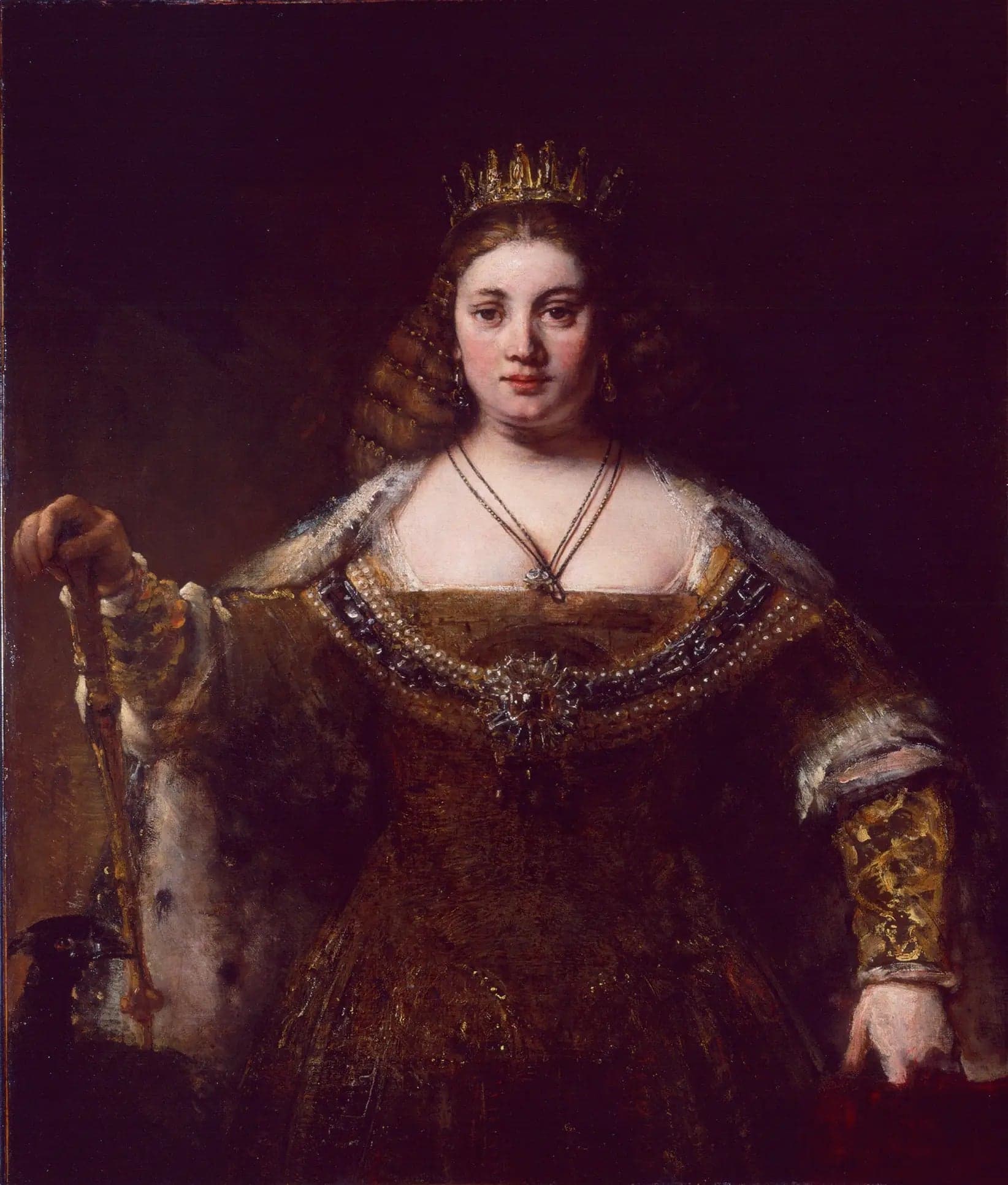
Juno
- Original dimensions
- 123.8 x 127 cm
- Museum
- Hammer Museum
- Year
- 1663
Scene depicted
In his composition, Rembrandt depicts Junon, majestic and protective, surrounded by symbolic elements. The canvas expresses the power, protection, and ascendancy of the goddess over her environment. The meticulous details of costumes, faces, and gestures reveal a rich story where mythology and human reality intertwine, inviting the viewer to dive into the utopia of a bygone era.
Historical context
Created in 1663 in Amsterdam, the painting "Junon" is part of the Baroque movement, a time when the artist Rembrandt explores themes of light and emotion. This iconic canvas , displayed at the Hammer Museum , remains a centerpiece of Dutch art. During this period, the city, in full artistic effervescence, becomes a true crossroads of creation, highlighting the powerful legacy of pictorial art.
Place in the artist's career
This painting stands as a milestone in Rembrandt's career, illustrating his period of maturity. These years parallel other famous works such as "The Night Watch" and "The Prodigal Son," where his technique experiences exceptional development. The psychological depth and manipulation of light reach their peak here, testifying to the painter's masterful evolution.
Anecdote
"Light is the soul of a painting , it dances in the shadow to reveal hidden beauty," said Rembrandt . Inspired during a twilight morning, he managed to capture the divine essence of Junon, the Roman goddess, blending mythology and reality. This moment of grace allowed him to give his masterpiece a unique evocative power that continues to resonate through the centuries.
Major exhibitions
Late Rembrandt