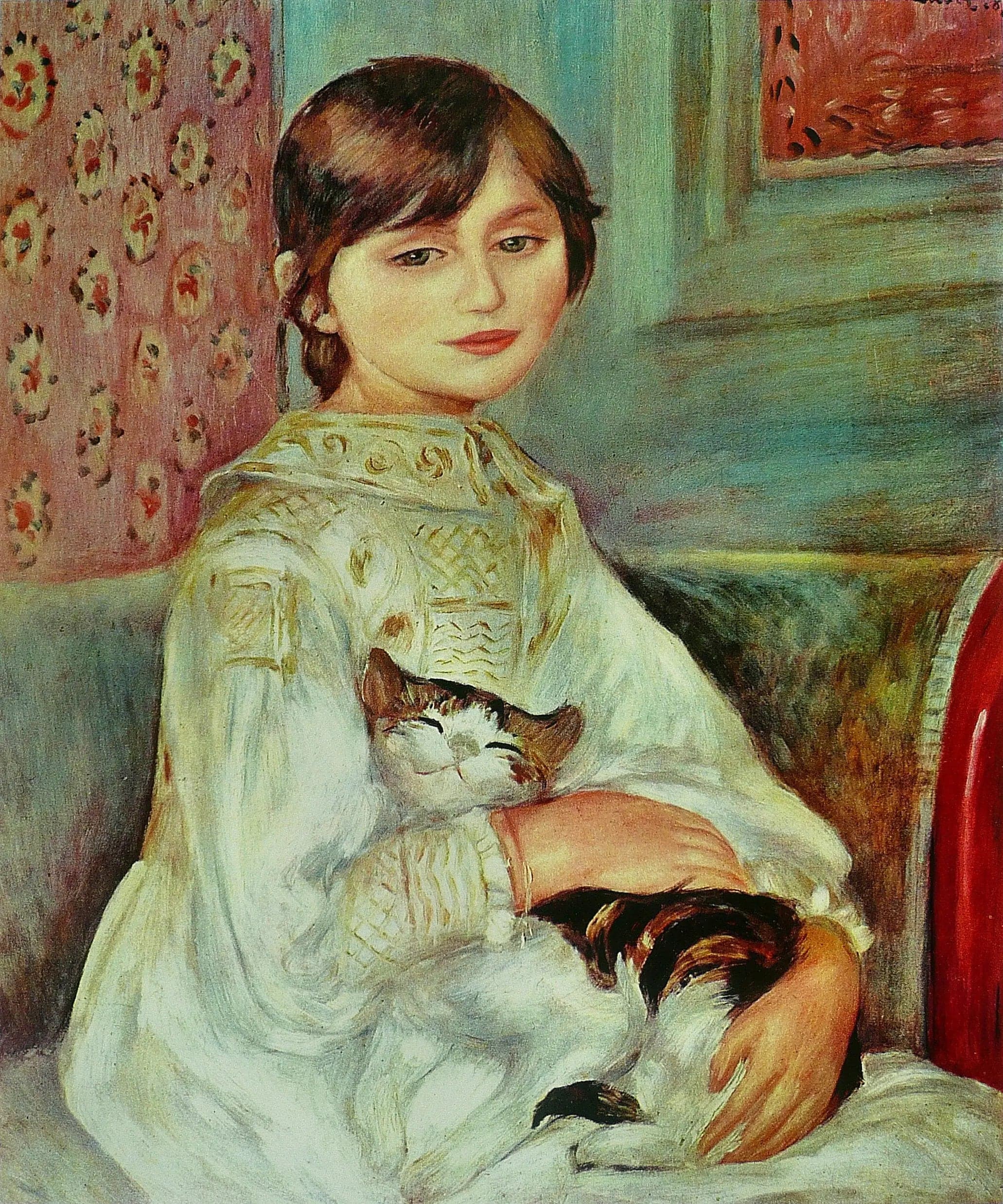
Julie Manet - Pierre
- Original dimensions
- 53.5 x 65.5 cm
- Museum
- Orsay Museum
- Year
- 1887
Scene depicted
This painting delicately highlights Julie Manet, the daughter of the famous poet and art critic, Édouard Manet. Captured with striking tenderness, she embodies youth and innocence, while a natural setting infuses the atmosphere with a fairy-like lightness. The pictorial work unfolds, revealing facets of a bourgeois life imbued with beauty and sweetness, magnified by a radiant light.
Historical context
Created in 1887, in the heart of Paris, this canvas is part of the Impressionist movement, a true artistic flourishing of the 19th century. The work unfolds against the backdrop of a Paris vibrant with energy and emotions, reflecting a society in transformation. Currently, this painting resides at the Orsay Museum , a sanctuary of art where a fusion between past and present occurs, both in its dimension and its unique impact.
Place in the artist's career
The painting of Julie Manet marks a turning point in Renoir's career, standing as a stylistic peak at the crossroads of his emerging Impressionism . In parallel, one can mention paintings such as “Luncheon of the Boating Party” and “Dance in the City,” which illustrate a continuous evolution towards mastery of light and color play, making each work an essential chapter in Renoir's artistic history.
Anecdote
“I have never understood human nuances without the colors of my friends.” This quote from Renoir resonates particularly in the genesis of the masterpiece , conceived one spring morning, cradled by the whisper of leaves and the sweet scent of lilacs. The painter's vivid inspiration, stemming from a fleeting encounter, powerfully illuminates the painting and makes the complexity of feelings tangible.