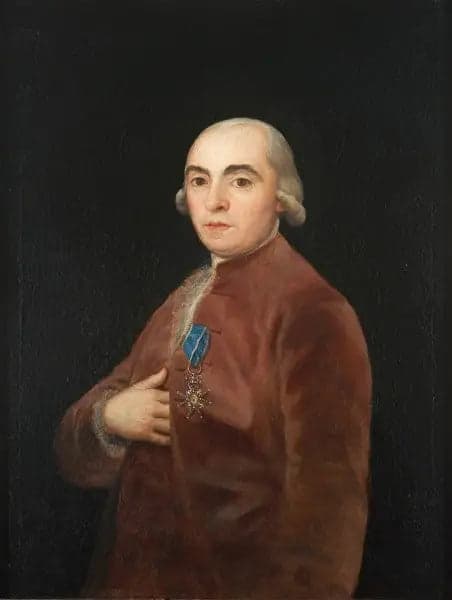
Juan Martín de Goicoechea and Galarza
- Original dimensions
- 65 x 84 cm
- Museum
- Museum of Zaragoza
- Year
- 1790
Scene depicted
This canvas is the portrait of a man of impressive stature, dressed in traditional attire. Goya manages to immortalize an essence, a strength, while immersing the viewer in a reflection on power and dignity. A composition that resonates with the echo of a people's struggles.
Historical context
This painting , created in 1790, is part of the artistic effervescence of a Spain in full transformation. Francisco de Goya , under the influence of the romantic movement, brilliantly captures the spirit of his time. The canvas , now exhibited at the Museum of Zaragoza, bears witness to a rich cultural and historical heritage, rooted in the Spanish landscape.
Place in the artist's career
This masterpiece is situated at a crucial turning point in Goya's career, reflecting his artistic evolution. In parallel, other canvases such as 'The 3rd of May 1808' and 'The Disasters of War' reveal the intensity of his social commitment, while cultivating an increasingly refined technique.
Anecdote
Goya once stated: "Every face I encounter is an unfinished canvas, waiting for the light of day." It is this inspiration he found during a morning walk in search of human nuances. The palpable emotion of this painting reflects these intersections of fate and stories.