Joyous Company
- Original dimensions
- 83.5 x 59 cm
- Museum
- Munch Museum
- Year
- 1903
Scene depicted
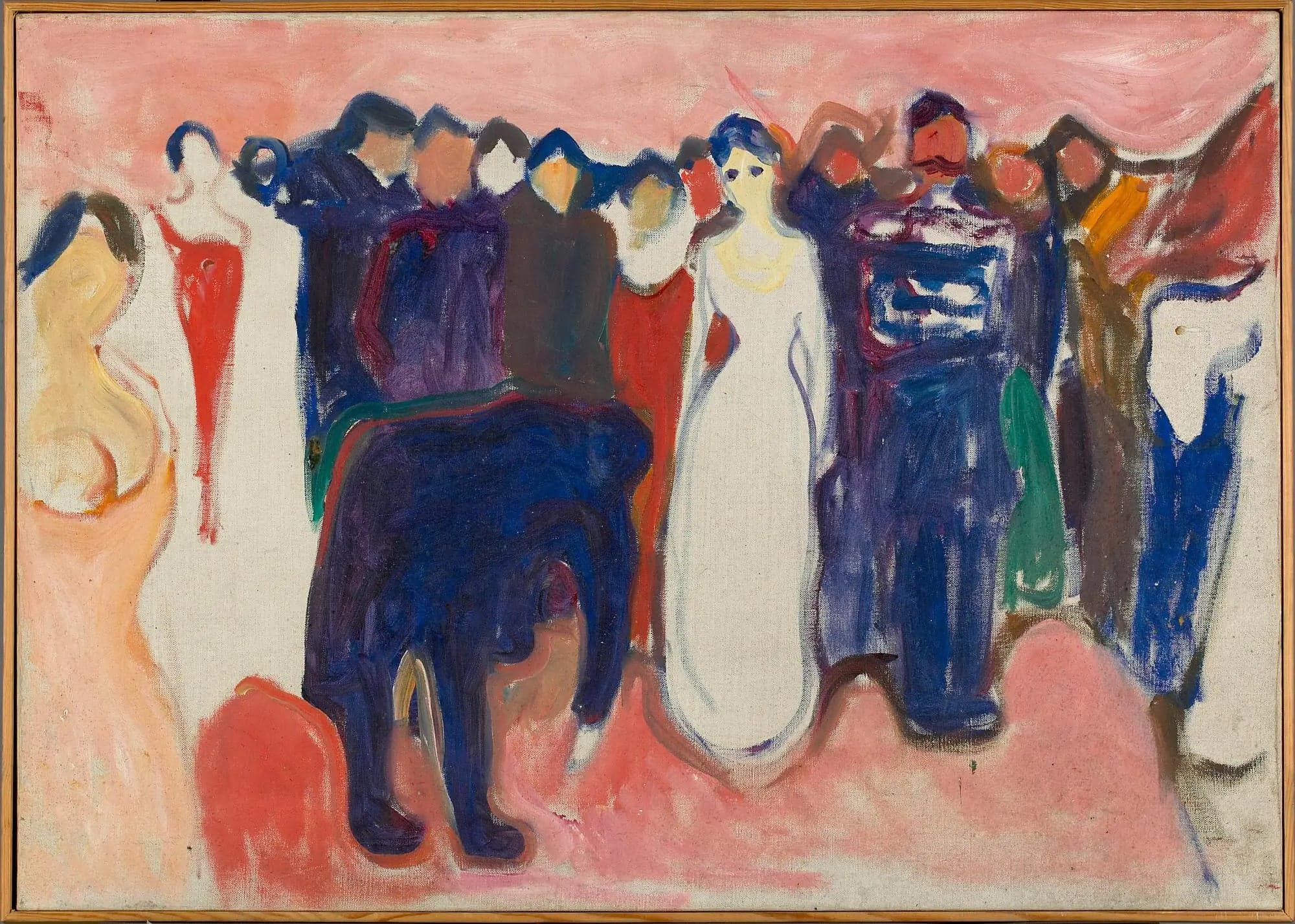
This masterpiece evokes a convivial scene where friends laugh and gather around a table, their faces illuminated by the brilliance of the moment. Munch succeeds in conveying a warm atmosphere through his unique use of colors and shapes, transforming a moment of simple reunions into a celebration of friendship.
Historical context
Created in the early 20th century, in Oslo, Norway, the iconic painting Joyeuse Compagnie is part of the expressionist movement that was emerging strongly. Edvard Munch , by capturing this essence, depicts a vibrant and comforting conviviality, directly inspired by the atmospheres of this period. The painting is currently exhibited at the Munch Museum, a sanctuary dedicated to his work, where it attracts the attention of art lovers.
Place in the artist's career
Joyeuse Compagnie represents an important milestone in Munch's career, symbolizing a period of great vitality and personal exploration. In parallel, works like The Scream and The Madonna illustrate his technical and emotional evolution, where the expression of feelings becomes increasingly pronounced.
Anecdote
“Friendship is a light that never goes out,” Munch might have said while contemplating his friends gathered around a drink. The precise moment of creation of this painting ? A cool spring morning, where the scent of flowers emerged from the gardens of Oslo, infusing a fleeting joy into the artist and leading him to capture this feeling in Joyeuse Compagnie .