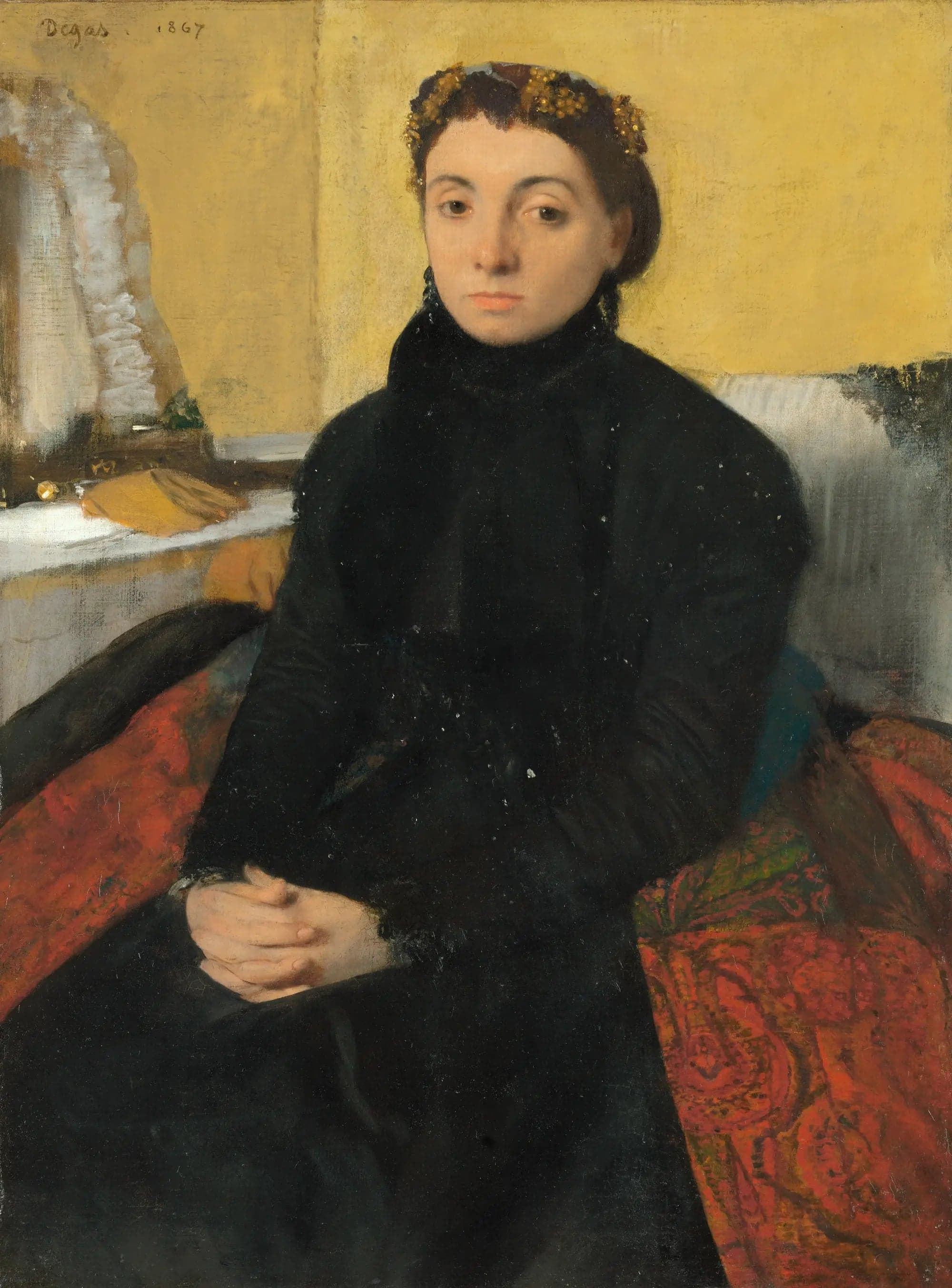
Joséphine Gaujelin
- Original dimensions
- 46 x 61 cm
- Museum
- Isabella Stewart Gardner Museum
- Year
- 1867
Scene depicted
"Joséphine Gaujelin" is more than just a simple canvas , it is an ode to the frozen moments of everyday life. Degas, through his brush, offers an intimate and delicate vision of feminine sensitivity. The artist captures a peaceful atmosphere, where each detail seems to whisper a story unique to the scene, conveying an emotion that still breathes today.
Historical context
Created in 1867, during a vibrant artistic period in Paris, the painting "Joséphine Gaujelin" by Edgar Degas is part of the Impressionist movement, where innovation meets tradition. This canvas , currently exhibited at the Isabella Stewart Gardner Museum, reflects an era where light and movement were passionately explored. With its dimensions of 46 x 61 cm, this work invites one to immerse in the artistic universe of its time.
Place in the artist's career
This canvas represents a pivotal moment in the career of Edgar Degas , capturing his distinctive style at the crossroads of Impressionism and Realism . Following works such as "The Dancer at Rest" and "The Singers at the Café-Concert", "Joséphine Gaujelin" shows a remarkable stylistic evolution, oscillating between movement and serenity, testifying to an unprecedented technical mastery.
Anecdote
“Every portrait is a silent conversation between the viewer and the subject.” These words resonate strongly when observing the painting that captures Joséphine Gaujelin. Inspired by a gentle morning light, Degas was able to cross the gaze of an ephemeral model in a Paris alley, capturing the soul and beauty of this encounter in his masterpiece .