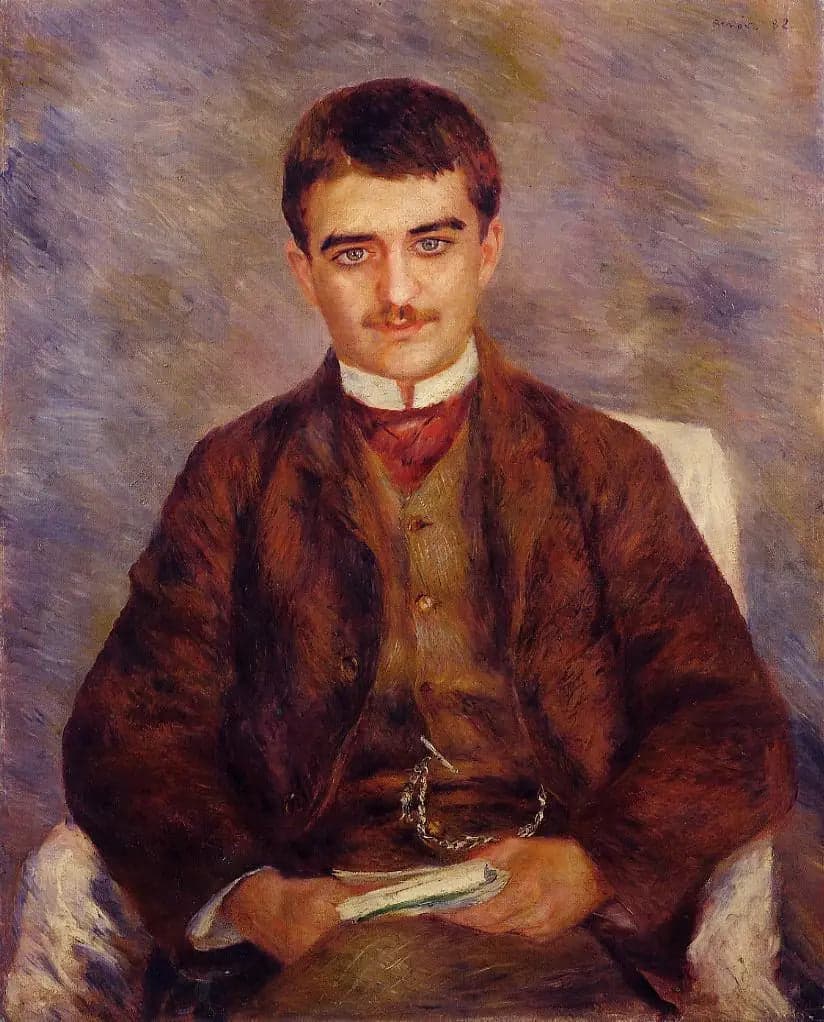
Joseph Durand-Ruel - Pierre
- Original dimensions
- 65 x 81 cm
- Museum
- Not specified
- Year
- 1882
Scene depicted
"Joseph Durand-Ruel" is much more than a simple canvas ; it is an ode to the passion for the arts. This pictorial work captures the essence of the art dealer who believed in Renoir, carrying within it the vitality of colors and forms. Through this canvas , we dive into the universe of impressionists , where light plays a crucial role in narrating the scene.
Historical context
Created in 1882, the painting "Joseph Durand-Ruel" is the result of an era marked by creativity and artistic revolt, characteristic of Paris. This canvas , emblematic of the impressionist movement, reflects a new vision of light and color, thus shaping the history of art. Although the current location of the canvas is not specified, its radiance continues to enchant art lovers around the world.
Place in the artist's career
Situated at a turning point in Renoir's career, "Joseph Durand-Ruel" evokes a moment of maturity and recognition. This canvas comfortably stands alongside other masterpieces such as "Luncheon of the Boating Party" and "La Grenouillère," representing a technical evolution towards mastery of light and emotional play.
Anecdote
Auguste Renoir once said: "In every painting, I seek to capture a moment of happiness." It was undoubtedly on a spring morning, under the gentle revitalizing light, that he saw the infinite possibilities of this masterpiece . This canvas vibrant with happiness and warmth echoes his desire to capture the ephemeral beauty of the present.
Major exhibitions
Paul Durand-Ruel, the bet of impressionism