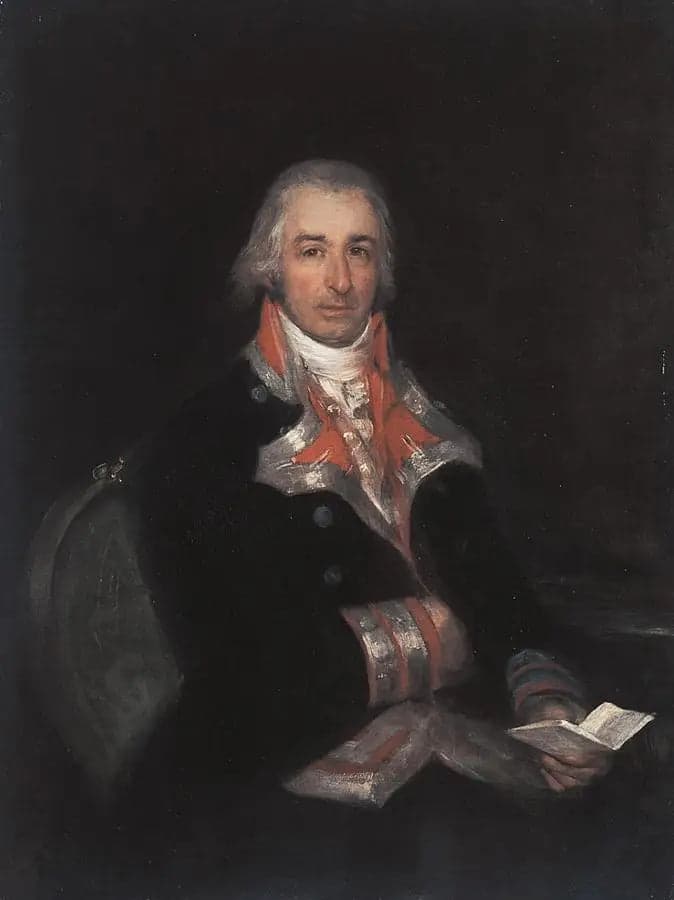
José Queraltó
- Original dimensions
- 76.1 x 101.5 cm
- Museum
- Neue Pinakothek, room 1
- Year
- 1802
Scene depicted
This pictorial work depicts the remarkable portrait of José Queraltó, awakening in us a reflection on the status of the artist in the face of the turmoil of his time. The scene is imbued with a certain melancholy and a deep sense of human dignity, typical of Goya's style.
Historical context
Created in 1802 in Madrid, the painting "José Queraltó" is at the heart of the romantic movement, deeply rooted in a time of sociopolitical upheaval. Goya, a pioneer of modern art, captured the depth of his time through this canvas emblematic, currently exhibited at the Neue Pinakothek in Germany.
Place in the artist's career
Positioned at a turning point in his career, "José Queraltó" is part of a series of significant achievements that illustrate Goya's technical mastery. Like his other paintings such as "La Maja vêtue" or "The Executions of May 3rd", this painting offers a glimpse into his artistic evolution towards a more introspective sensitivity.
Anecdote
Goya reportedly stated: “Light and shadow are the emotions of the painting.” It was at the turn of a busy street, one spring morning, that he encountered the face that inspired him for this masterpiece . Evoking a fleeting encounter, the painting reflects the ephemeral beauty of humanity.