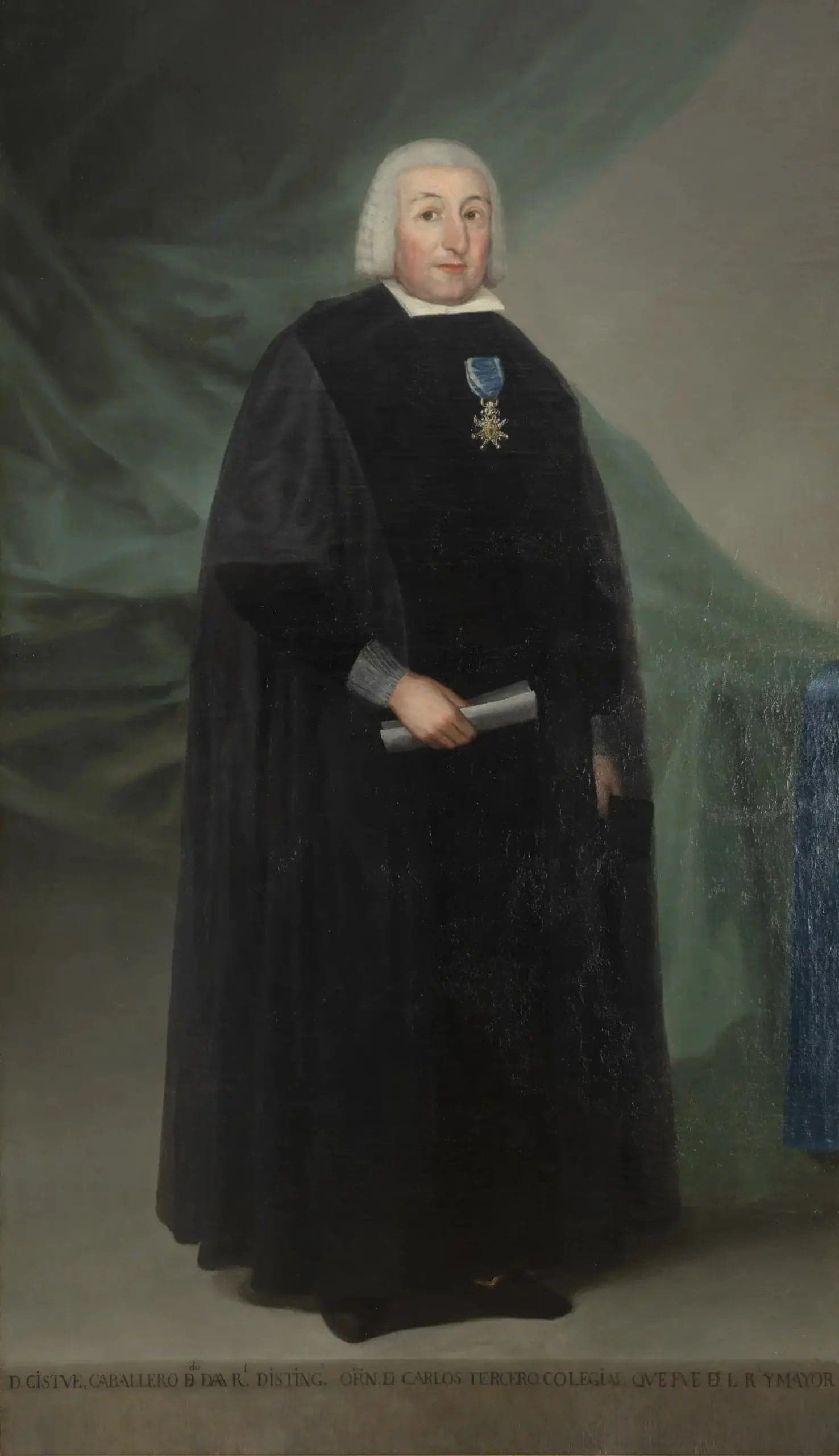
José de Cistué y Coll
- Original dimensions
- 140 x 210 cm
- Museum
- Museum of Huesca
- Year
- 1788
Scene depicted
The scene captured in this canvas immerses us in the intimacy of the characters. Goya, with remarkable virtuosity, invites us to discover the social dynamics and human interactions that unveil deep narratives, revealing the complexity of society in his time. Every detail of this painting is an invitation to reflect and feel.
Historical context
Created in 1788, this painting is set against a rich backdrop of cultural changes in Spain. In the midst of the Enlightenment, Goya draws his inspiration from Zaragoza, a dynamic city symbolizing the intellectual and artistic rise of this era. Today, this canvas is carefully preserved at the Museum of Huesca, where it continues to move visitors with its impressive dimensions.
Place in the artist's career
This work is a significant milestone in Goya's career, illustrating his transition from a bold portraitist to a master of visual storytelling. This painting establishes a fascinating connection with other major works such as “Las Meninas” and “The Family of Charles IV,” where the play of light and composition testifies to an impressive stylistic and emotional evolution.
Anecdote
“Art is the reflection of the human soul, a mirror of fears and dreams.” Thus speaks Goya, whose inspiration for this masterpiece may emerge from a spring morning, bathed in soft light, when the artist encounters a face imbued with wisdom and melancholy. This painting tells a vibrant story, at the crossroads of emotions and reality.