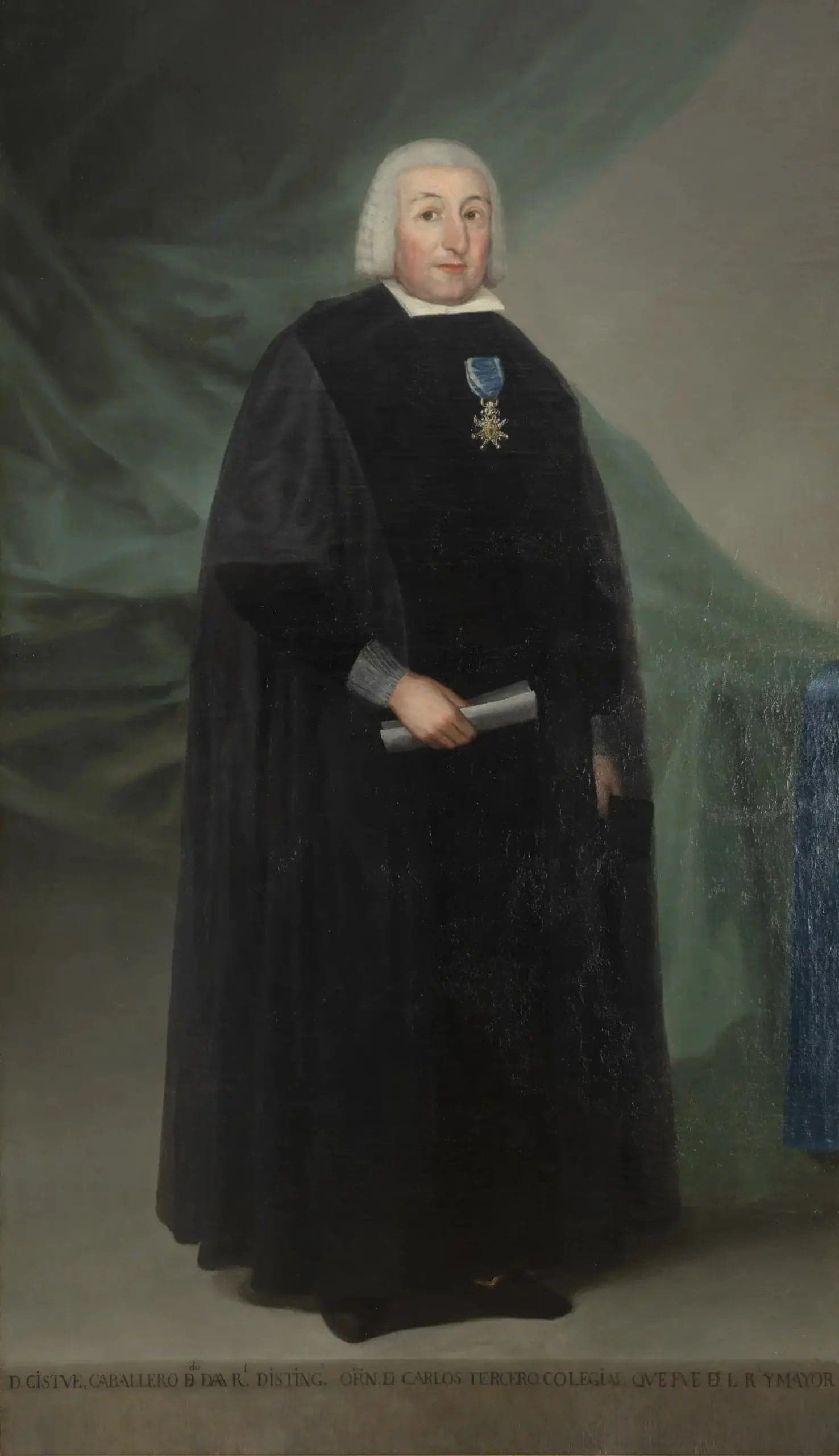
José de Cistué y Coll
- Original dimensions
- 82.5 x 114 cm
- Museum
- Not specified
- Year
- 1788
Scene depicted
This canvas reveals the intimacy of a suspended moment, where the portrait of José de Cistué y Coll unfolds with unprecedented delicacy. The character, frozen with grace, embodies the elegance of a bygone era. Through this masterpiece, Goya captures the very essence of his model, projecting a vibrant and human personality beyond time.
Historical context
Created in 1788, the painting "José de Cistué y Coll" is set in the rich and tumultuous context of pre-Napoleonic Spain, in Madrid. This pictorial work embodies the dynamics of the romantic movement, where human emotions intertwine with a subtle use of light. Although the museum where this canvas resides is not specified, it remains a precious testimony to the artistic evolution during this transitional period.
Place in the artist's career
“José de Cistué y Coll” represents a pivotal moment in Goya's career, blending promise and stylistic evolution. Running parallel to famous works such as “La Maja Desnuda” and “The Executions of May 3, 1808,” this canvas testifies to his exploration of human emotions, affirming his unique voice in the artistic landscape of his time.
Anecdote
“The beauty of a moment, when captured by art, becomes eternal.” These words resonate in Goya's mind, one spring morning, walking through the streets of Madrid. It is there that he crosses the captivating gaze of José de Cistué, bringing this painting to life.