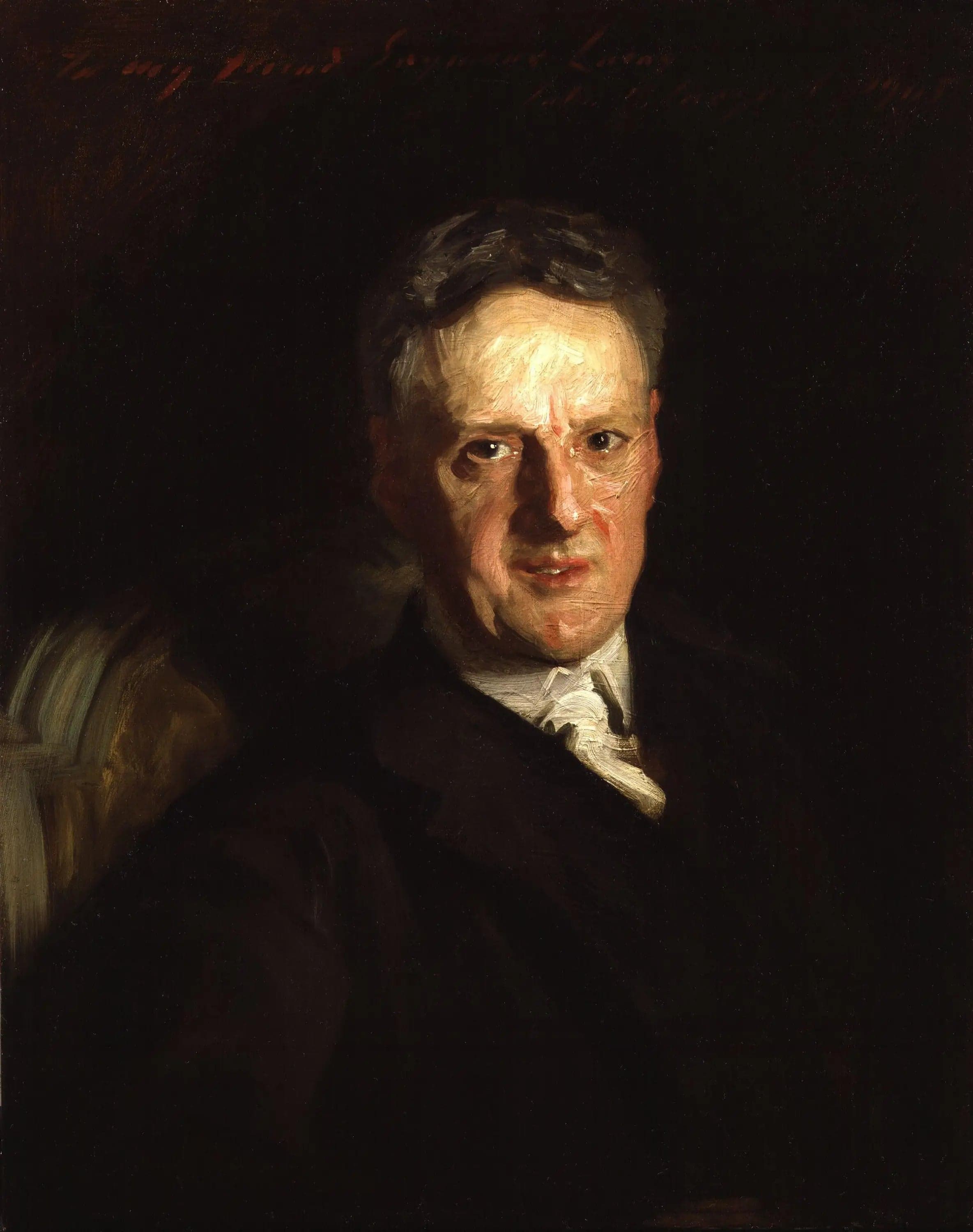
John Seymour Lucas
- Original dimensions
- 54.9 x 69.8 cm
- Museum
- National Portrait Gallery
- Year
- 1905
Scene depicted
John Seymour Lucas highlights a poignant representation, witnessing a moment of life rich in emotions. Through a subtle play of light and shadow, the composition draws the viewer into this inner universe, making every nuance of emotion palpable, like an echo of the most intimate thoughts.
Historical context
It is in the vibrant city of London, at the heart of a lively era where realistic art bursts forth in all its splendor, that this painting was born. In 1905, as the realism movement reached its peak, **John Seymour Lucas** is a pictorial work that, through its fascinating composition, invites us to explore a refined cultural heritage. Currently exhibited at the National Portrait Gallery, this canvas is a sublime reaffirmation of the art of portraiture, embedded in a context of creativity and timeless beauty.
Place in the artist's career
This canvas represents a crucial step in the journey of John Singer Sargent , marking the evolution of his style from traditional portraits to creations imbued with modernity. Associated with other masterpieces such as “Carnation, Lily, Lily, Rose” and “Madame X,” **John Seymour Lucas** testifies to a technical and emotional mastery in full maturity.
Anecdote
“Every canvas is a message of emotions where the soul of the subject comes to life,” stated John Singer Sargent . This eloquent quote immerses us in the gentle atmosphere of a London spring morning, a magical moment when John Seymour Lucas was captured. Through each brushstroke, Sargent not only depicts a face but converses with the very essence of existence.