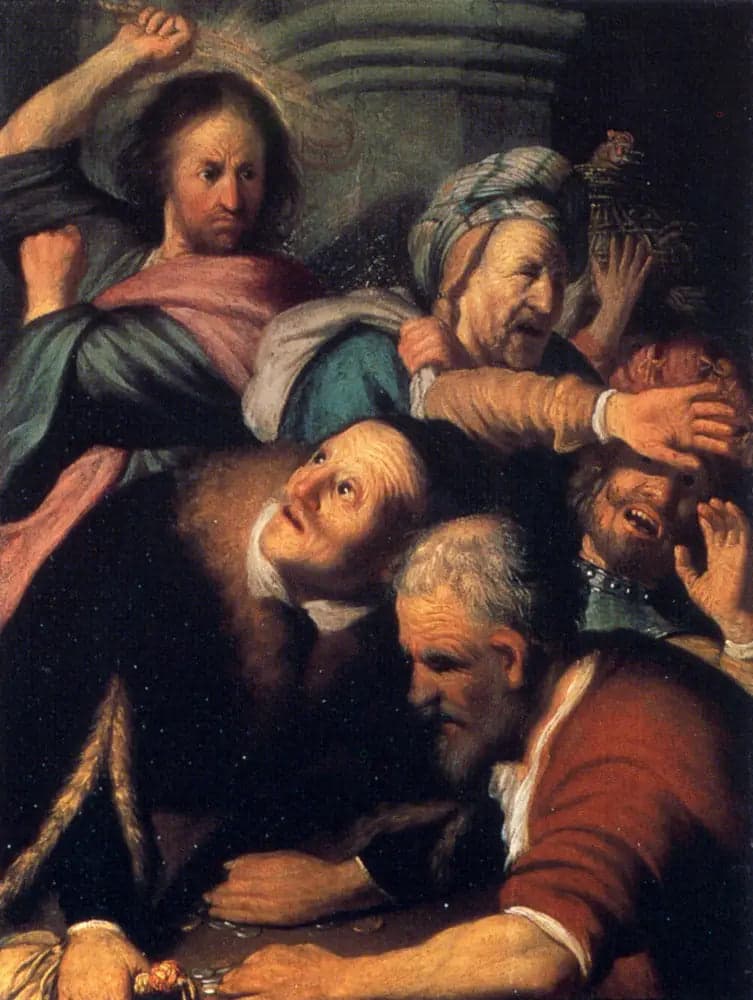
Jesus Christ Drives the Money Changers from the Temple
- Original dimensions
- 32 x 43.1 cm
- Museum
- Pushkin State Museum of Fine Arts
- Year
- 1626
Scene depicted
This painting illustrates a crucial moment from the Gospels, when Jesus, defying authority, overturns the tables of the money changers. The scene is charged with tension and determination, with figures blending in palpable agitation. Christ's determination pierces the canvas, creating an emotional shock, showcasing the struggle against corruption and materialism.
Historical context
This painting , created in 1626 in Amsterdam, is part of the Baroque movement, characterized by dramatic intensity and captivating light. At that time, Rembrandt , already recognized, captures the spiritual essence of a memorable biblical scene. Today, the painting is housed in the Pushkin State Museum of Fine Arts in Moscow, where it continues to amaze visitors.
Place in the artist's career
With Jésus-Christ chasse les changeurs du temple , Rembrandt asserts his very personal and unique style. He then begins a period of artistic maturity where each painting becomes an exploration, as evidenced by his later works such as “The Night Watch” or “The Anatomy Lesson of Dr. Tulp.” Each of these canvases reveals an increasingly significant emotional complexity.
Anecdote
“Light must always tell a story,” Rembrandt is said to have remarked while painting this iconic work . The story of its creation is said to have emerged one foggy morning, as the artist envisioned the outpouring of divine anger. In this context, Jésus-Christ chasse les changeurs du temple emerges as an emotional cry, vibrating with intense force.