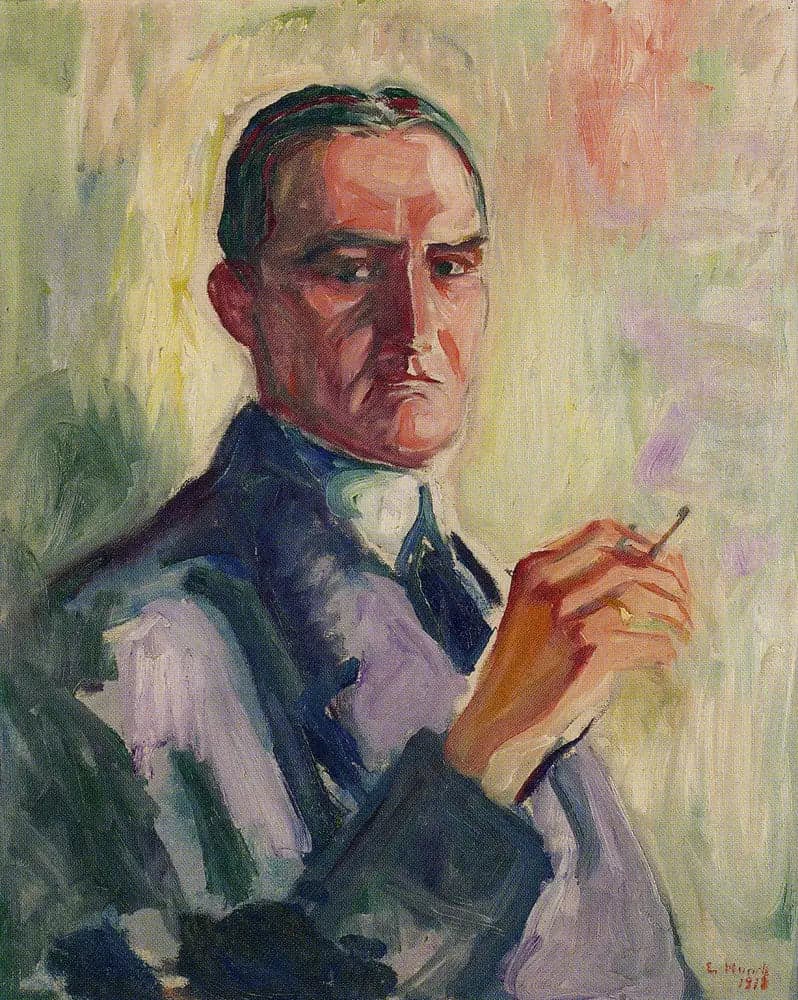
Jérôme Heyerdahl
- Original dimensions
- 110 x 200 cm
- Museum
- Munch Museum
- Year
- 1917
Scene depicted
This pictorial work, both melancholic and mysterious, highlights the emotional tensions that run through human relationships. Jérôme Heyerdahl stands at the center of a composition where gazes intersect, trapped in a moment of introspective reflection. The intensity of the expressions of the figures reveals a psychological depth and an existential questioning typical of Munch's works.
Historical context
Created in 1917 in Oslo, this painting boldly places its creator within the expressive movement that characterizes the previous years. In this tumultuous context, Edvard Munch , an iconic figure of symbolism , pays tribute to the duality of modern man through this canvas that evokes both fragility and strength. The painting , now exhibited at the Munch Museum, reveals the tormented soul of the artist, capturing a rare emotional depth through its impressive dimensions of 110 x 200 cm.
Place in the artist's career
Positioned between two great masterpieces of the artist, “The Scream” and “The Madonna,” this painting skillfully marries expressionism with a more introspective style. This canvas embodies a key period of maturity where Munch delicately explores the themes of solitude and anxiety, reflecting a humanity confronted with its own demons.
Anecdote
“Each canvas is a window into the inner world, a wall that only the eye can cross.” It was on a misty morning by the fjord, surrounded by the silence of Norwegian nature, that Munch encountered a face that deeply inspired him. This fleeting meeting nourished the evocative power of the painting , placing Jérôme Heyerdahl in a quest for authenticity and emotion.
Major exhibitions
Edvard Munch : portretter