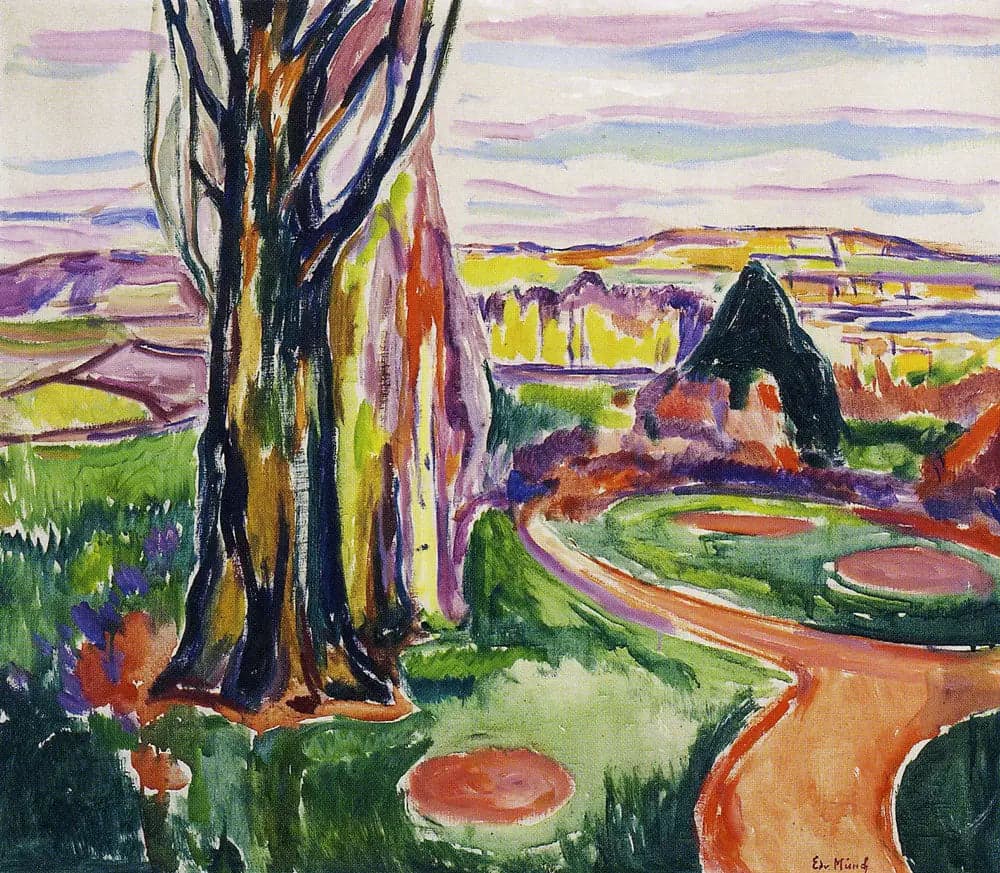
Jeløya
- Original dimensions
- 80.5 x 71 cm
- Museum
- Not specified
- Year
- 1913
Scene depicted
Munch's painting “Jeløya” depicts a coastal landscape, where silver waters caress rocky shores, enveloped in a light breeze. The pictorial work evokes feelings of introspection and tranquility, highlighting the fragile harmony between man and nature. Each element, from the texture of the rocks to the movement of the water, embodies the duality of peace and turmoil that inhabit the human mind.
Historical context
Created in 1913, Munch's painting traces a significant period of modernism, an artistic movement that emerged in Europe in the early 20th century. The canvas evokes the wild beauty of Jeløya, a small island located in Norway, reflecting a landscape imbued with class and mysteries. At that time, Munch, already recognized, explored themes of anxiety and nature, marking a turning point in the European artistic legacy. Today, this canvas is carefully preserved in private collections, its impact remaining indelible in the art world.
Place in the artist's career
“Jeløya” fits into a key period of Munch's career, merging his earlier emotional explorations with increased technical mastery. Compared to “The Scream” and “The Madonna,” this canvas illustrates a stylistic transition towards a more poetic abstraction, marking a notable evolution. Munch, more than ever, reveals himself as a pioneer of symbolism , armed with his unique vision.
Anecdote
“The beauty of nature is a melody that resonates deep within our being,” Munch might have declared, inspired by the Norwegian landscapes on an April morning. Strolling on the island of Jeløya, he was seized by the delicate moment when light plays on the waves. This fleeting moment seeped into the soul of his painting , capturing forever this atmosphere of contemplation.