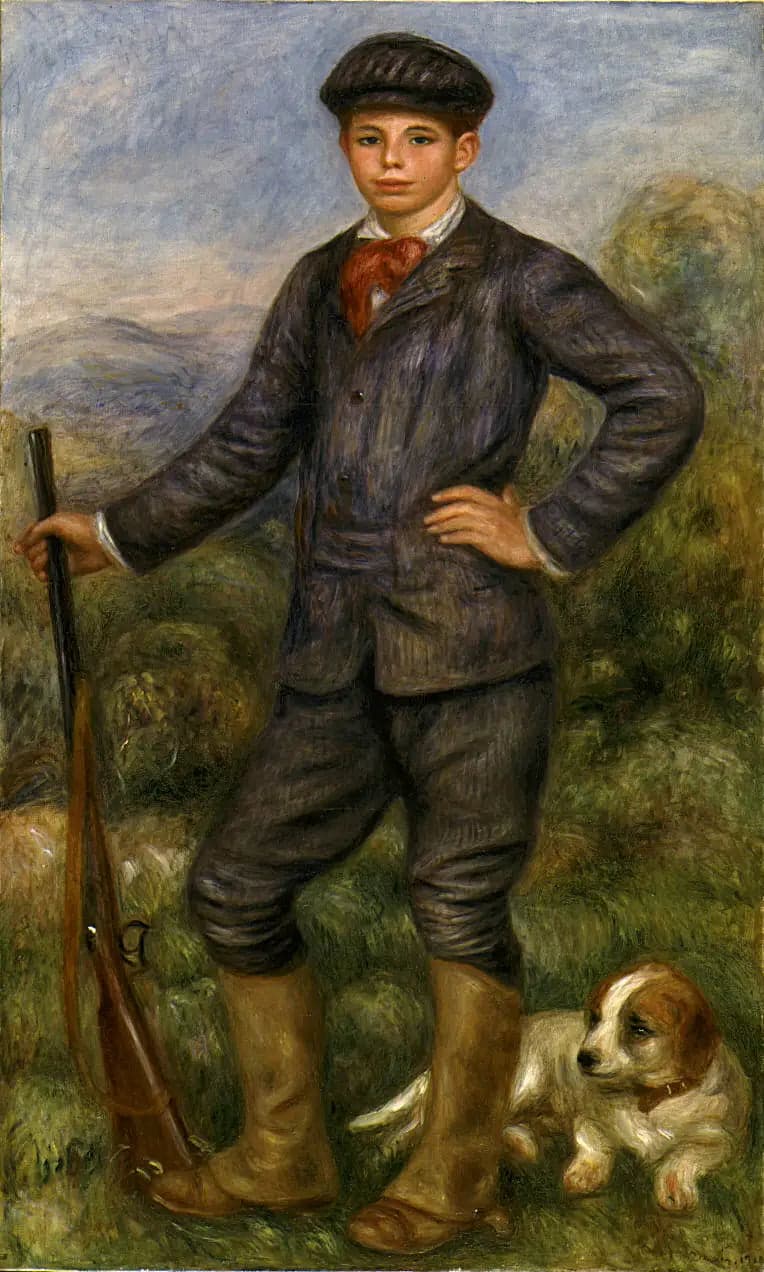
Jean Renoir as a Hunter - Pierre
- Original dimensions
- 88.9 x 172.72 cm
- Museum
- Los Angeles County Museum of Art
- Year
- 1910
Scene depicted
This painting reveals an intimate scene of the artist's son, Jean, in the midst of hunting, capturing the spirit of escape and communion with nature. The vibrant colors and delicate shades create a moment of serenity where the viewer is transported into the enchanting setting that represents the richness of French landscapes.
Historical context
This painting emblematic, created in 1910, finds its roots within the Impressionist movement, known for its explorations of light and color. Located in the vibrant city of Los Angeles, this major work summarizes an era when art began to capture moments of emotion in a more subtle way, embodying the very essence of modern art. The canvas , of an impressive size, offers a depth and richness that transcend the simple visual narrative.
Place in the artist's career
In the career of Auguste Renoir , Jean Renoir en chasseur represents a period of maturation where his style reached remarkable fluidity. In parallel, works like Le Déjeuner des canotiers and La Grenouillère testify to his evolution, revealing a sense of harmony and joy of living. This canvas, far from being a simple portrait, is part of a quest for artistic freedom and celebration of nature.
Anecdote
“Art must be a cry of joy,” Renoir might have said, inspired one peaceful morning when the sunlight pierced through the leaves of the trees. It is in this atmosphere filled with promises that Jean Renoir en chasseur was born, a masterpiece that encapsulates the melody of nature, where each brushstroke evokes the rustling of a light breeze and the sweet scent of freshly cut grass.