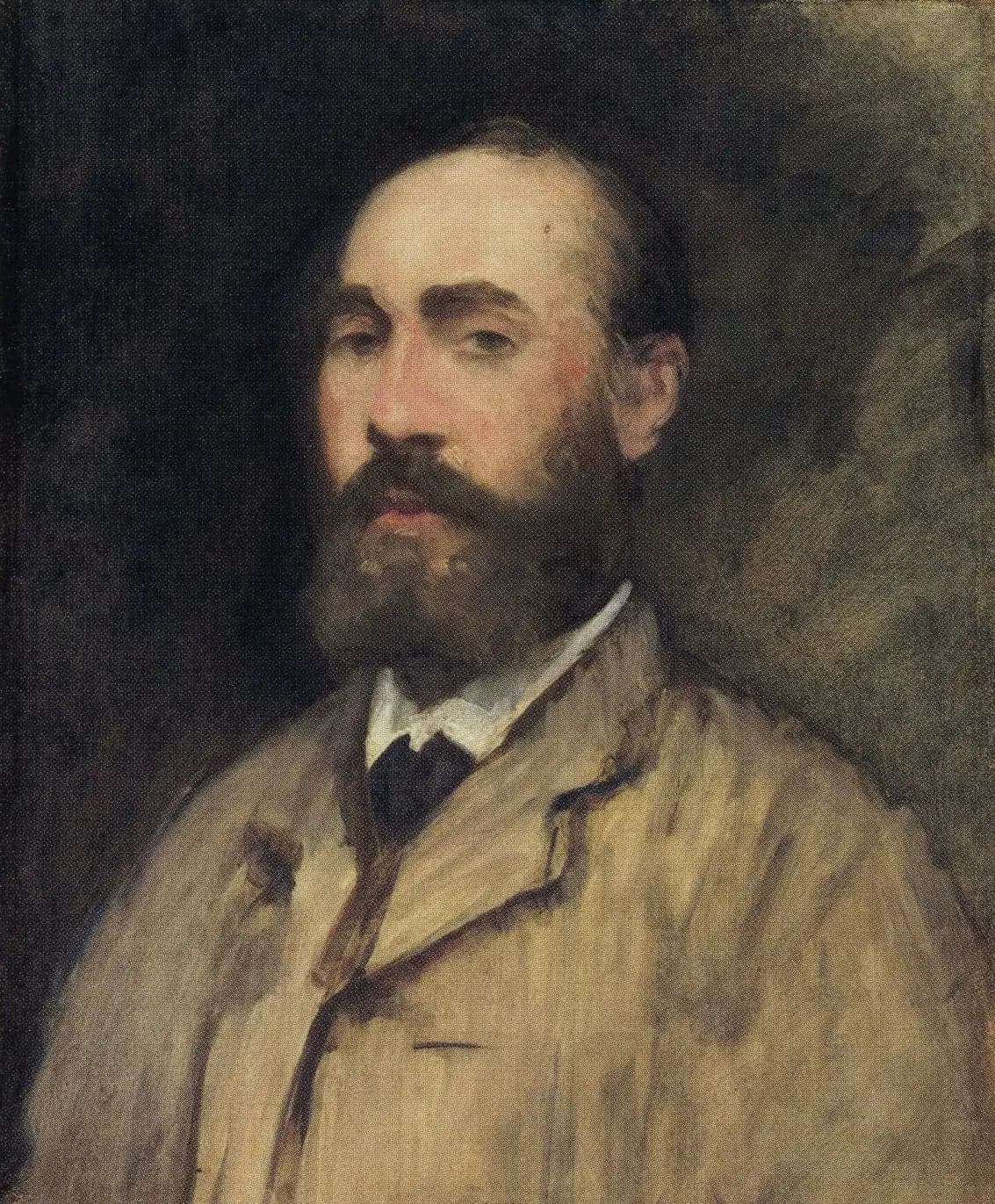
Jean-Baptiste Faure
- Original dimensions
- 49.5 x 59.1 cm
- Museum
- Metropolitan Museum of Art
- Year
- 1882
Scene depicted
This painting by Édouard Manet depicts with striking precision the famous baritone Jean-Baptiste Faure, captured in a moment of intimacy and elegance. The meticulous details, from his features marked by expressions and the light dancing on his face, pay tribute to the intensity of his stage presence. Manet, through this portrait, seeks to convey the very essence of performance and the unbreakable bond between the artist and his art.
Historical context
Created in 1882, this iconic painting resonates with the spirit of modern Paris, during a period when Impressionism begins to dominate the artistic scene. Édouard Manet , a pillar of the realistic movement, immerses his brush in a time of upheaval and artistic innovations, offering a profound exploration of human themes. Currently, the painting is displayed at the Metropolitan Museum of Art , providing a valuable insight into the evolution of the canvas over the decades.
Place in the artist's career
Jean-Baptiste Faure represents a key milestone in the career of Édouard Manet , marking a period of renewal and stylistic evolution. Alongside works such as “Luncheon on the Grass” and “Olympia,” this painting testifies to his boldness in capturing the human soul with growing sensitivity, while evolving towards more accomplished and meaningful compositions.
Anecdote
“Painting is the writing of a captured emotion.” These words from Manet resonate during the creation of this masterpiece, in a bustling Paris, at the dawn of a bright spring. It is in this invigorating setting that the artist allows himself to be carried away by inspiration to compose this pictorial work, immortalizing light and gesture with palpable intensity.