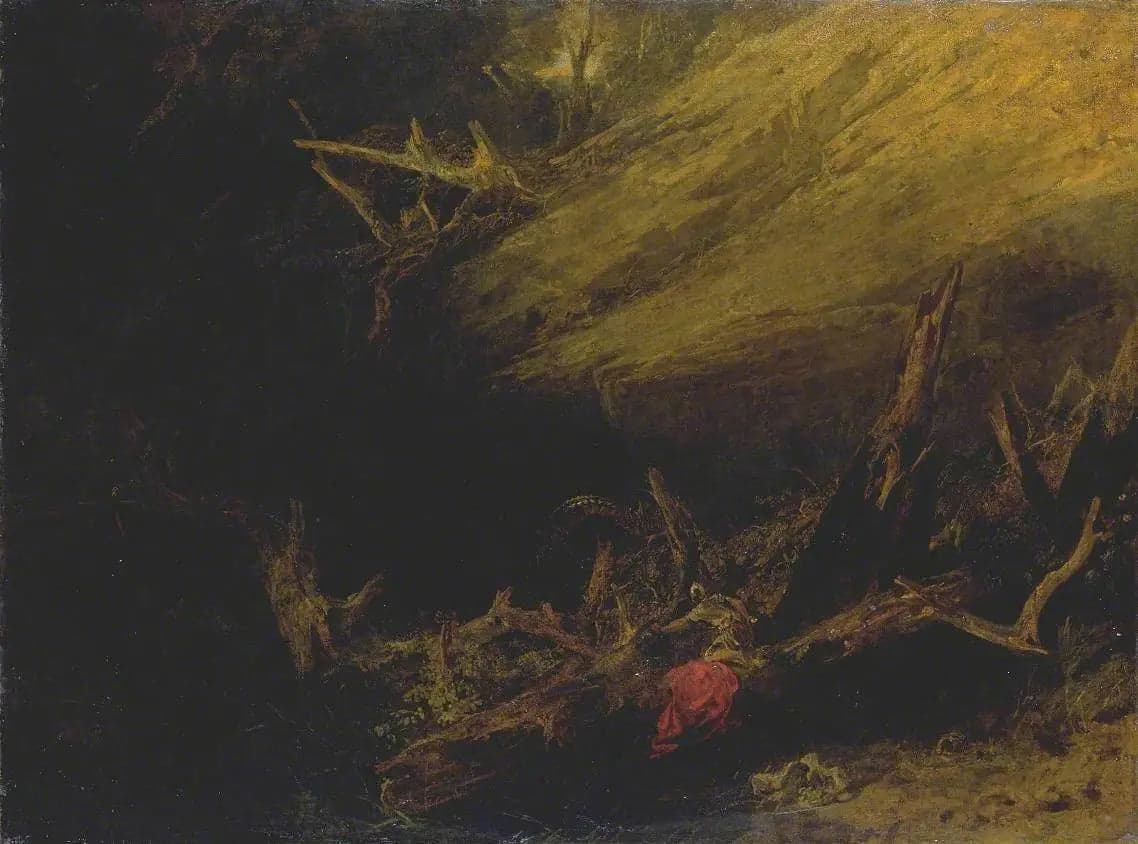
Jason
- Original dimensions
- 90.2 x 119.7 cm
- Museum
- Tate
- Year
- 1802
Scene depicted
"Jason," an iconic painting by Turner, magnificently represents the legend of the Greek hero. The scene is imbued with an epic breath where adventure and quest intertwine. Turner masters the art of lifting the imagination through this painting , making palpable the struggle between man and the untamed forces of nature.
Historical context
Created in 1802, the painting "Jason" is part of the romantic movement, emanating from the creative spirit of London, a vibrant capital that houses this canvas within the prestigious Tate museum. This era is marked by a deep interest in nature and feelings, highlighting human emotions while drawing inspiration from ancient legends.
Place in the artist's career
This masterpiece is part of a period of maturity for Turner, where he begins to boldly explore lights and atmospheres. Through "Jason," one can compare him to his major works such as "The Last Voyage of the Tempest" and "The Sunset," illustrating his technical and emotional evolution, moving from a rigid realism to lyrical abstraction.
Anecdote
“I paint the skies, the lights, and the movement, to capture the soul of the world.” With these words, Turner evokes the inspiration that struck him on a misty morning in London, when the light played with shadows in the alleys, breathing life into his pictorial composition. This emotion resonates in the evocative power of "Jason," where the movement of the sea tells forgotten stories.