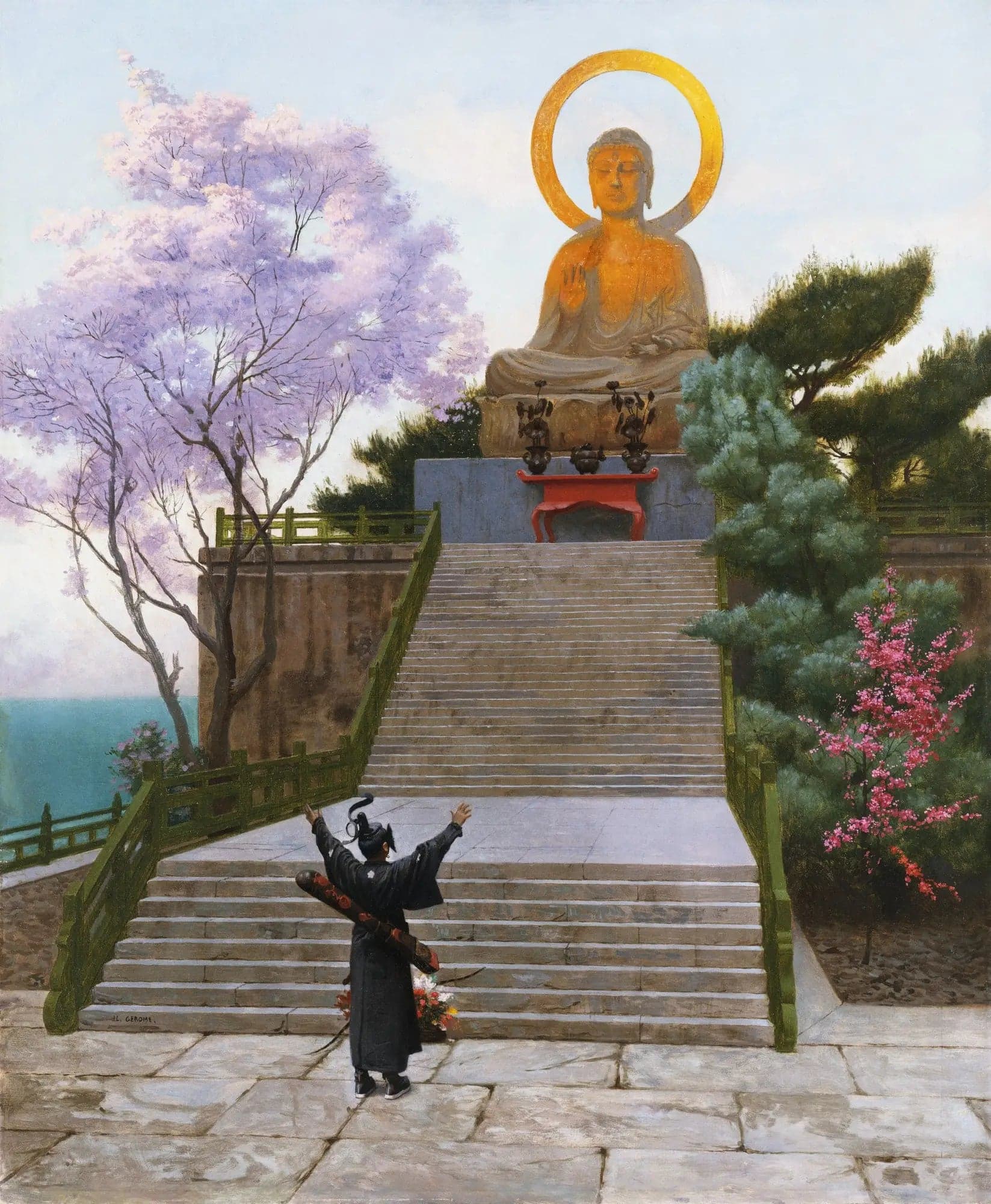
Japanese imploring a deity - Jean
- Original dimensions
- 59 x 71 cm
- Museum
- Not specified
- Year
- 1885
Scene depicted
This painting captures a solemn and intimate moment. It shows a man in traditional attire, hands raised, imploring an invisible deity above him. The expression of fervor and the praying posture testify to a spirituality rooted in Japanese culture, an invitation to meditation. The scene depicts not only a quest for spiritual redemption but also a fascinating connection between man and nature.
Historical context
Designated as an emblematic piece of the late 19th century, the painting Japanese Imploring a Deity represents a delicate moment of exchange between man and the spiritual. Jean-Léon Gérôme , a major figure of the neoclassical movement, created this canvas in a context where the East fascinates the West. Currently, this painting is not housed in a known museum, adding to its mysterious aura.
Place in the artist's career
Considered one of Gérôme's key works, Japanese Imploring a Deity fits into a period where the artist explores Eastern themes with unprecedented expression. Alongside The Silk Market and The Reception of the Pasha , this canvas illustrates an evolution in his style, where meticulousness and the magic of colors take center stage.
Anecdote
On a warm summer morning, Gérôme reportedly remarked: “In every gaze, there is a prayer, a call to the heavens.” It is this profound feeling that breathed life into his masterpiece , making the painting vibrant with emotion and intensity.