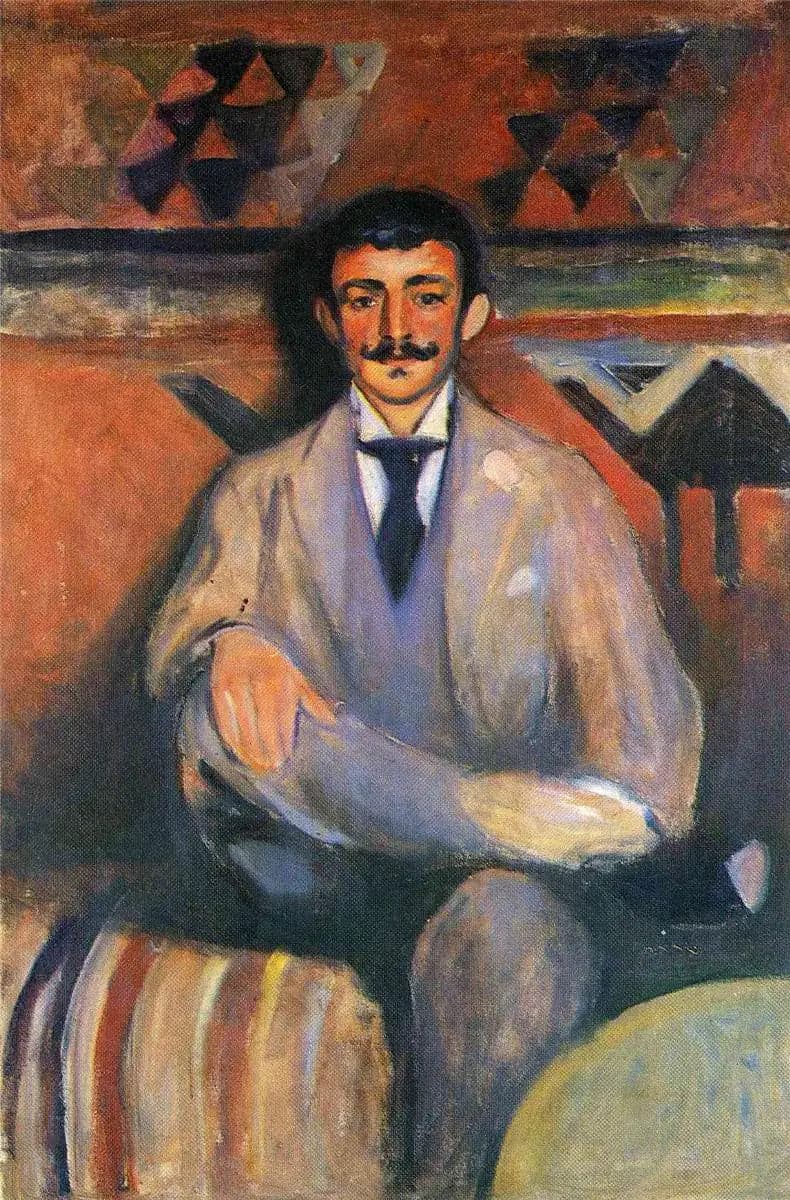
Jakob Bratland
- Original dimensions
- 66.5 x 100 cm
- Museum
- Munch Museum
- Year
- 1892
Scene depicted
The painting “Jakob Bratland” offers a poignant glimpse into the human soul. Depicting a young man, the facial features reflect both sadness and beauty, encapsulating a suspended moment where emotions and reflection meet. The carefully crafted light illuminates the face, while the blurred background seems to fade away, concentrating all the viewer's attention on the main subject of this painting .
Historical context
Created in 1892, Jakob Bratland is an iconic canvas from the late 19th century, immersed in the emerging expressionist movement in Norway. Emanating from the psychological depths of its creator, Edvard Munch , this painting is currently housed in the Munch Museum in Oslo, where it is carefully preserved. This striking composition , measuring 66.5 by 100 centimeters, evokes a rich inner world of emotions.
Place in the artist's career
This painting marks a key milestone in Munch's career, illustrating his journey towards self-expression, following works such as “The Scream” and “The Madonna.” “Jakob Bratland” embodies a period of maturity, where technique merges with unparalleled emotional depth, creating a dialogue between the subject and the observer.
Anecdote
“Nature only represents the reflections of my sensations,” said Munch. The story of this pictorial work begins on a foggy spring morning when the artist, observing the face of Jakob, a young man from the village, perceives a deep and authentic melancholy. This fleeting moment, forever etched on the canvas, generates the evocative power of Jakob Bratland .
Major exhibitions
Edvard Munch : portraits