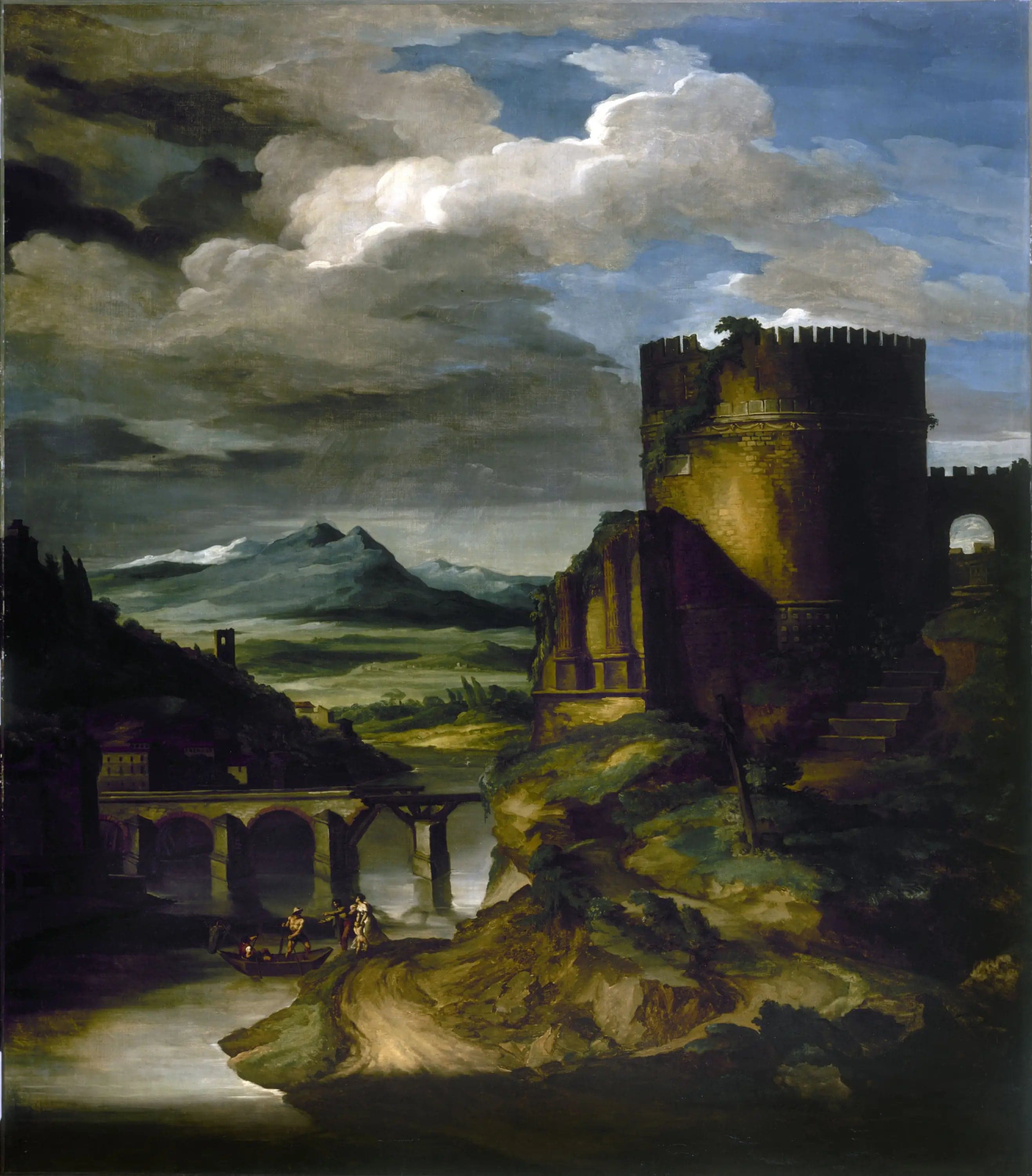
Italian Landscape at the Tomb
- Original dimensions
- 244 x 277 cm
- Museum
- Petit Palais
- Year
- 1818
Scene depicted
In this painting, Géricault depicts an enchanting landscape, a space where the majesty of nature reveals itself. Between ancient ruins and lush greenery, every detail of the composition breathes harmony and time. The wanderers traversing this landscape, echoes of the human soul, blend with the natural elements, and the viewer is invited to dream before this painting that speaks of the cycle of life and the traces left in time.
Historical context
Created in 1818, this painting reflects a time when romantic art, in full swing, resonates with an impulse of nature and passion. Located in Paris, at the Petit Palais, this canvas embodies Géricault's desire to translate the beauties of Italian landscapes while capturing the melancholy of human existence. The romantic movement, to which this work belongs, advocates emotion through striking compositions and dramatic light, a fact that increased its appeal in its time.
Place in the artist's career
This canvas represents a key milestone in Géricault's career, both a promising beginning and a quest for maturity. In parallel, works such as “ The Raft of the Medusa ” and “The Return of the Hunt” reveal his technical evolution. “Italian Landscape at the Tomb” stands out for its emotional power and mastery of light, making the artist unforgettable.
Anecdote
“Nature is my muse,” would have said Théodore Géricault one morning by a tranquil river, contemplating the horizon. This thought fueled the inspiration for his masterpiece , “Italian Landscape at the Tomb,” born from an outdoor walk that connected him to memories of Italy, floral scents, and the gentle whispers of the breeze, embodying a perfect moment where devotion and passion meet.