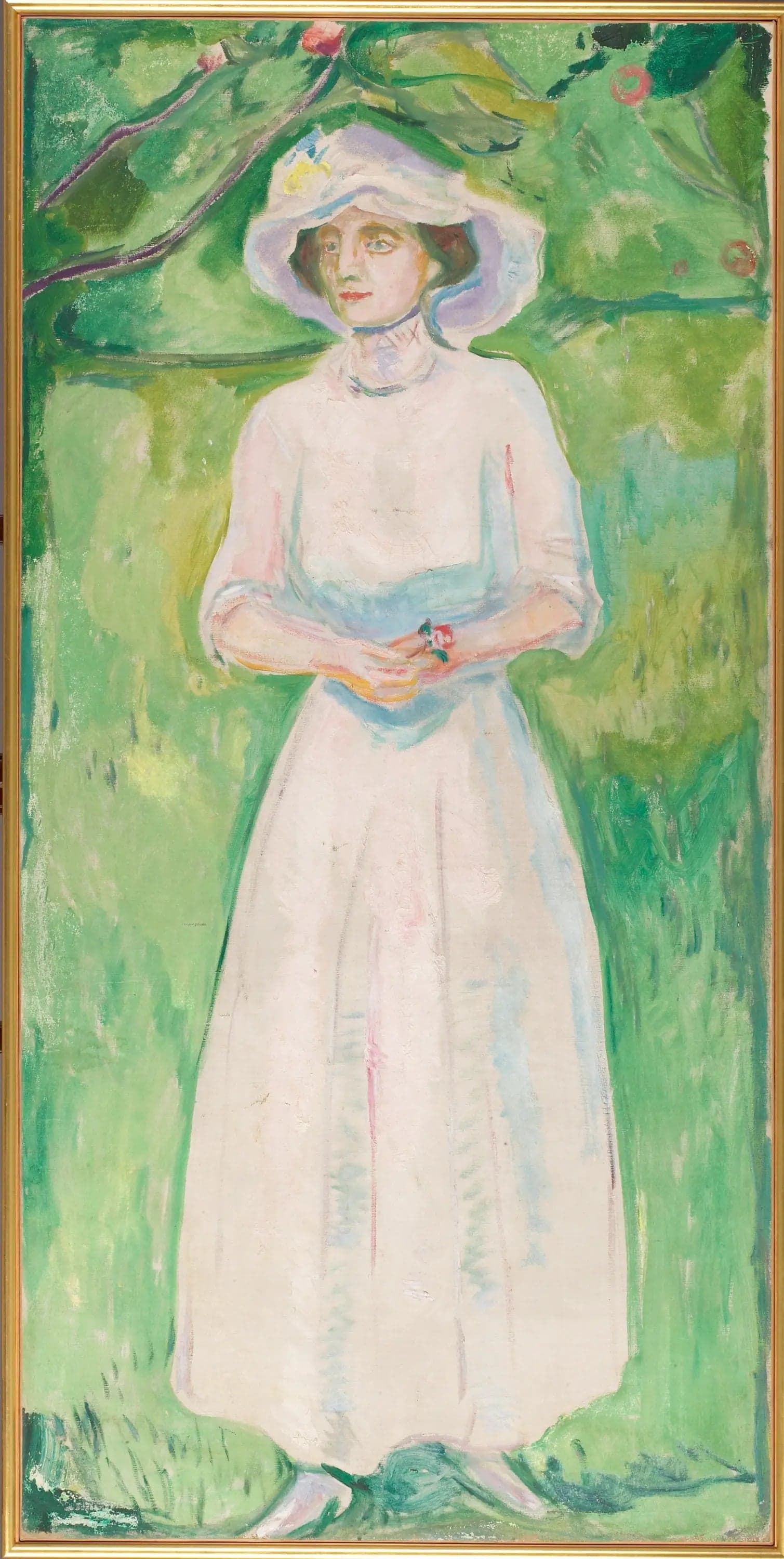
Irmgard Steinbart
- Original dimensions
- 91 x 183 cm
- Museum
- Munch Museum
- Year
- 1913
Scene depicted
The painting “Irmgard Steinbart” depicts a slender figure with a contemplative gaze, her gentle attitude contrasting with a palpable emotional depth. The artist manages to capture a moment where the intimate meets the universe, suggesting stories of life, past and present sorrows and joys; an invitation to introspection. Each brushstroke is a breath of life, transforming this painting into a dialogue between the subject and the viewer.
Historical context
Created in 1913, this painting embodies its roots in Oslo, Norway, a vibrant hub of creation where Edvard Munch fits perfectly into the Symbolist movement. In the bubbling cultural context of his time, Munch contributed to a reinvention of forms and memories, bringing new light to modern canvas . Today, this work is carefully preserved at the Munch Museum, famous for its invaluable collection.
Place in the artist's career
“Irmgard Steinbart” represents a pivotal moment in Munch's career, where his style refined to express a human depth yet unexplored. This canvas fits seamlessly between “The Scream” and “The Woman in White,” two other masterpieces, highlighting the evolution of his visual and emotional approach to universal themes of the human condition.
Anecdote
“The human spirit is a battlefield,” said Munch, inspired by the melancholy of a misty spring morning. It is in this atmosphere imbued with solitude that he captured the essence of the pictorial work “Irmgard Steinbart,” transforming a simple portrait scene into a powerful echo of the human soul.
Major exhibitions
Edvard Munch : portraits