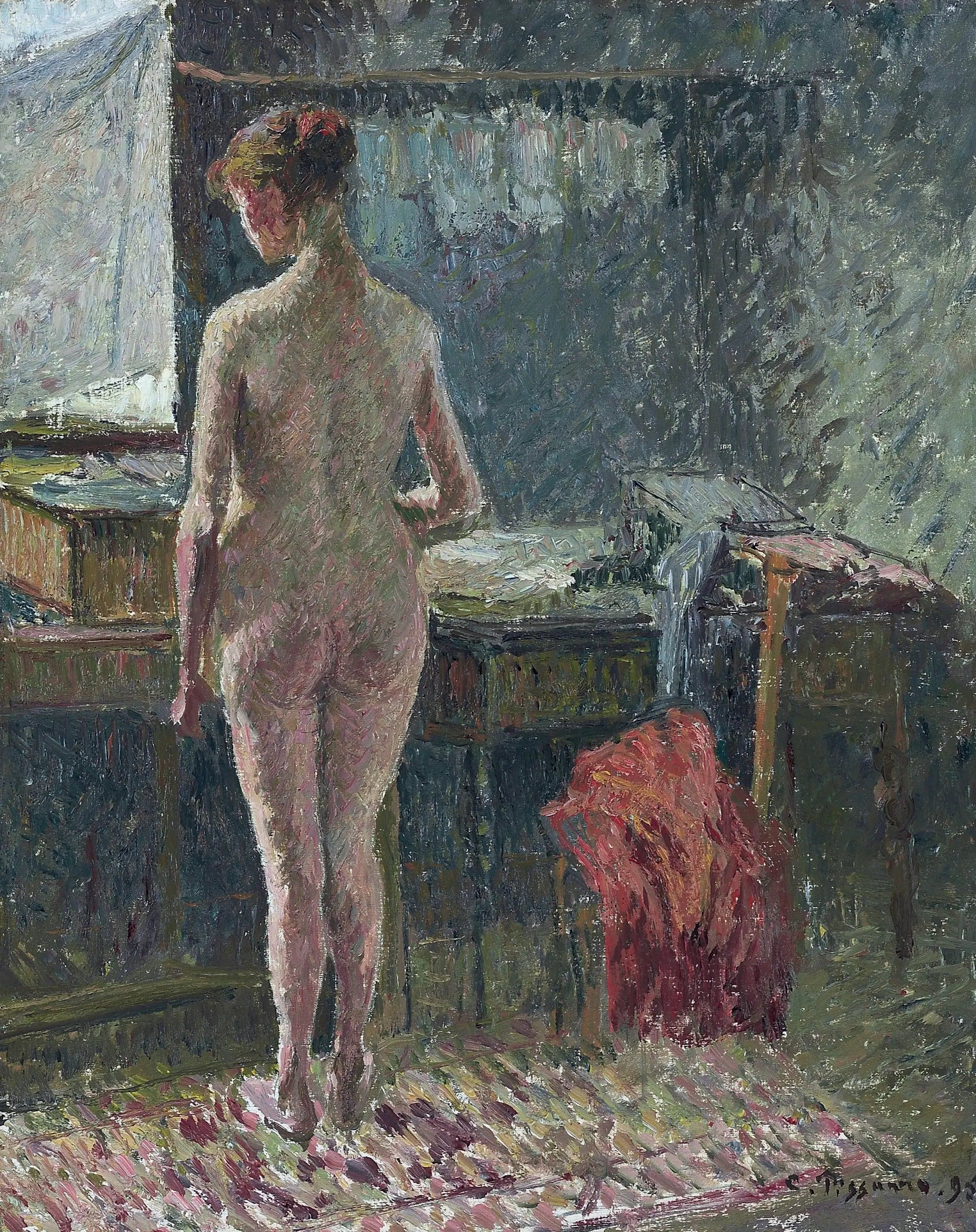
Interior with Nude from the Back
- Original dimensions
- 33.3 x 41.5 cm
- Museum
- Not specified
- Year
- 1895
Scene depicted
In this composition, Pissarro explores the intimacy of an interior, where a female figure is outlined in front of the canvas. The atmosphere is imbued with serenity, capturing the spirit of a fleeting moment. The meticulous details of the decor, silent witnesses of daily life, blend harmoniously into this pictorial ensemble. The painting thus becomes an open window to the emotions and atmospheres unique to this enclosed space.
Historical context
Created in 1895, this painting immerses us in the intimate universe of Camille Pissarro , a master of impressionism . Set in the picturesque backdrop of late 19th century Europe, this canvas illustrates the vibrancy of an era, between tradition and modernity. Pissarro, settled in Éragny, immortalizes moments of daily life while navigating the artistic currents that shape his time. The location of this work remains mysterious, but its vital stature in the history of art is undeniable.
Place in the artist's career
“Interior with Nude from the Back” marks a crucial turning point in Pissarro's career, revealing his evolution towards more intimate compositions. In parallel, one can mention his works “The Potato Harvest” and “The Artist's Garden at Éragny,” which, although different in subject, testify to a continuous exploration of light and man in his environment. This painting reflects a maturity achieved, a mastery of contrast and color.
Anecdote
“Art is a reflection of life, and each canvas I create captures a breath of my existence,” Pissarro might have said, inspired by the light of a spring morning. This painting , full of delicacy, was the result of a precious moment, observed with love in his studio. The soft light of the sun's journey across this scene brings forth forgotten emotions, giving the work a unique evocative power.