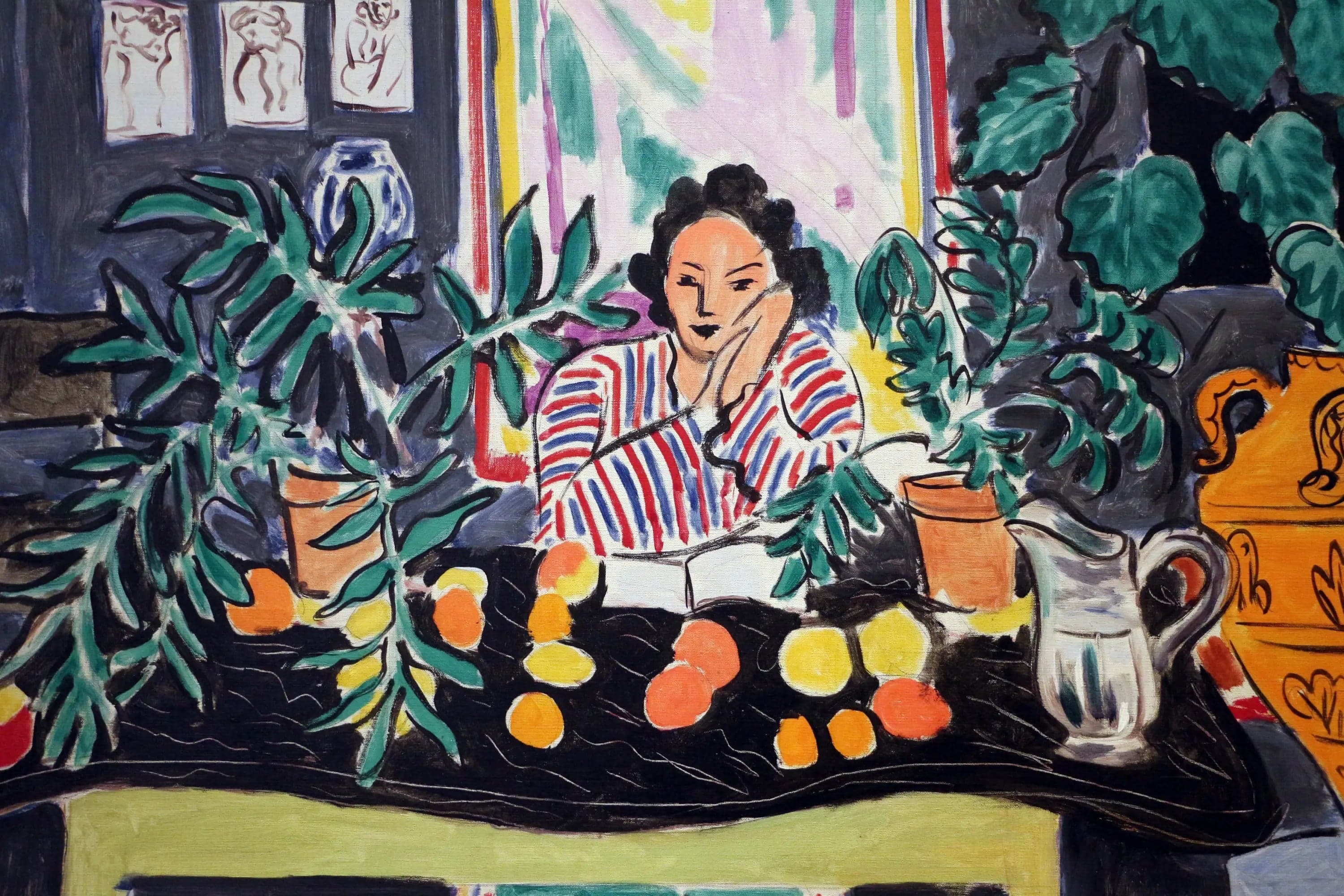
Interior with Etruscan Vase
- Original dimensions
- 108 x 73.7 cm
- Museum
- Cleveland Museum of Art
- Year
- 1940
Scene depicted
This painting opens a window onto a warm interior, where natural light plays on surfaces and textures. The Etruscan vase, in the background, stands majestically, highlighting the symbiosis between decorative art and painting. Matisse thus transforms an ordinary space into a living tableau, a celebration of simple beauty and vibrant colors. This composition conjures an atmosphere of serenity, inviting the viewer to enter this cocooning universe.
Historical context
Created in 1940 in the beautiful city of Nice, this canvas is one of the emblematic works of the artist Henri Matisse . Inscribed in the artistic movement of Fauvism , this painting evokes a tumultuous period during which Matisse was able to bring a unique light to the pictorial scene. Currently exhibited at the Cleveland Museum of Art , this canvas measures 108 x 73.7 cm and perfectly embodies the artistic essence of its time.
Place in the artist's career
Interior with Etruscan Vase is situated at a turning point in Matisse's career, representing a period of stylistic maturation. Alongside other works like The Dance and Woman with a Hat , this painting testifies to his relentless exploration of colors and forms. It is a perfect synthesis of his quest for a new expressiveness, placing emotions at the heart of each canvas.
Anecdote
“Color and light are my only words,” Matisse might have said while contemplating his masterpiece at dawn, when the first rays of sunlight dance on the walls of his studio. It is in this sacred place, bathed in light, that he finds the inspiration needed to bring to life Interior with Etruscan Vase , a pictorial work where every shade of color tells a story.
Major exhibitions
Matisse. Cahiers d'art, the turning point of the 1930s