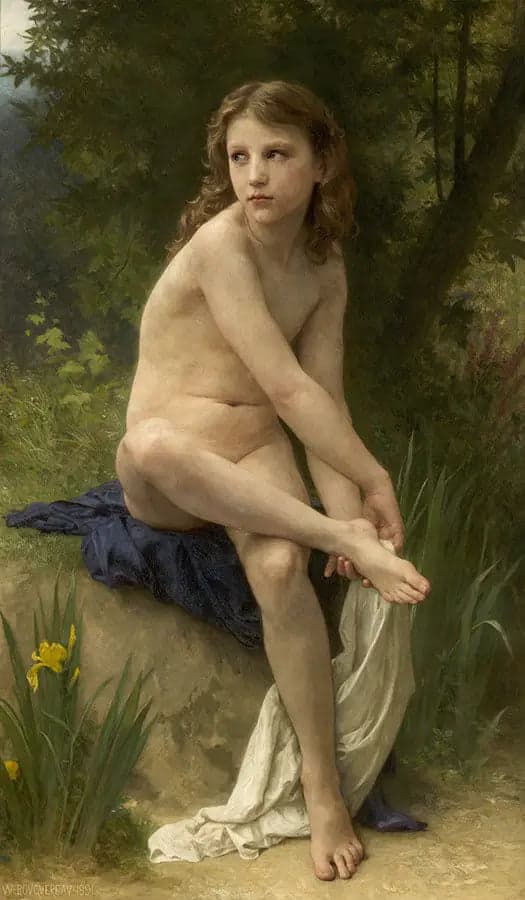
Innocence
- Original dimensions
- 94 x 178 cm
- Museum
- National Museum of Western Art
- Year
- 1893
Scene depicted
At the heart of this painting , a young child, draped in light and freshness, embodies lost innocence. He is illustrated with a small dove, a symbol of peace. The scene transports us to a time when the simplicity of childhood met the pure admiration of nature. It is a subtle blend of emotions that engages the viewer and invites introspection.
Historical context
Created in 1893 in Paris, this painting is emblematic of the academic movement, symbolizing the essence of refined art in the service of beauty and harmony. In the heart of the Belle Époque, Bouguereau whispers the pains and joys of his time through this canvas , now displayed at the National Museum of Western Art . With majestic dimensions of 94 x 178 cm, this grand work captures attention and invites wonder.
Place in the artist's career
“L'Innocence” constitutes a high point in Bouguereau's career. A witness to a period of maturity, this painting stands out from his previous works such as “The Virgin and Child” and “The Pardon.” Each canvas shows a marked technical evolution characterized by a mastery of light and textures, thus redefining the academic art of his time.
Anecdote
“Innocence is a breath of life, a light that nature offers us,” said Bouguereau while contemplating a spring morning near his studio. This canvas , the fruit of ephemeral inspiration, captures the pure innocence that only childhood can evoke and reveals the very essence of the human soul.