Ingse Vibe
- Original dimensions
- 70 x 160 cm
- Museum
- Munch Museum
- Year
- 1903
Scene depicted
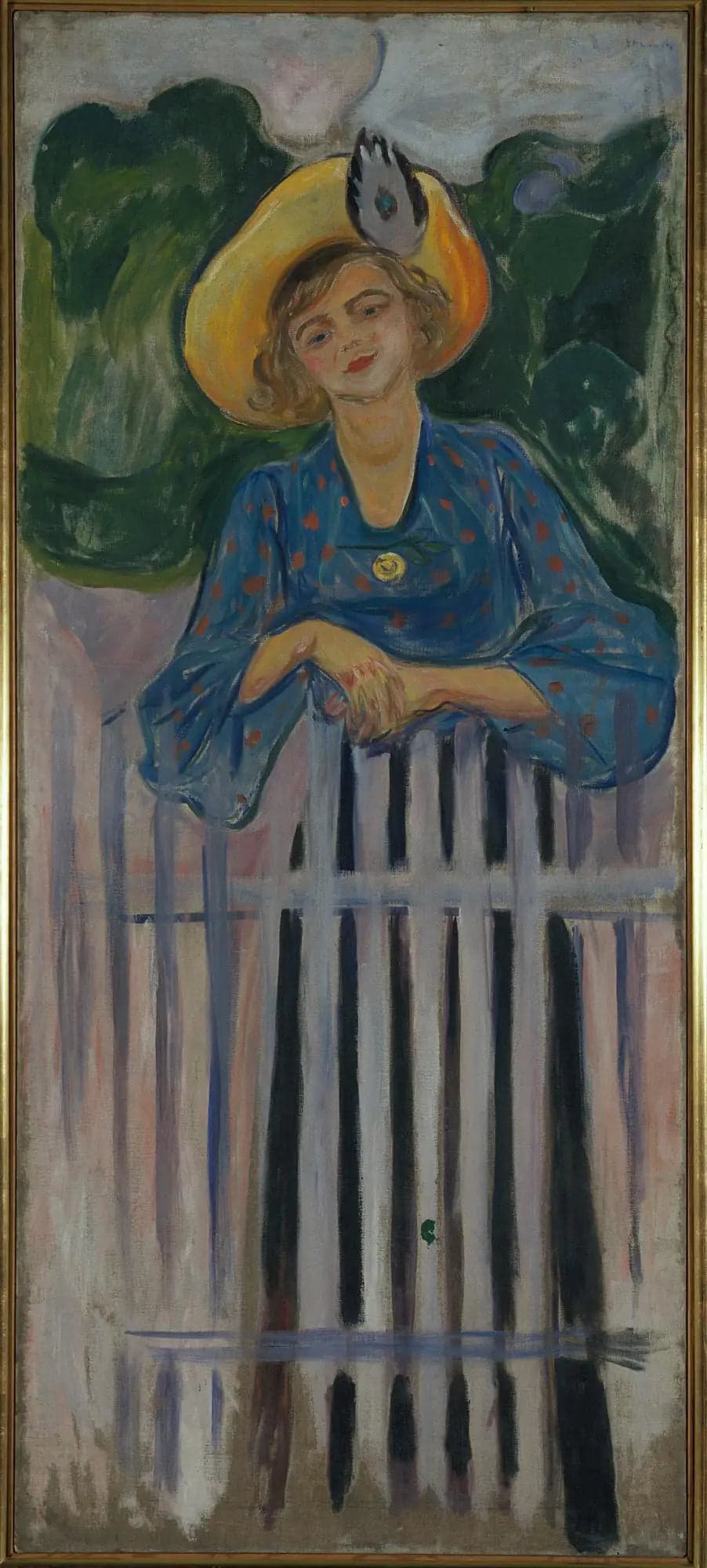
In this painting , Munch presents a deeply contemplative female figure, capturing both the fragility and strength of the human being. The woman's posture, her melancholic gaze, evokes poignant introspection, as if she is listening to the whispers of her own heart. It is an invitation to explore buried emotions, hidden behind the shine of everyday life.
Historical context
Created in 1903, the painting emblematic "Ingse Vibe" plunges its roots into the vibrant expressionist movement. Located in the city of Oslo, Norway, this pictorial work is part of the invaluable heritage preserved at the Munch Museum. It embodies a moment of deep emotional turmoil and bears witness to the complex feelings that Munch explored at that time. Today, this subtle canvas is the guardian of a unique atmosphere, of doubts and human passions. Its generous dimensions allow for total immersion in the scene.
Place in the artist's career
“Ingse Vibe” stands at the heart of Edvard Munch 's career, marking an artistic maturation that propels him to the heights of artistic expression. Alongside “The Scream” and “The Madonna,” this painting reveals the evolution of his innovative style, using color and form to delve deep into human emotion. This pictorial work, often seen as a crucial milestone, makes Munch one of the pioneers of modern art.
Anecdote
“I remember wanting to capture the essence of the life around me, even when everything seemed uncertain and dark.” Through these words, Edvard Munch evokes the impulse that brought this masterpiece to life. It was a foggy morning in Oslo when the artist, inspired by the details of a face, knew that this canvas would be a window into the human soul.
Major exhibitions
Edvard Munch : portraits