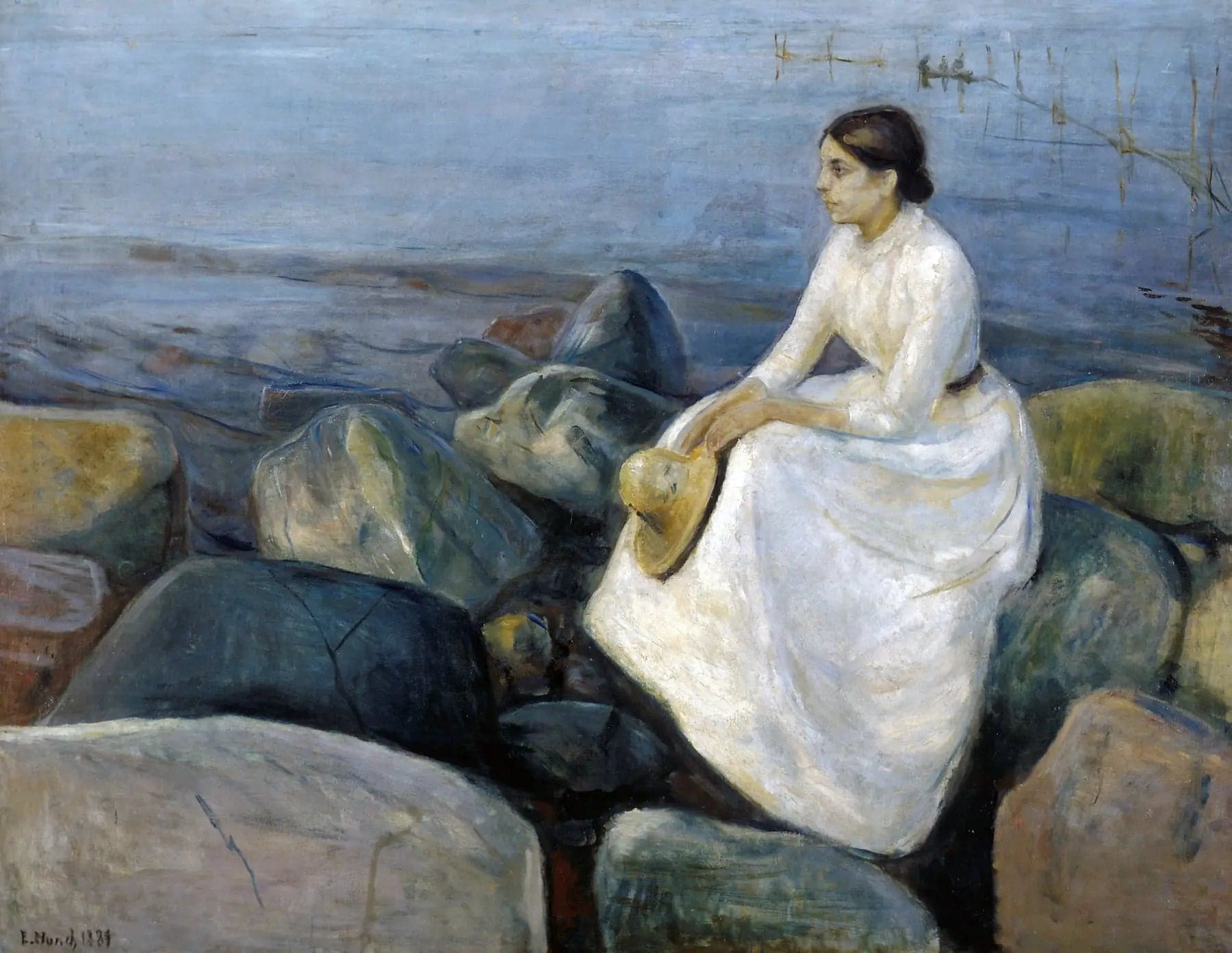
Inger on the Beach
- Original dimensions
- 161.5 x 126.5 cm
- Museum
- Bergen Art Museum
- Year
- 1889
Scene depicted
This painting, “Inger on the beach,” depicts the elegant figure of Inger, captured in a melancholic contemplation at the water's edge. In this composition , the sea dances harmoniously with the sky, while the horizon suggests a depth of elusive emotions. The delicate curves of Inger's silhouette evoke both fragility and strength, symbolizing the complexity of human existence.
Historical context
Written in the vibrant heart of the late 19th century, this remarkable painting , at the intersection of symbolism and expressionism , invites us to dive into the tormented soul of a bold artist. Housed in the Bergen Art Museum, this striking canvas embodies an era where every nuance of color recreates deep and universal emotions.
Place in the artist's career
At the heart of his production, this painting occupies a unique place, representing an evolution towards greater introspection. While Munch explores themes of love and death in other canvases such as “The Scream” and “The Madonna,” “Inger on the beach” reveals itself as a gem of intimacy, symbolizing a crucial turning point in his artistic maturity.
Anecdote
“I do not paint what I see, but what I feel.” With these words, Munch reveals the very essence of his creation. Imagine him wandering the Norwegian shores, a light sea breeze caressing his face, and it is then that Inger appears to him. This fleeting moment becomes a creative impulse, resonating through the vigorous strokes of this masterpiece .
Major exhibitions
Edvard Munch : portraits