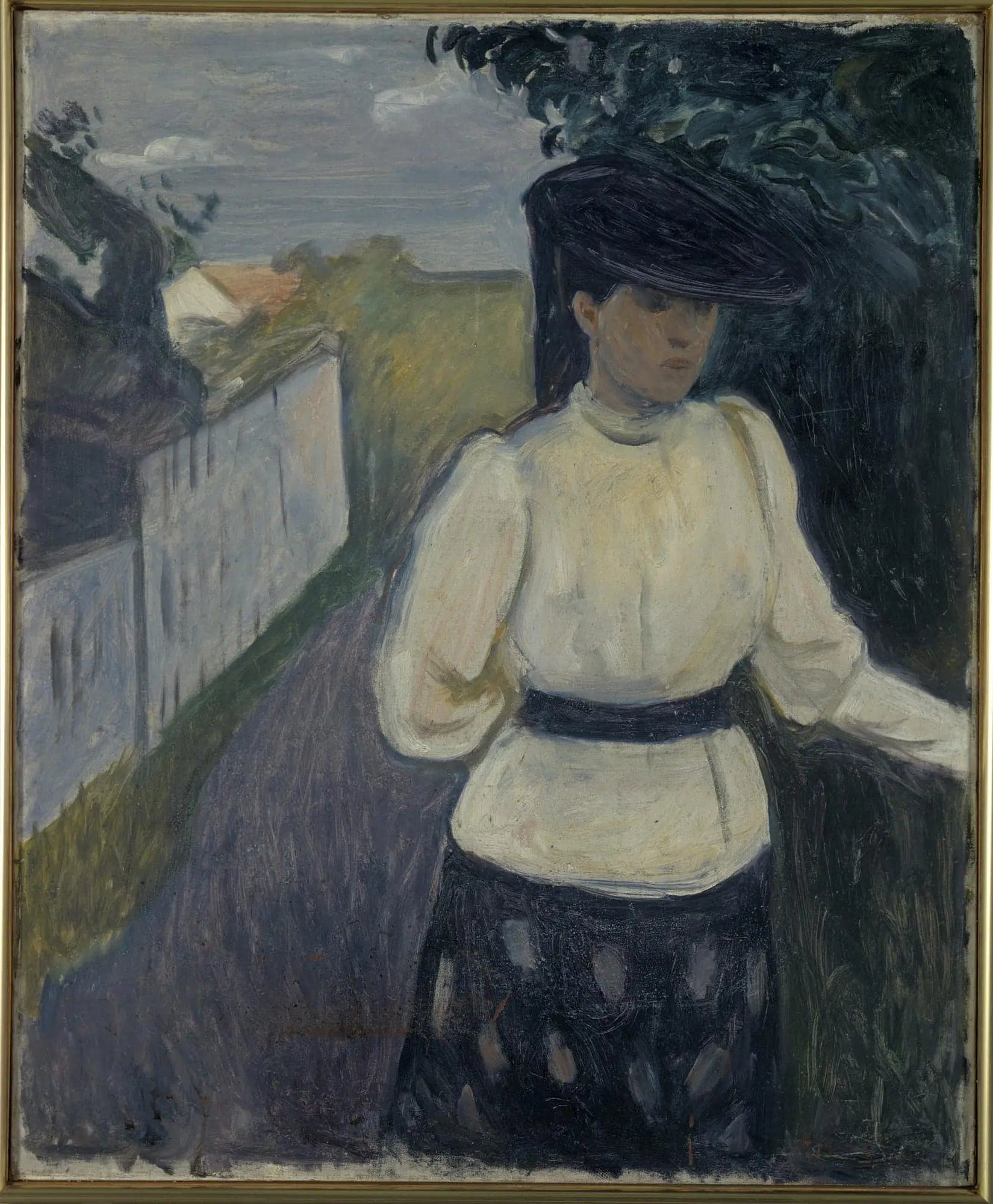
Inger in a White Blouse
- Original dimensions
- 66.5 x 81.5 cm
- Museum
- Munch Museum
- Year
- 1891
Scene depicted
In this canvas , Munch presents us with Inger, a figure with a gentle presence, imbued with serenity. Dressed in a white blouse, she embodies both innocence and vulnerability. The intimacy of the scene, accentuated by the use of soothing colors and delicate brush strokes, reveals a personal story through the universality of the emotions that emanate from it.
Historical context
Created in 1891, this painting takes place in the vibrant city of Oslo, Norway, during the period of symbolism , an artistic movement that explores the depths of the human soul. It is in this rich context, bathed in northern light and a turn-of-the-century atmosphere, that Munch develops his unique vision. Currently, this canvas is preserved at the Munch Museum, a place that celebrates the genius of this iconic artist, whose canvas spans evocative dimensions of 66.5 x 81.5 cm.
Place in the artist's career
Inger dans une blouse blanche marks a significant period in Munch's career, a first step towards a deeper exploration of human emotions. In parallel with his major works such as The Scream and The Madonna, this painting bears witness to the artist's evolution towards a more personal and symbolic language, thus marking an important turning point in his artistic maturation.
Anecdote
“Art must be a cry of the soul,” declared Munch. It was probably during a soft, misty morning, in the quiet streets of Oslo, that he encountered the face that would inspire this masterpiece . The soft light filtering through the trees seems to evoke a melancholy imbued with beauty, and this emotion is powerfully transcribed in the painting .