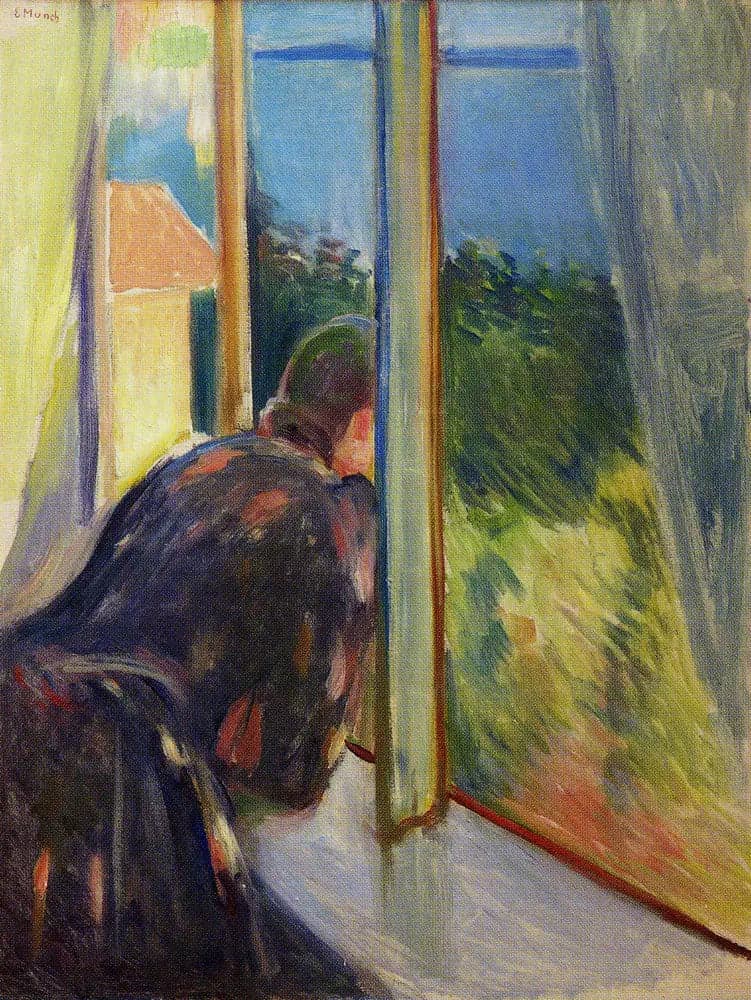
Inger by the Window
- Original dimensions
- 27.5 x 39 cm
- Museum
- Not specified
- Year
- 1882
Scene depicted
In this painting, a young woman, Inger, stands by a window, illuminated by soft, filtered light. The contrast between the intimate interior and the uncertain exterior highlights the duality of human emotions. The scene evokes solitude and introspection, while the transparency of the drapes suggests a possibility of communicating with the outside world.
Historical context
Created in 1882, during a period of artistic upheaval in Oslo, this painting , rooted in the movement of symbolism , is a window into the human soul. The city, then vibrant with creativity, breathes new life into pictorial conception. Today, the canvas remains elusive within public collections, its origin shrouded in the mystery of private exhibitions.
Place in the artist's career
Inger près de la fenêtre proves to be a significant milestone in Munch's career, symbolizing the awakening of a promising talent. It is positioned between other notable paintings such as “The Knowledge” and “The Scream,” illustrating the evolution of his style towards a deeper exploration of human emotions.
Anecdote
“I paint to express what I feel deep within my being.” Murmurs Munch, recalling a sweet and calm morning. The inspiration for the pictorial work was born from a fleeting glance exchanged through a window, this suspended moment capturing the ephemeral beauty of life.