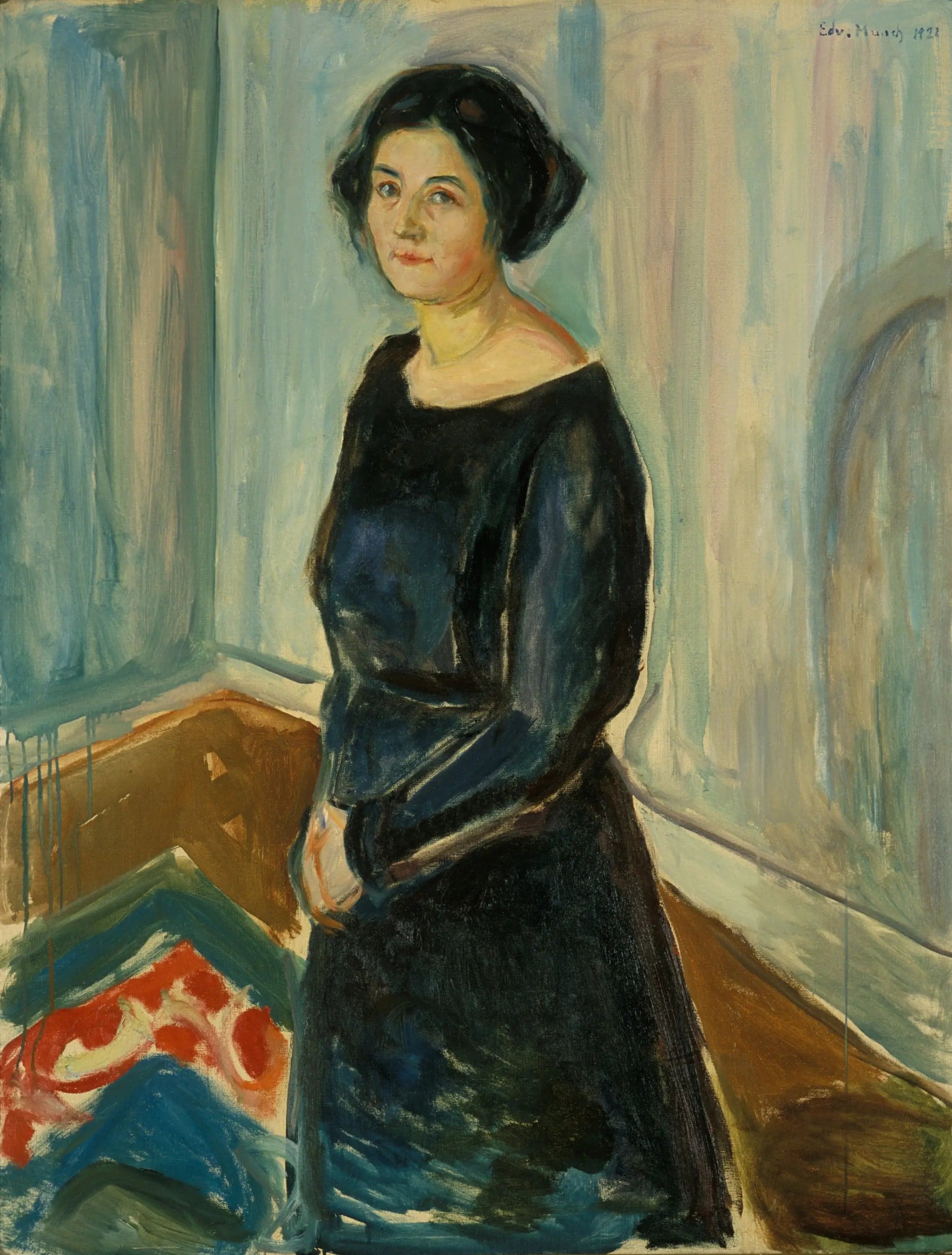
Inger Barth
- Original dimensions
- 100 x 130 cm
- Museum
- Stenersen Museum
- Year
- 1921
Scene depicted
The canvas "Inger Barth" reflects an introspective look at human nature. It captures the beauty and vulnerability of a face, framed by an atmosphere rich in emotions. In this scene, Munch succeeds in transcending the simple portrait to evoke universal themes of solitude and desire, emotions that resonate through the ages.
Historical context
Created in 1921, this painting with a striking character emerges during a tumultuous time, as modern art takes root in Norway, and more broadly in Europe. An emblematic work of Edvard Munch , this canvas is currently housed at the Stenersen Museum in Oslo, where it shares space with other masterpieces of the expressionist movement. Its large canvas of 100 by 130 cm exudes a power and expressiveness that fascinates visitors, immersing each one in a shared universe imbued with nostalgia.
Place in the artist's career
"Inger Barth" sits at the heart of Munch's artistic maturity, a turning point that reveals a deepening of his expressionism . Alan Munch juxtaposes this work with "The Scream" and "The Madonna," thus showing his stylistic and emotional progression, from despair to serene introspection. Each canvas is an exploration of the depths of the human soul.
Anecdote
"I paint my dreams and my anxieties," Munch said, thus evoking the very essence of his inspiration. Imagine an April morning, soft light filtering through the windows of a sunlit studio, as he shapes his subject, his gaze lost in the meanders of his memory. This moment of introspection nourishes the unique emotional strength of the masterpiece that is Inger Barth .
Major exhibitions
Edvard Munch : portraits