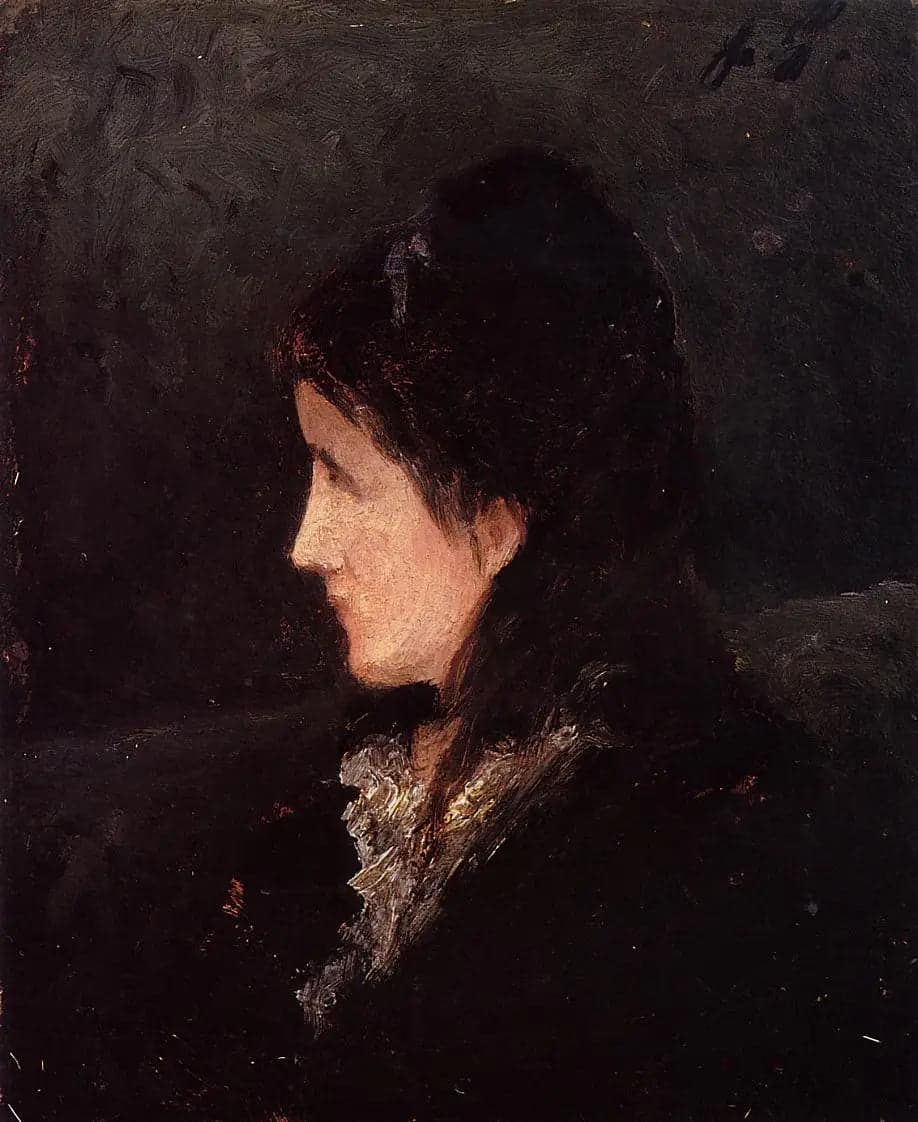
Ingeborg Thaulow
- Original dimensions
- 12.5 x 15.5 cm
- Museum
- Not specified
- Year
- 1877
Scene depicted
In this canvas , the artist presents a delicate portrait of Ingeborg Thaulow, imbued with palpable softness. The work highlights a female figure, surrounded by a halo of natural light, capturing both an intimate introspection and an expression of pure beauty. The simplicity of the scene reveals the depth of emotions, inviting the viewer to explore inner worlds.
Historical context
Created in 1877, in an artistic environment in full effervescence, the painting "Ingeborg Thaulow" is situated at the crossroads of post-impressionism . Paul Gauguin , influenced by his stay in Pont-Aven, captures here the tranquility of intimate moments, reflecting a time when art frees itself from conventions. Although the current location of this painting is not specified, its dimensions evoke striking delicacy and intimacy.
Place in the artist's career
“Ingeborg Thaulow” delicately sits at the beginning of Paul Gauguin 's career, marked by bold artistic exploration. In parallel with his later works, such as “Vision after the Sermon” and “The Yellow Christ,” this painting bears witness to the evolution of his style, from an engaging realism to a more pronounced spiritual abstraction.
Anecdote
“Art must transcend reality,” said Gauguin, reminiscing about a spring morning in the flower-filled gardens of his adopted Brittany. It is in this serene atmosphere that the inspiration for this masterpiece emerged, a composition that combines emotional truth and pure aesthetics, embodying his quest for a painting that is more spiritual.