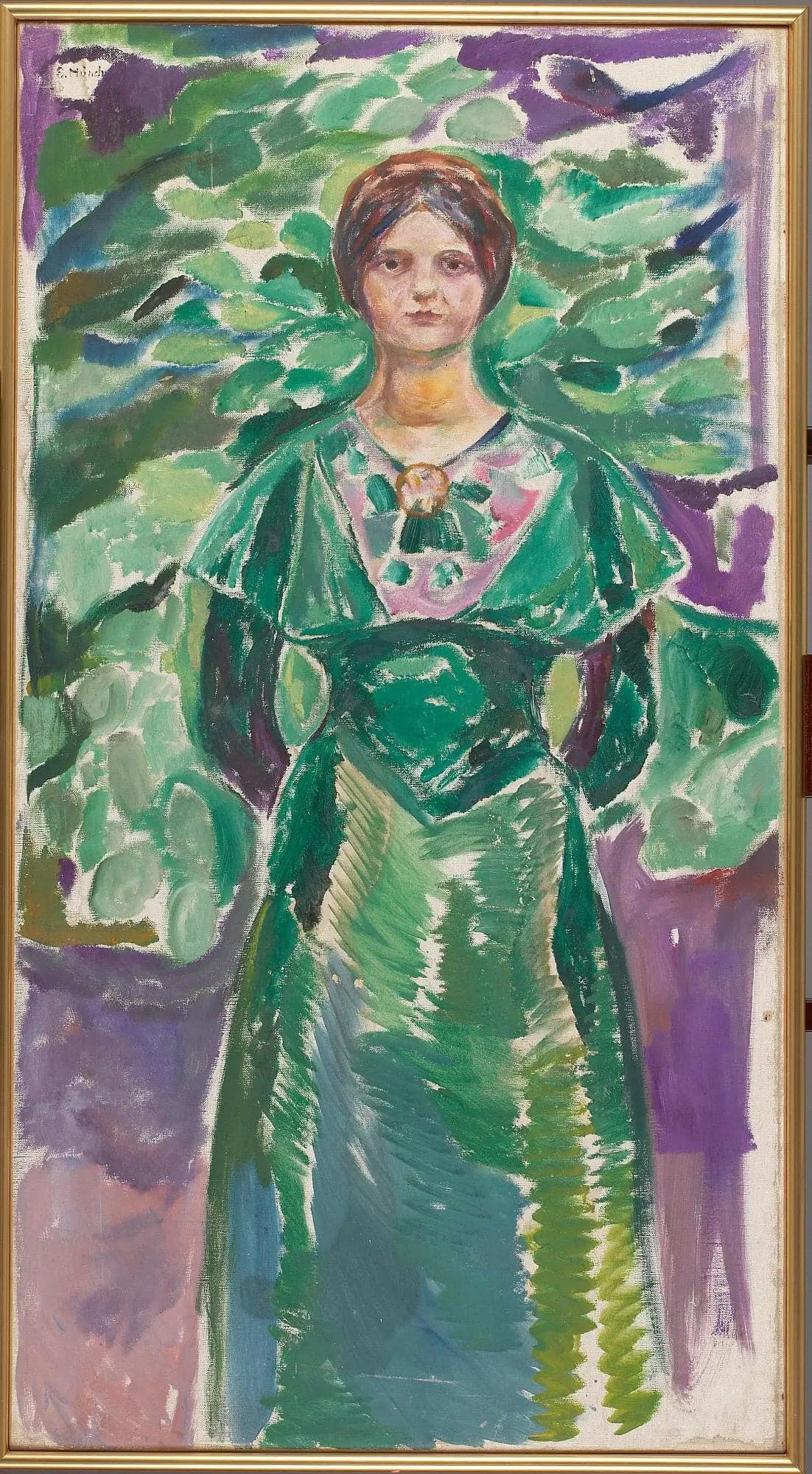
Ingeborg Kaurin
- Original dimensions
- 75 x 98 cm
- Museum
- Munch Museum
- Year
- 1911
Scene depicted
This painting depicts a poignant scene of human life, where the portrait of Ingeborg Kaurin radiates a melancholy that is both sweet and unsettling. The captivating composition evokes feelings of introspection, inner tension, and transcendent beauty, amplified by the piercing gaze of the model who seems to tell us a story throughout the masterpiece .
Historical context
This iconic painting , created in 1911, is an integral part of the expressionist movement and finds its origin in Oslo, Norway. Evoking themes of the human psyche, this canvas stands out for its ability to convey deep emotions. The painting , now exhibited at the Munch Museum, reveals the unique vision of its creator and invites us to dive into the Norwegian cultural identity of the time.
Place in the artist's career
“Ingeborg Kaurin” is at the heart of Edvard Munch 's career, marking a significant turning point towards experimentation with interior motifs. Alongside paintings like “The Madonna” and “The Scream,” this painting showcases the stylistic evolution of the artist, blending bold techniques and an unprecedented exploration of human emotion.
Anecdote
“The true essence of art lies in the way it captures the human soul.” This quote from Edvard Munch resonates in the painting “Ingeborg Kaurin.” The artist, inspired by a chance encounter with the muse who captivated his gaze through the light of a northern morning, managed to capture a rare emotional depth in this masterpiece .
Major exhibitions
Edvard Munch and his models: 1912-1943