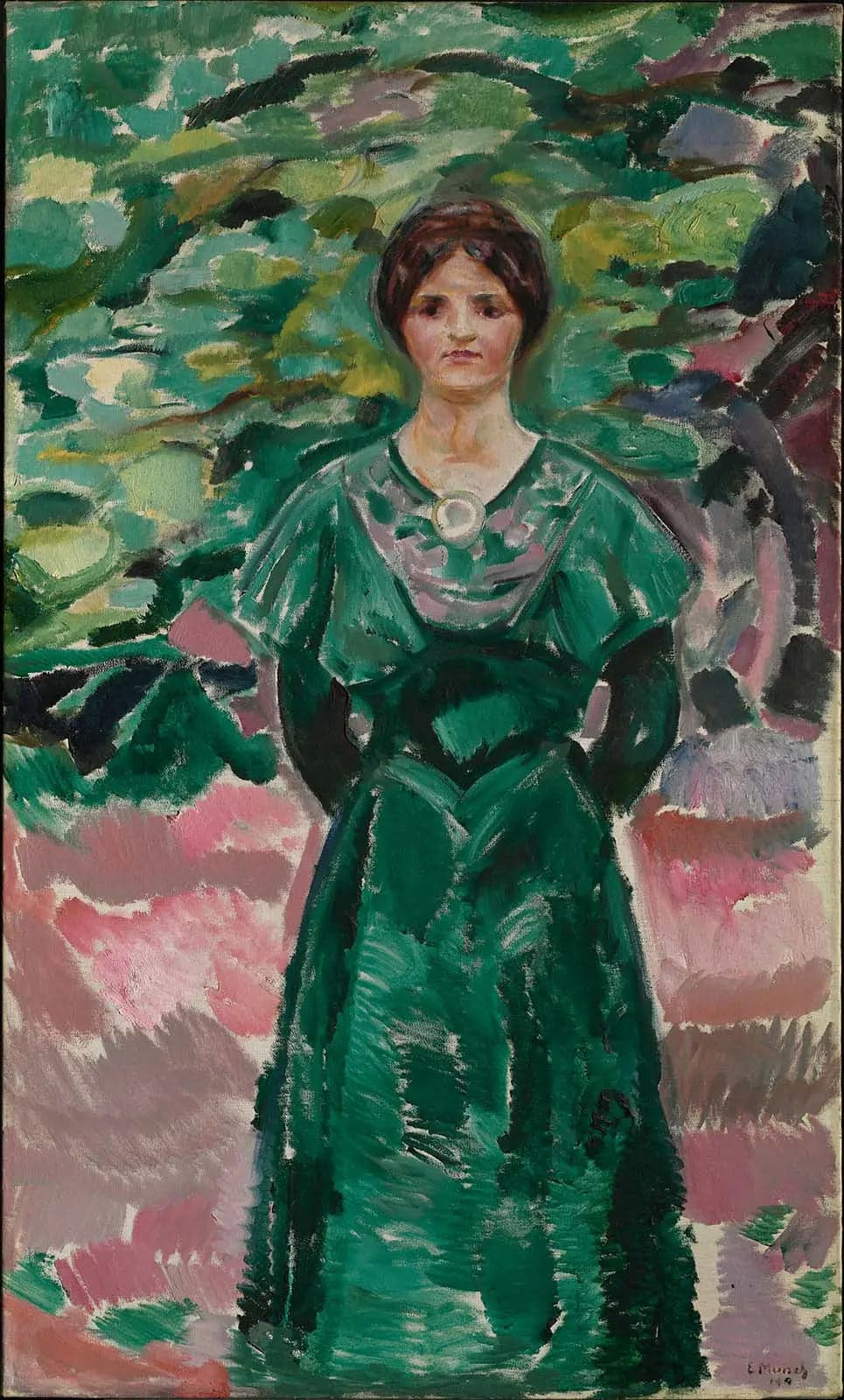
Ingeborg in Green
- Original dimensions
- 97.5 x 162.9 cm
- Museum
- Museum of Fine Arts Boston
- Year
- 1912
Scene depicted
In Ingeborg en vert , Munch immortalizes Ingeborg, a feminine figure imbued with mystery and serenity. The composition highlights a harmony of lines and shapes, where the feminine silhouette blends with the surrounding nature. The juxtaposition between the softness of the painting and the depth of expression gives this pictorial work an atmosphere that is both peaceful and unsettling. The shades of green and delicate touches of color exert a fascination on the observer, awakening intimate and personal emotions.
Historical context
Created in 1912, the painting Ingeborg en vert by Edvard Munch appears as an emblem of the expressionist movement, emerging in the heart of Europe, particularly in Norway, the artist's birthplace. This masterpiece is now housed in the prestigious Museum of Fine Arts Boston , where it continues to enchant visitors with its emotional power and visual originality. The generous dimensions of this canvas make it a centerpiece, capturing the very essence of the historical moment when Munch fully asserted himself in his artistic quest.
Place in the artist's career
Ingeborg en vert represents a pivotal period in Munch's career. This canvas fits into a time when the artist increasingly explored themes of love, melancholy, and nature. Alongside The Scream and Madonna , this masterpiece illustrates his stylistic evolution, marrying elements of realism with a strongly expressive vision.
Anecdote
“Art must not reproduce the visible, but make visible,” declared Edvard Munch . Inspired by a bright afternoon in a friend's garden, he captured the ephemeral beauty of Ingeborg, wrapped in her green dress. This canvas evokes the sweetness of a suspended moment, a delicate encounter between light and shadow.