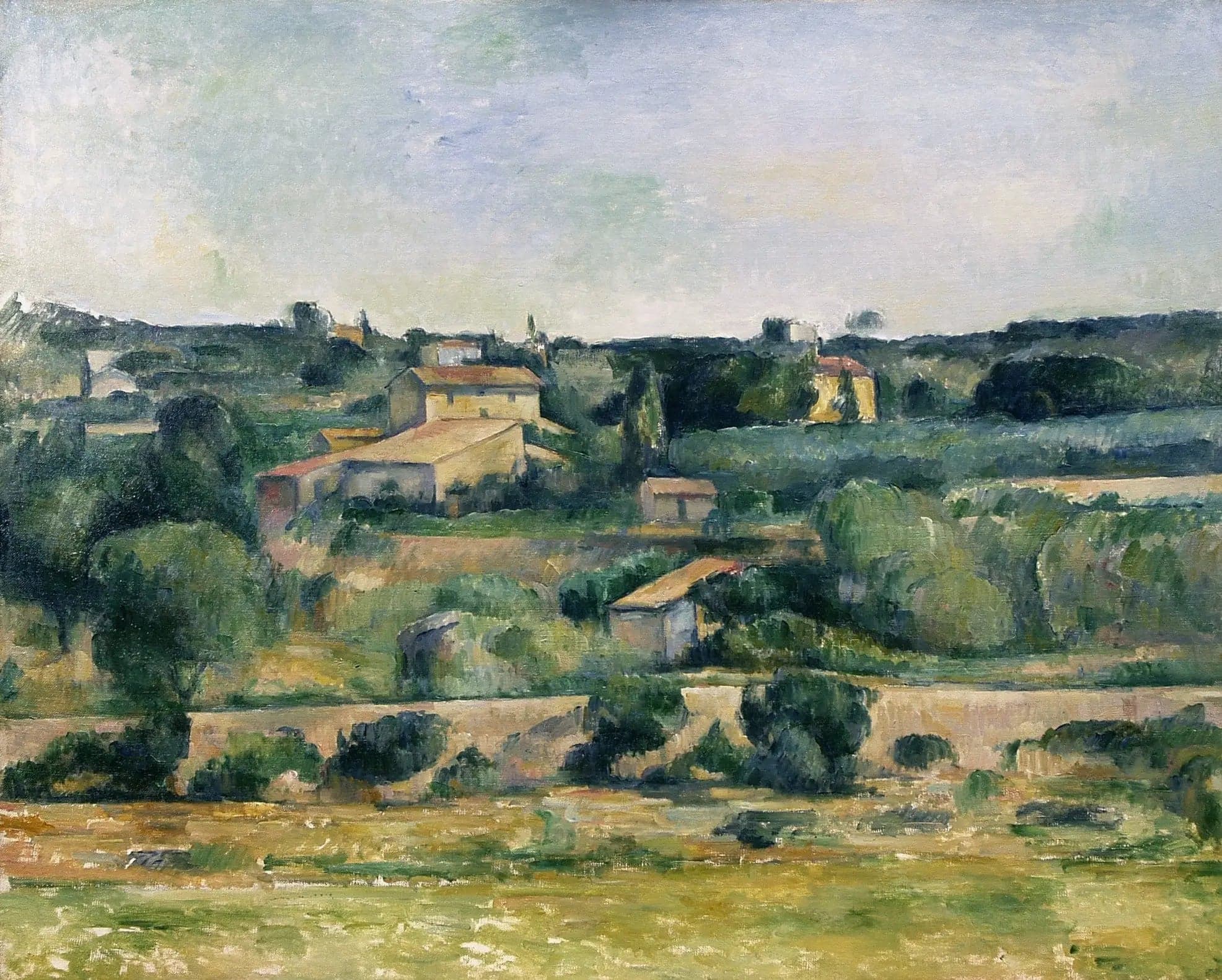
In the plain of Bellevue, to the West of Aix
- Original dimensions
- 81.5 x 65.3 cm
- Museum
- Wallraf-Richartz Museum
- Year
- 1886
Scene depicted
This painting immerses the viewer in the vastness of a Provençal field, where nature flourishes in a palette of earthy tones and vibrant greens. The shapes, almost sculpted by Cézanne's hand, intertwine to offer a dynamic representation of the landscape. Each brushstroke evokes the breath of the wind, creating a serene and contemplative atmosphere.
Historical context
Created in 1886, in Aix-en-Provence, this painting reflects a pivotal moment of the Impressionist period. It evokes a region where Cézanne, master of colors and forms, drew infinite inspiration. Currently, this canvas enchants visitors of the Wallraf-Richartz Museum , a place that celebrates the richness of European pictorial heritage.
Place in the artist's career
In this painting , Cézanne reaches a stylistic maturity, between his beginnings marked by a search for light and his later works, such as The Large Bathers and Mont Sainte-Victoire . This painting illustrates his ability to merge observation of nature with a nascent abstraction, reflecting his artistic evolution towards bolder compositions.
Anecdote
“I seek to translate nature and the emotion that arises from it.” This quote from Cézanne resonates strongly when contemplating his masterpiece . Imagine a spring morning, the song of birds and the softness of a breeze. It is in this context that the artist envisioned the landscape, combining light and harmony, to bring the painting of his reality to life.