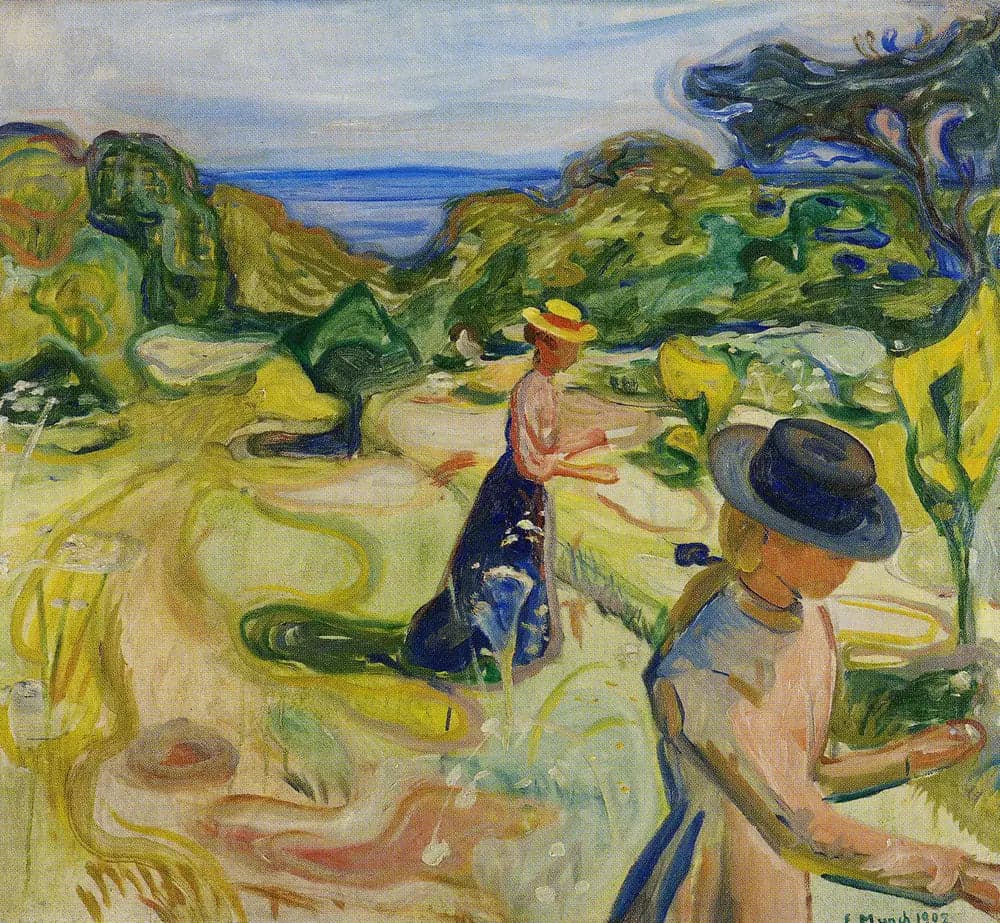
In the Garden
- Original dimensions
- 82 x 75 cm
- Museum
- Not specified
- Year
- 1902
Scene depicted
The canvas “In the Garden” is a vibrant representation of a lush garden, where colors intertwine with a hypnotic delicacy. Human figures blend with the surrounding nature, creating a harmony between the inside and the outside, between the spirit and the natural world. Through this canvas , Munch aims to capture the communion between man and nature, while evoking emotions deeply rooted in the human experience.
Historical context
Created in 1902, this painting is emblematic of the rich artistic soil of Norway, cradled by the currents of symbolism and expressionism . During this time, Edvard Munch flourished under the influence of pioneering artistic movements, laying the foundations for a body of work that would redefine the artistic landscape. Although the canvas currently lacks an assigned museum, its imprint remains indelible in the history of art.
Place in the artist's career
This painting holds a legitimate place in Munch's career, marking a transition to a more mature expression of his art. Associated with other works from this period, such as “The Scream” and “The Madonna,” “In the Garden” illustrates the artist's quest to translate personal feelings into universal images. Together, these canvases form an emotional trilogy that explores the human psyche through the prism of a troubling reality.
Anecdote
“Nature is the mirror of our emotions,” Munch might have declared as he captured the shimmering beauty of a blooming garden. That morning, the sounds of a gentle rustling of leaves and the sweet scent of flowers awakened in him an intense creative impulse. It is this atmosphere that infused a palpable energy into the painting , echoing the emotional whirlwind that inhabited the artist.