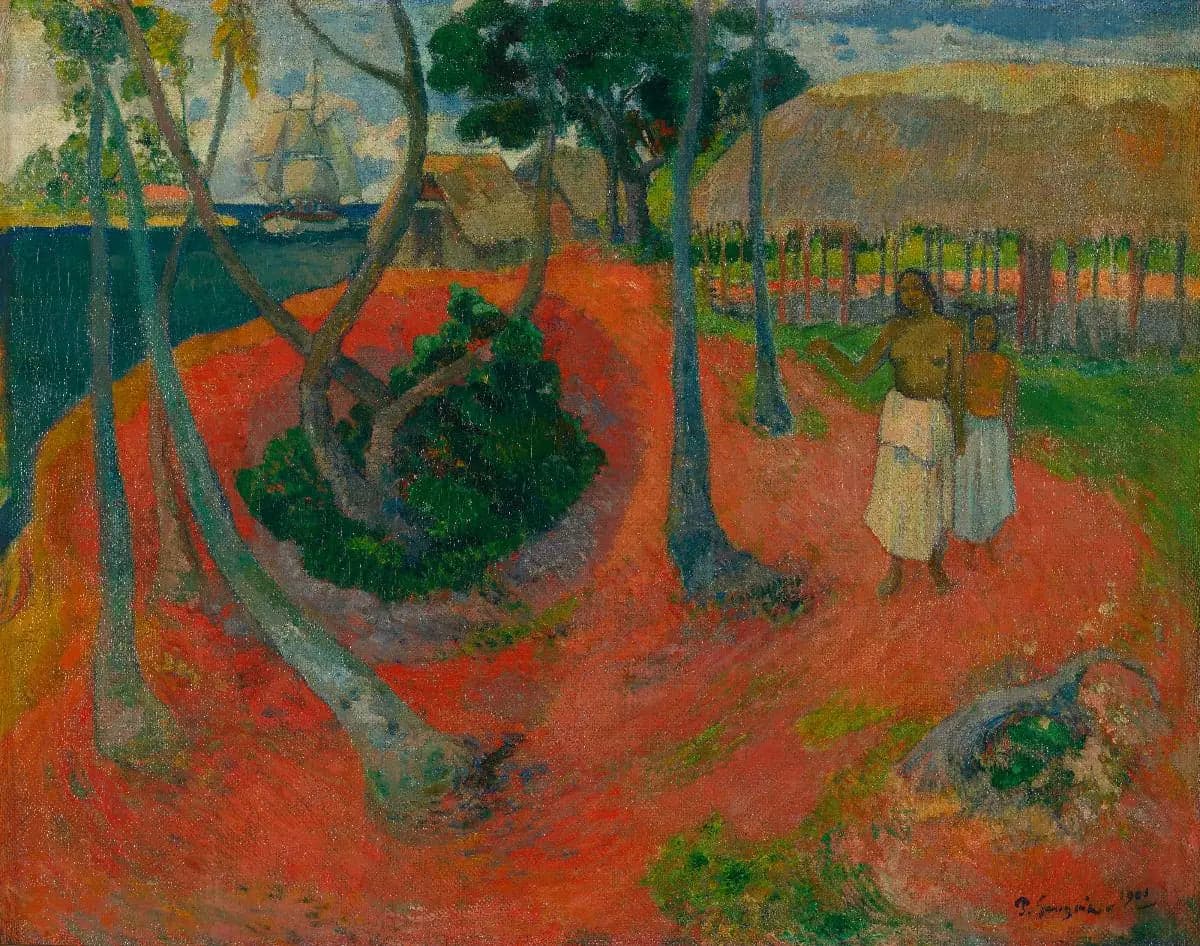
Idylle in Tahiti
- Original dimensions
- 94.5 x 74.5 cm
- Museum
- Foundation and Collection Emil G. Bührle
- Year
- 1901
Scene depicted
The painting “Idylle à Tahiti” depicts a scene imbued with serenity. Two female figures, elegantly dressed in traditional pieces, intertwine in a lush landscape. Gauguin, with his bold palette, evokes an atmosphere of sweetness and tranquility. The canvas invites the viewer to dive into a world of dreams and mystery, revealing a moment stolen from island life.
Historical context
Created in 1901, this canvas emblematic resides at the Foundation and Collection Emil G. Bührle , in Switzerland. Paul Gauguin , a pillar of the post-impressionist movement, created this pictorial work during his stay in Tahiti. In this vibrant period of history, Gauguin explored an exotic world, far from European conventions. A curiosity and a quest for authenticity led him to this distant island, in search of primitive beauty.
Place in the artist's career
This painting marks a major turning point in Gauguin's career. In full stylistic experimentation, it lies between “Vision after the sermon” and “La Orana Maria,” witnessing a constant development towards the integration of local culture and a more symbolic approach. With “Idylle à Tahiti,” Gauguin fully embraces his island envelope, reflecting his artistic maturation.
Anecdote
“Life is a mystery to be deciphered, and every brush I touch evokes it with a thousand sighs.” This word from Gauguin recalls the nascent inspiration of a peaceful morning on the tranquil beaches of Tahiti. Amid the gentle rustling of palm leaves and the songs of colorful birds, this painting was born, full of life and escape.