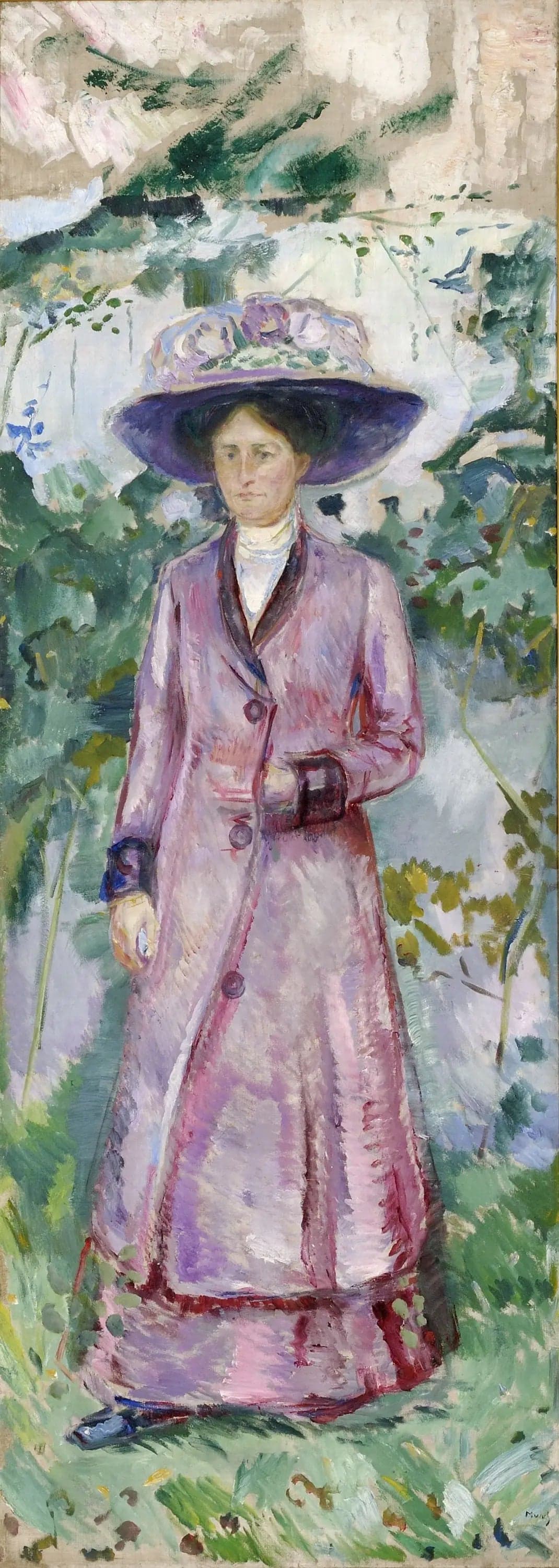
Ida Roede
- Original dimensions
- 90 x 248 cm
- Museum
- Lillehammer Art Museum
- Year
- 1910
Scene depicted
“Ida Roede” is a fascinating pictorial work that illustrates not only the timeless beauty of a feminine face but also the intensity of emotions that only Munch can capture. The canvas exhibits a masterful balance between light and shadow, creating an enveloping atmosphere that seems to breathe authenticity.
Historical context
Created in 1910 in the picturesque town of Lillehammer, this painting elegantly fits into the expressionist movement of which Munch is one of the pioneers. Rooted in a time when art seeks to translate the invisible, this work is now housed in the Lillehammer Art Museum, an ideal setting for a canvas of such magnitude.
Place in the artist's career
This painting stands as a milestone in Munch's career, representing a period of artistic maturity. Alongside iconic works like “The Scream” and “The Madonna,” the composition of “Ida Roede” reveals a subtle yet significant evolution in his approach to human psychology.
Anecdote
“The human soul is a canvas that reveals itself under the effect of emotions.” These words of Edvard Munch resonate deeply when contemplating his masterpiece , in which he captures the ephemeral beauty of a moment that will forever be etched in the observing soul. Imagine this painting being born in the sweet scent of lilacs in spring, during a silent walk, where each step evokes the harmony of the world.
Major exhibitions
Edvard Munch : portretter