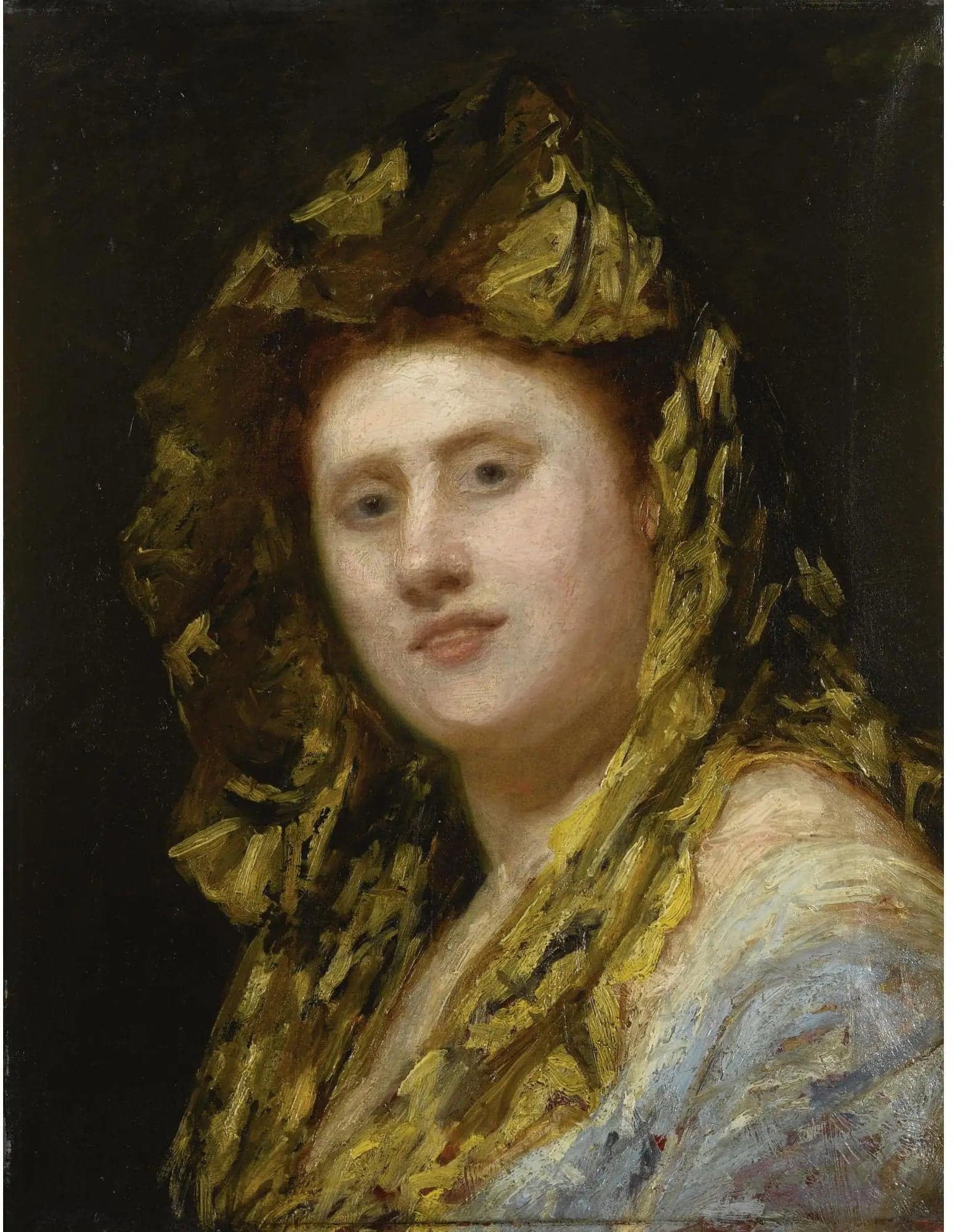
Ida
- Original dimensions
- 44.8 x 57.8 cm
- Museum
- Not specified
- Year
- 1874
Scene depicted
In "Ida," the artist immerses us in the intimacy of a young girl nestled in an armchair, her gaze filled with reflection. The painting delicately illustrates the innocence and ephemeral beauty of childhood. The composition, carefully chosen, shows a soothing blur, almost giving a dreamlike impression to this tender moment. It is this scene of daily life that Cassatt masters perfectly, making visible what is often felt deep within.
Historical context
Created in 1874, in the vibrant context of the Impressionist years in Paris, the painting "Ida" by Mary Cassatt represents a magnificent dive into the daily life and intimacy of women of the time. This canvas is emblematic of a period when the French artistic homeland attracted talents from around the world, providing Cassatt with a perfect playground to express her sharp sense of observation. Although the exact location of preservation is not specified, the legacy of this painting continues through exhibitions that highlight this unique work.
Place in the artist's career
This painting , one of Cassatt's first major works, marks a turning point in her career. Presented at the Salon of 1874, it is often considered a cornerstone of her recognition as a female painter in a male-dominated environment. It resonates in other compositions such as "The Reading" and "Maternity," where the exploration of feminine and parental themes flourishes and develops. "Ida" thus remains a fundamental milestone in her artistic evolution.
Anecdote
Mary Cassatt , touched by the daily lives of women, said: "My art reflects the lives of mothers and their children, for that is where I find my greatest inspiration." It is in a soft light filtering through a window that "Ida" comes to life, probably reflecting a moment of shared fullness. This painting does not merely capture a moment; it evokes a maternal relationship filled with emotion.
Major exhibitions
Salon of 1874