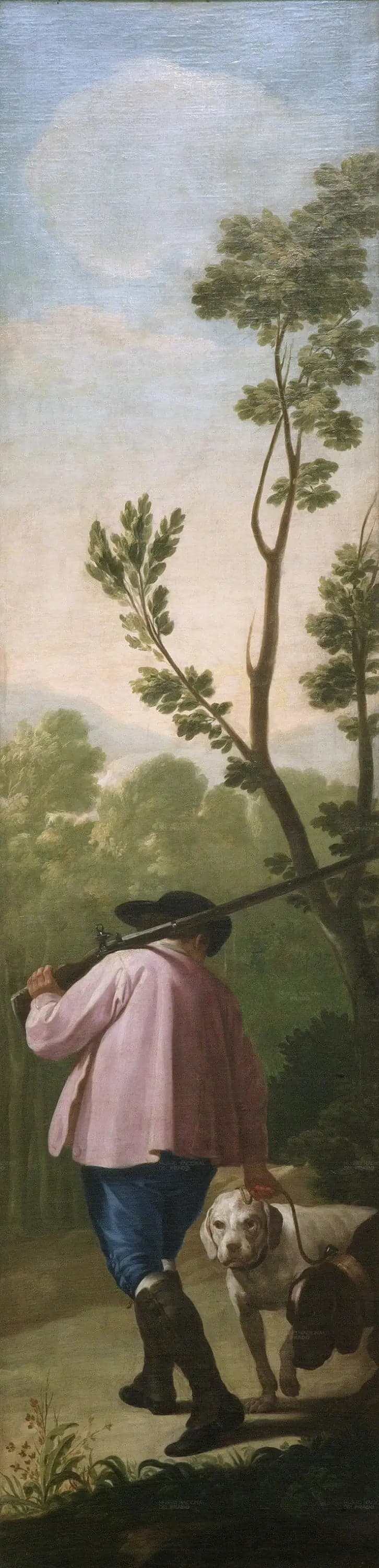
Hunter with His Dogs
- Original dimensions
- 67.5 x 268 cm
- Museum
- Prado Museum
- Year
- 1775
Scene depicted
The painting illustrates a hunter, proud and determined, flanked by his two faithful dogs, thus capturing the very essence of an outdoor hunt. The dynamic composition reveals the movement and wild beauty of nature, all encapsulated in a perfect separation between man and his companions. This pictorial work symbolizes a landscape of bravery and tranquility, while offering an introspective look at the intrinsic relationship between man and animal.
Historical context
Created in the heart of Madrid in the 18th century, Hunter with his Dogs by Francisco de Goya is part of the emerging romantic movement. This painting , displayed at the Prado Museum, evokes a time when major artistic currents were redefining aesthetic standards. The painting, measuring 67.5 x 268 cm, embraces a vibrant and authentic atmosphere that awakens the senses and immerses us in the wild nature of Spain.
Place in the artist's career
Hunter with his Dogs is situated at a major turning point in Goya's career, marking a point of stylistic maturity. In comparison with The Maids of Honor by Velázquez and The Sleep of Reason Produces Monsters , this canvas highlights the evolution of his approach, both technically and emotionally. This work thus becomes a milestone, an evolution towards greater expressiveness and a deeper understanding of his subjects.
Anecdote
“Art must capture the soul of nature, as it reveals itself to us in joy and suffering,” Goya might say as he painted this masterpiece . One can imagine him, inspired by a clear morning, where the song of birds merges with the rustling of leaves. Each brushstroke, imbued with intense passion, traces a deep connection between man and his animal companions, rooted in the immediacy of the scene.